
CT Anglers Who Write Off State Parks as Hiker Water Miss the Hammonasset Fall Striper Surf and Bigelow Hollow's Near-Zero-Pressure Bass. What Shore Communities, DEEP Stocking Schedules, and Tidal Cove Regulars Report About Public Access Fishing Across All Four Seasons
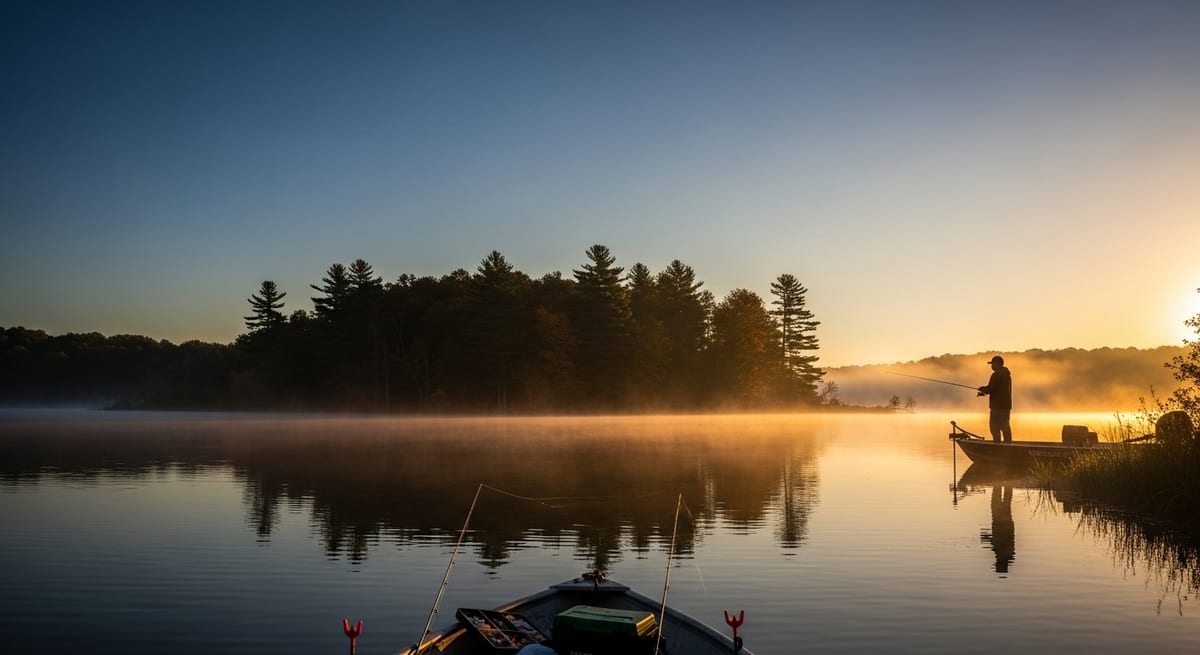
Anglers who fish Bigelow Hollow State Park's remote ponds in late April consistently report arriving to find no other anglers present. A pattern the CT kayak community attributes to the pack-in requirement that filters out casual day-trippers and leaves the bass and chain pickerel population in near-pristine condition. That same low-pressure dynamic repeats at several CT state parks, and shore communities around Hammonasset and Rocky Neck have flagged an identical seasonal gap for years: the parks fill with swimmers in July and largely empty out by October, precisely when the surf striper bite and tautog action on rocky points reaches its annual peak. Fishing access at most CT state parks carries no separate fee beyond standard day-use parking, which runs $15-22 in-season depending on CT versus non-CT residency; off-season access is typically free. CT DEEP regulations apply at all locations. A valid CT saltwater fishing license is required at the coastal parks, and freshwater licenses with applicable species limits govern the inland parks. What follows draws on conditions shared across CT shore and freshwater communities, cross-referenced against publicly available DEEP stocking schedules and creel survey data.
Hammonasset Beach State Park (Madison): Fall Stripers, Summer Bluefish, and the West-End Tidal Cove Snapper Window
CT's largest shoreline state park offers approximately 2 miles of beach frontage along Long Island Sound and is the most frequently cited shore casting location in CT saltwater communities. What's there: Surf casting for striped bass from the main beach and jetty area, bluefish blitzes in summer, snapper blues in the tidal cove at the west end from late July through September, and fluke from the stone jetty on incoming tides.
What shore communities report: Shore casters who target the fall striper run at Hammonasset consistently identify October and early November as the peak window, with slot-sized and larger fish showing up after the first sustained northwest winds push bait against the beach. The consensus among CT shore fishing forums is that the west-end jetty and tidal cove outperform the main beach stretch for anglers targeting species other than stripers, snapper blues and small bluefish concentrate in the cove through September in numbers that communities describe as reliable for light-tackle action. Summer bluefish blitzes are characterized as unpredictable but occasionally excellent.
Regulations and access: CT saltwater fishing license required for anglers 16 and older. DEEP's striper slot limit applies, verify the current size and bag limits on the CT DEEP Marine Fisheries page before fishing, as slot parameters have been adjusted in recent seasons. Day-use parking runs $15-22 in-season depending on residency; the west-end lot provides the closest walk to the tidal cove. Off-season parking is free and the park remains open for fishing year-round.
Rocky Neck State Park (East Lyme): Tidal Cove Flounder on Incoming Tides and Fall Tautog on Rocky Points
A tidal cove, rocky shoreline, and open beach give Rocky Neck three distinct fishing environments within a single park boundary. CT shore communities who fish the tidal cove describe it as a reliable producer of summer flounder, small stripers, and snapper blues on incoming tides from June through September, accessible from the beach path without a boat, which shore anglers cite as a meaningful advantage over access points that require a trailer.
What tautog regulars report: The rocky shoreline beyond the cove is the water CT tautog communities reference when fall blackfish timing comes up. The consensus among CT blackfish anglers is that October through early November produces the most consistent bites on green crab or Asian shore crab fished tight to structure; Rocky Neck's rocky points are regularly mentioned alongside Black Rock and Hammonasset as accessible tautog shoreline that holds fish without requiring a boat. Anglers targeting tautog on foot describe the falling tide as the more productive window once fish have moved into shallower structure.
Regulations and access: CT saltwater fishing license required. DEEP tautog season dates and current size and bag limits apply, verify on the CT DEEP Marine Fisheries page before targeting blackfish, as tautog regulations have been revised in recent seasons. Seasonal day-use parking fee in effect; the main lot provides direct cove access.
Bigelow Hollow State Park (Union): Walk-In Bass, Perch, and Pickerel in a Near-Zero-Pressure Northeast Corner Pond System
The northeast corner of CT holds the state's most remote publicly accessible freshwater fishing. A 9,000-acre roadless forest containing Bigelow Pond and Breakneck Pond, accessible only on foot from the Route 197 parking area in Union. CT freshwater communities who fish Bigelow Hollow describe the pack-in requirement as the primary filter that keeps both ponds dramatically underpressured relative to drive-up access lakes in the region.
What's there: Largemouth bass, yellow perch, chain pickerel, and brown bullhead in both ponds. Bigelow Pond is roughly 0.5 miles from the parking area; Breakneck Pond requires a longer hike on established trail. No facilities at either pond, pack-in, pack-out. No motorized boats permitted.
What the CT kayak and freshwater community reports: Anglers who pack in canoes or kayaks to Bigelow Hollow describe bass behavior consistent with lightly fished water. Fish that respond to presentations ignored on Candlewood or Bantam after a tournament weekend. Spring and early fall are cited as the most productive windows for bass; perch fishing holds through summer, particularly in early morning and evening sessions before surface temperatures peak. The consensus is that the pond resets quickly between visits compared to drive-up impoundments.
Access: Free entry. CT freshwater fishing license required. CT DEEP seasonal stocking schedules for Bigelow Pond are published on the DEEP Fishing Stocking Reports page, check before planning a trout-targeting trip.
Burr Pond State Park (Torrington): DEEP-Stocked Trout in April and Year-Round Warm-Water Species in the Litchfield Hills
Burr Pond is an 88-acre impoundment in the Litchfield Hills that CT DEEP stocks seasonally with trout and that supports a year-round population of largemouth bass, yellow perch, and chain pickerel. Anglers who fish northwest CT freshwater parks list Burr Pond as one of the more accessible stocked-trout options in the region. A small boat launch accommodates canoe and kayak access without requiring a full trailered rig.
What anglers report: The opening weekend push, typically the first Saturday of April, draws consistent pressure on the bank access areas outside the swim beach perimeter. Anglers who return midweek in April and early May, after the opening-weekend crowds have moved on, describe substantially lower competition and comparable catch rates on stocked fish that have had a few days to settle into the water column. Summer bass fishing in the shaded coves, particularly in the first two hours of light, is cited as productive through July before heat pressure builds.
Regulations and access: CT freshwater fishing license required. Fishing from the designated swimming beach area is prohibited during the posted swim season; bank access remains available from other shoreline points throughout. Day-use parking fee in season. CT DEEP stocking schedules are publicly available, search the DEEP Fishing Stocking Reports page to confirm Burr Pond trout plants before scheduling a trip. Ice fishing for perch is practiced in winter when ice conditions meet CT DEEP safety guidelines.
Macedonia Brook State Park (Kent): Wild Brook Trout, DEEP-Stocked Fish, and Small-Stream Presentation in a Forested Litchfield Valley
Macedonia Brook in Kent holds both wild and CT DEEP-stocked brook trout through a forested valley with walk-in access from multiple pull-offs along the park road. CT fly fishing communities reference Macedonia Brook as a representative small-stream environment, tight canopy, restricted casting lanes, fish that reward careful approach over pattern selection, and pools that recover quickly when pressure eases.
What small-stream communities report: Anglers who fish Macedonia Brook and similar Litchfield Hills streams consistently identify May through June as the productive window for stocked fish; water temperatures in the brook climb through July and communities describe catch rates dropping noticeably until fall. Late September and October are cited as the native brookie window, smaller fish, wilder behavior, and lower angling pressure as most casual trout anglers have moved off after stocking season ends.
Access and approach: Free entry. CT freshwater fishing license and applicable trout stamp required, verify current DEEP regulations for the specific water before fishing. The park road parallels the brook with several pull-offs providing direct walk-in access to distinct pool sequences. CT small-stream communities describe ultralight spinning rigs and shorter fly rods in the 7 to 8 foot range as the practical choice; longer setups become unworkable in the tighter upstream sections where canopy closes over the water.
EVERY SATURDAY MORNING
Weekly fishing intelligence
Nationwide conditions, what's biting, and honest gear deals. One email, no noise.
No spam. Unsubscribe anytime.