
Duplicate Jig Heads, Rusted Sound Hooks, Fused Soft Plastics. What CT Anglers Who Finally Got Organized Stopped Replacing
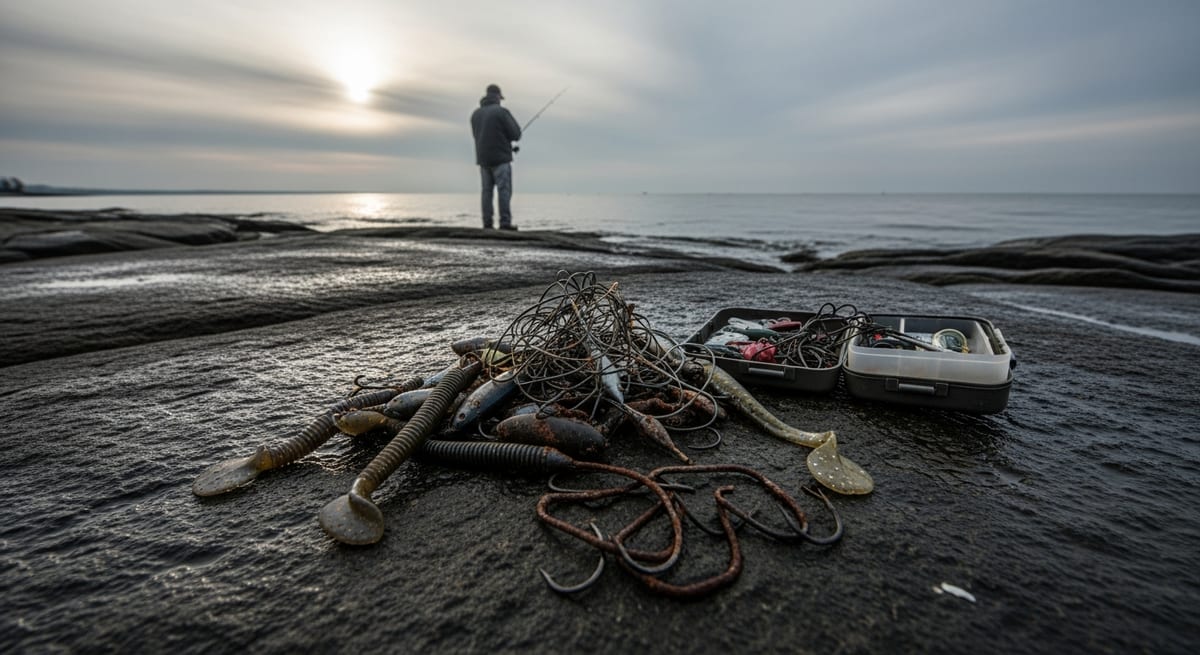
The most common finding when CT anglers systematically audit their tackle for the first time: duplicate purchases across two or more seasons for the same jig head weights, hook sizes, and swivel packs, gear bought again because the original was buried, not because it was gone. Add hooks rusted solid after a Sound trip that didn't get rinsed until two days later, and soft plastics fused into an unusable mass after a summer in a hot truck bed, and the real cost of disorganized tackle becomes clear. It's not what gets spent on gear the first time. It's what gets spent a second time on gear already owned. CT anglers who rebuilt their storage around trip-ready modular trays report the duplicate purchases largely stop.
Build Around the Trip, Not the Lure Type
The organizing principle CT anglers return to most consistently isn't sorting by lure type. It's sorting by fishing situation. The practical setup: a master bag or hard tackle box holds a collection of smaller utility trays, each pre-configured for a specific trip. Grab the trays for the day and leave the rest at home.
The Plano 3700-series box is the most frequently cited workhorse in CT tackle storage threads, deep enough for most soft plastics and hard baits, shallow enough to stack several in a side pocket or truck organizer. Clear lids mean contents are visible without opening anything. Flambeau and Savage Gear make comparable dimensions; consistency in tray sizing matters more than brand loyalty, since trays that don't stack cleanly defeat the purpose of the system.
Hard-sided boxes like the Plano Guide Series offer more impact resistance for vehicle transport and boat use but add weight. The soft-sided hybrid approach. A cordura-style bag holding removable 3700-series trays, is what CT kayak anglers and shore-based surf casters most commonly describe, since it adapts to different carry situations without requiring a separate system for each type of trip.
What CT anglers describe as the practical payoff of this system is reconfiguration speed. A morning on the Housatonic for smallmouth pulls two trays and a rod bag. A surf session at Hammonasset Beach State Park or the Niantic River mouth for stripers requires a completely different set of boxes. Same bag, different trip loadout in a couple of minutes. A configuration pattern that surf-caster and freshwater threads on regional forums arrive at independently through similar trial and error.
The consistency half of the system, returning every item to exactly the same compartment, every time, is what CT anglers who've cycled through looser approaches cite as the deciding factor. Approximate organization degrades quickly; exact placement holds. A few minutes at the tailgate after a trip saves significant digging the next morning before the first cast.
What a CT Season Actually Requires, Tray by Tray
Rather than generic lure categories, the trays CT surf casters and freshwater anglers describe building across a typical season break down by specific situations:
Striper and bluefish surf tray (Sound, river mouths, hammonasset, Rocky Neck, Thames and Niantic river mouths): Diamond jigs in 1-3 oz, metal casting plugs, large soft plastic paddle tails on 1/2 to 1 oz jig heads, bucktail jigs, and fluorocarbon leader material pre-cut to working lengths. Sound surf anglers fishing the western and central stretches commonly run 40-50 lb fluorocarbon for striper leaders. A range cited consistently across CT striper charter reports and surf-casting accounts, covering most presentation scenarios without re-rigging mid-session.
Freshwater bass tray (Candlewood Lake, Connecticut River backwaters, smaller public ponds): Soft plastics for Texas and Carolina rigs, jig heads from 1/16 to 3/8 oz, hard swimbaits, a topwater walking plug or frog for early-morning surface windows. A complete CT bass session, structure, open water, and shallow cover approaches, typically fits in one Plano box.
Trout and panfish tray (stocked rivers, CT DEEP impoundments): Mepps and Rooster Tail spinners in sizes 0 through 2, small spoons, jigs under 1/16 oz, split shot in multiple sizes, hooks from size 10 to 14, small bobbers. Covers the Farmington, the Salmon River, and the stocked stretches CT DEEP puts fish into from late March through late May each season. The full stocking calendar is published annually on the DEEP Fisheries Division site.
Terminal tackle tray (every trip, no exceptions): Hooks from size 6 through 2/0, barrel swivels, split rings, snap swivels, split shot, egg sinkers, cylinder sinkers. Every other tray depends on this one being present.
One detail that appears consistently across CT tackle-storage discussions: treble hooks on hard baits get their own divided tray with hooks oriented upward. A treble snagging another in a loose pile turns a short drive to the launch into a lengthy untangling session on the tailgate. A scenario familiar enough that the separate-tray habit gets recommended by surf and freshwater anglers alike, independently of each other.
Why CT Soft Plastics Fail in Storage, and What Anglers Who Stopped Losing Them Changed
A pattern that surfaces regularly in CT bass and surf-caster accounts: soft plastics bought at the start of the season, senko-style worms, Zoom Trick Worms, creature baits, stored loose in the same compartment of a tackle bag that spent the summer in a vehicle, and arriving at the water fused into something that can't be cleanly separated.
The underlying mechanism involves plasticizer migration between different soft-plastic formulations. A materials behavior that certain product combinations are more susceptible to and that heat accelerates. The degree varies by brand and specific formulation; it's not uniform across every product combination on the market. CT anglers who've consistently lost lures this way describe arriving at the same storage changes:
Store flat, not piled. Worms, creatures, and swimbaits tangled together in a pile stick and become difficult to sort on the water. Flat in zippered bags, or a dedicated multi-compartment soft-plastic bag (Plano makes these), keeps them organized and separable when it matters.
Keep scent and salt baits in their original packaging. Salt-impregnated and scented baits, senko-style worms, Trick Worms, lose their coating faster stored loose. The original bag slows that loss noticeably and preserves the bait action that depends on it.
Keep scented and unscented baits separated. A related issue CT bass anglers flag: scented baits stored in the same compartment as unscented soft plastics transfer odor over time. For finesse presentations where odor neutrality matters, drop shot rigs, shaky heads on pressured water, cT bass forums recommend keeping the two categories in separate compartments regardless of brand.
Remove soft plastic trays from the vehicle between trips. A tackle bag sitting in a CT truck bed through July runs at temperatures that accelerate plasticizer breakdown and reduce flexibility across every bait in that compartment. Taking the soft-plastic tray inside between outings is the single most commonly cited preventive step in CT gear discussions each summer.
What the Sound Does to Tackle Over a Season
Saltwater tackle maintenance runs on a different standard than freshwater, and CT Sound regulars consistently describe the gap as wider than most anglers recognize before their first full season on the water. Salt air alone, not submersion, just exposure during a session at Hammonasset, Rocky Neck, or the Thames River mouth, begins surface pitting on exposed metal over a season without consistent attention. CT Sound anglers who've kept the same outfits running for multiple seasons describe the same protocol: fresh water rinse after every salt trip, done that evening, not the following day.
Consistent rinsing extends hook life, but hooks on saltwater trays still degrade faster than freshwater equivalents. CT surf anglers commonly describe pulling and replacing hooks at the start of each spring regardless of appearance, and sooner mid-season at any sign of surface rust or discoloration, keeping gear reliable through the September striper and October tautog windows when hook failure costs a fish on a limited-window tide. Hooks are inexpensive relative to a lost fish on good conditions.
On hook sharpness: Running the point across a thumbnail is the field check CT regulars describe. A sharp hook drags and catches slightly on the nail, a dull one skips across clean. A ceramic hook file handles routine touch-ups; diamond files cut faster and last longer for heavier seasonal use. CT striper threads flag hook sharpness as a maintenance step that regularly gets deprioritized, with the consequences surfacing mid-fight when a fish throws the hook at boatside.
Lure maintenance CT surf and freshwater anglers describe:
- Replace treble hooks on hard baits every one to two seasons, rust affects both sharpness and wire integrity, and a treble that opens on a large fish means losing both the lure and the catch
- Swap split rings that won't open smoothly or show heavy pitting before they fail, not after
- Wipe down plugs and spinnerbaits after each use to maintain finish and running behavior; salt residue left through the off-season accelerates paint adhesion loss
The start-of-season audit. Late February or early March, before CT DEEP's trout stocking schedule kicks into the late-March through late-May window on rivers like the Farmington, Willimantic, and Salmon River, is when CT freshwater regulars describe doing a full tackle overhaul. Every tray, every compartment: rusted hooks replaced, degraded soft plastics cleared out, line on every spool checked. The full process takes under an hour. The practical result is that the first morning of CT trout season, when freshly stocked fish are holding in predictable lies, the gear performs when it needs to.
EVERY SATURDAY MORNING
Weekly fishing intelligence
Nationwide conditions, what's biting, and honest gear deals. One email, no noise.
No spam. Unsubscribe anytime.