
Soft Plastic Worms Produce CT Bass When Nothing Else Does, what Candlewood, Bantam Lake, and Lillinonah Anglers Report About Rig Selection, Water Temperature Windows, and the Presentations That Hold From April Through October
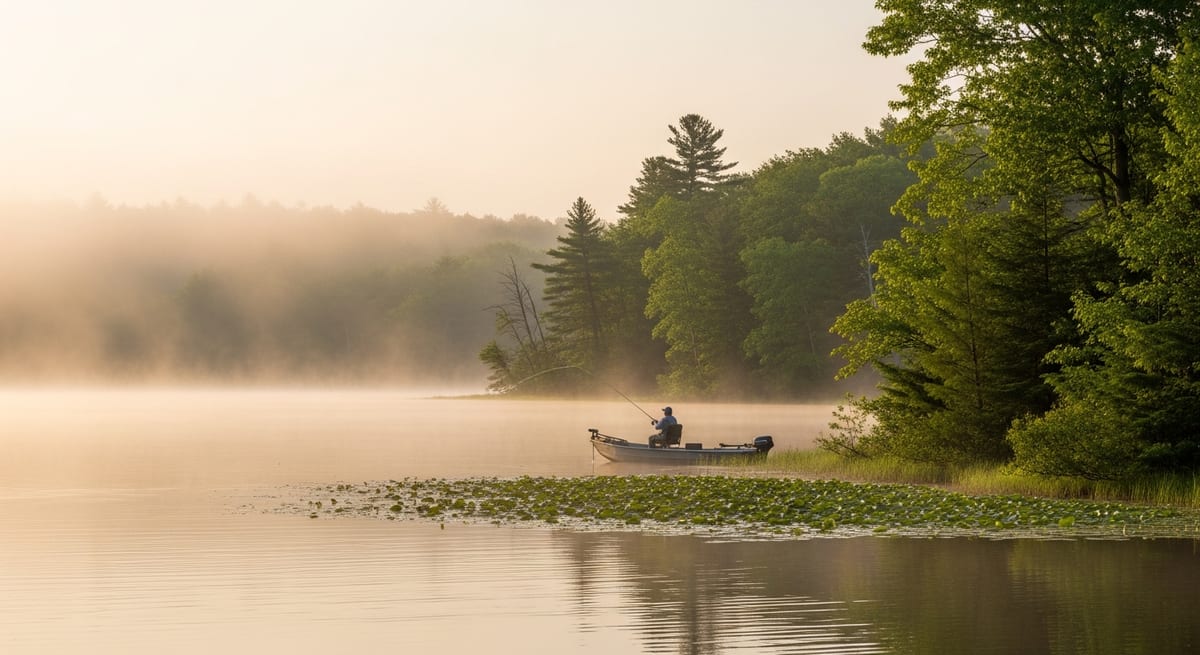
Anglers fishing Candlewood Lake and Lake Lillinonah in the weeks after ice-out consistently report that soft plastic worms produce largemouth bass before surface temps climb past 50°F. A window where crankbaits and spinnerbaits often draw short strikes or none at all. The worm's slow fall, soft texture, and profile flexibility make it effective across CT reservoir conditions that shut down faster presentations, which is why bass anglers from Bantam Lake to the Housatonic River return to it when reaction baits stop producing. The community consensus across CT bass forums and angler-reported tournament results is that soft plastics are a year-round staple across reservoir, river, and pond fishing in the state, not a seasonal choice or a specialty technique. Few setups match the versatility of a well-rigged soft plastic across depth, cover type, and seasonal window in Connecticut freshwater bass fishing.
Why CT Reservoir Bass Strike Soft Plastics Across Conditions
Soft plastic worms don't resemble earthworms. They profile as the eels, large aquatic invertebrates, and water snakes that bass encounter in Connecticut's deeper impoundments. The long, undulating shape and soft texture register as food at a sensory level that produces strikes even when bass aren't actively chasing.
Candlewood and Lillinonah hold significant eel populations, which likely contributes to the consistent worm production on those lakes specifically. Anglers who fish those waters after dark report that eel-pattern worms in 8-10 inch lengths outperform shorter rigs in a way that doesn't hold as clearly on smaller, eel-light ponds.
The practical advantage is presentation flexibility. A worm can be rigged completely weedless for the lily pad fields on Bantam Lake's northwest arm, fished on a shakyhead along Candlewood's submerged rock points, or suspended weightless under dock overhangs. No other single bait family covers that range of cover types with the same bait.
Bass often mouth soft plastics before fully committing. The subtle 'tick' or momentary slack on the line before a solid load-up is the worm's tell. That brief window allows a hook set on a fish that's actively evaluating the bait rather than one that has already ejected it.
Texas Rig Through CT Weed Beds, Lily Pads, and Laydowns
The Texas rig is the standard approach for weed-heavy CT bass water. Thread a bullet weight (1/8 to 1/2 oz depending on depth and cover density) onto the main line, tie on a wide-gap offset hook (3/0 to 5/0 for 7-10 inch worms), and bury the hook point just under the plastic surface. Done correctly, the rig is fully weedless. It moves through lily pads, thick grass, and laydowns without fouling.
Anglers working the lily pad fields along Bantam Lake's northwest shore and the grass flats in Lillinonah's upper arms typically run 3/16 or 1/4 oz weights, enough to punch through canopy cover but slow enough that the worm settles rather than plunges. The same rig dragged along fallen timber and dock pilings on Candlewood produces through mid-summer when bass have pushed off open-water structure.
Basic retrieve: cast to cover, let the worm fall on a semi-slack line and watch for the line to jump (strikes on the fall are common in spring), then hop and crawl the bait slowly back. Set the hook firmly, sweep the rod and reel simultaneously to drive the point through the plastic.
CT DEEP regulations set a 12-inch minimum size for largemouth bass on most Connecticut waters, with some designated trophy fisheries carrying modified limits. Anglers should verify current year-round regulations at ct.gov/deep before fishing specific impoundments, as individual water rules can differ from the statewide default.
Shakyhead on Hard Bottom: Rock Points and Gravel Transitions
A stand-up shakyhead jighead with an exposed hook is the finesse standard for CT bass water with hard, clean bottom. Thread a straight-tail worm (5-6 inch) on a 3/0 shakyhead, keep the worm straight so the tail stands, and work it slowly along any transition from soft bottom to rock or gravel. The shakyhead earns nothing in vegetation.
On Candlewood Lake, the submerged rock points along the eastern shore between Danbury and Sherman hold both largemouth and smallmouth that relate to hard structure through spring and into summer. Topographic lake maps available through CT DEEP's public records show the gravel-to-rock transitions on those points, and that's where shakyhead anglers on Candlewood report the most consistent smallmouth contact from late April through early June.
The technique works best in the 55-65°F water temperature range, which on CT reservoirs typically means late April through late May and again in September and October. Retrieve is minimal: cast, let it settle, shake the rod tip while keeping the bait on the bottom. The worm quivers with the tail standing up.
Post-cold-front conditions that stall reaction baits are when CT anglers on Candlewood and Lillinonah most frequently report defaulting to the shakyhead. The consensus among regulars on those waters is that it's their go-to when surface pressure drops overnight and bass won't move laterally to chase.
Wacky Rig for Dock Lines, Overhangs, and Suspended Bass
Thread the hook through the middle of a straight worm perpendicular to the long axis. Both ends hang free and flutter on every twitch and during the fall. That's the entire technique. The action comes from the bait itself, not the retrieve.
Bass anglers on Coventry Lake and Highland Lake report the wacky rig under dock structures in 4-8 feet outperforming Texas-rigged presentations in clear-water conditions where bass can inspect a bait before committing. It's a slow-fall approach suited to docks, shaded overhangs, and shallow cover where bass are holding off the bottom rather than relating to deep structure.
An O-ring threaded around the center of the worm before rigging extends bait life substantially. The hook passes through the ring rather than the plastic, so a bass can tear the worm sideways without destroying it. Without an O-ring, each fish typically renders the bait unusable. O-rings are sold at most CT tackle shops and commonly ordered online in bulk.
The neko rig is a weighted variant: insert a small nail weight into the nose of the worm before rigging. The nose sinks and the tail flutters, producing a lopsided action that CT smallmouth anglers on the Housatonic River and its backwater pools report as particularly effective in low, clear late-summer flows when standard presentations spook fish in skinny water.
Matching Color and Size to CT Water Conditions
Connecticut's bass waters range from Bantam Lake's clear, spring-fed visibility to the tannin-stained upper arms of Lillinonah and the sometimes turbid Connecticut River backwaters, and color selection should track that difference.
In clear water (Bantam Lake, much of Candlewood in non-algae season), the consensus among CT reservoir anglers is green pumpkin and watermelon with red flake as year-round producers. Green pumpkin matches the crawfish that bass encounter across CT's rocky structure. In very clear conditions, brown and natural crawfish patterns often outproduce brighter options, particularly on heavily pressured water where bass have seen every flashy presentation.
In stained to dark water. The tannin-stained coves of Lillinonah, the darker bays on Gardner Lake, black with blue or red flake has produced CT bass for decades. Junebug (purple-black) performs similarly. Chartreuse-tipped worms seem counterintuitive in dark water but are reported effective by anglers who fish the deeper, darker sections of the Housatonic backwaters in late summer.
For sizes: 7-10 inch worms are standard for largemouth on CT's larger reservoirs. For Housatonic River smallmouth and finesse situations following cold fronts, 4-6 inch straight worms on a shakyhead or wacky rig typically produce more bites. After heavy rain. A common condition on CT river systems, larger profiles with curly tails generate vibration that bass detect with their lateral line when visibility drops near zero.
CT Timing Windows, Access, and Regulation Notes
The productive worm window on CT reservoirs typically opens as water temps clear 48-50°F in early to mid-April and runs through November. Bass in Candlewood and Lillinonah tend to stage on shallow secondary points and creek arm mouths ahead of spawn, and a Texas-rigged worm crawled slowly through those areas produces some of the season's largest fish.
Spawn timing on CT reservoirs generally falls between late April and late May depending on the year. Some CT DEEP-designated trophy fisheries carry modified regulations during spawning months. Anglers should check current rules at ct.gov/deep before fishing specific waters during that window.
Public boat launches for Candlewood Lake are maintained by Candlewood Lake Authority at multiple access points in Danbury and New Milford. Bantam Lake has a public launch through White Memorial Conservation Center in Litchfield. Lake Lillinonah state boat launch access is listed in CT DEEP's public-access database. Shore access along the Housatonic River corridor near Falls Village and below Bulls Bridge Dam provides productive smallmouth water without requiring a boat.
Anglers should verify current CT DEEP freshwater regulations at ct.gov/deep before each season, as size limits and water-specific rules are subject to annual revision.
EVERY SATURDAY MORNING
Weekly fishing intelligence
Nationwide conditions, what's biting, and honest gear deals. One email, no noise.
No spam. Unsubscribe anytime.