
Long Island Sound Fluke Peak in June, Not August. What CT Charter Communities, Niantic Bay Regulars, and Current DEEP Data Report About Keeper Size, Seasonal Timing, and Reading the Drift.
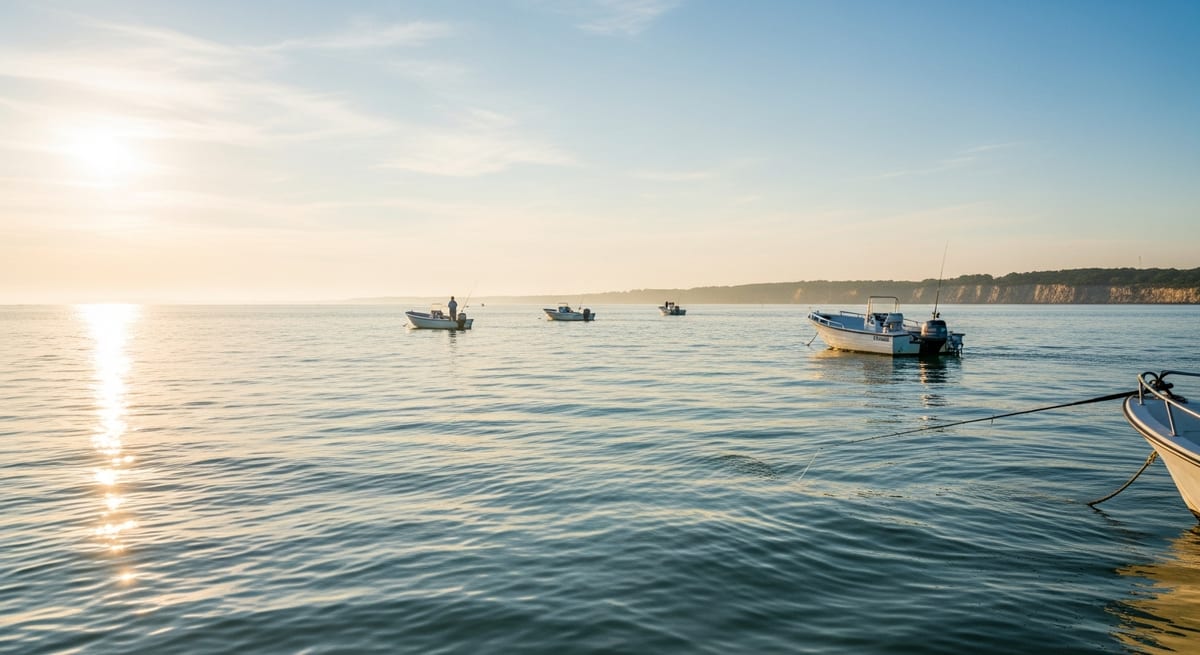
DEEP creel data and CT charter communities consistently report peak fluke catch rates in June and July, not August, when water temperatures climb past 72°F and fish push toward the cooler basin of the Sound. Summer flounder are ambush predators that bury into sandy or mixed-gravel bottom and strike upward at passing baitfish; anglers who drift over the right bottom type typically out-catch those anchoring on open flat sand. The CT minimum keeper size for fluke in 2025 is 18 inches measured with the tail pinched. A threshold that has shifted in recent seasons as coastwide summer flounder quotas have tightened, and Sound regulars recommend confirming the current limit at ct.gov/deep before each trip.
The CT Fluke Season: May Arrival, June Peak, and What Current DEEP Regs Require
Fluke arrive in Connecticut coastal waters in May from offshore wintering grounds, but CT charter captains who fish the Sound regularly report that the reliable keeper bite does not start until water temperatures reach 62-65°F, typically late May to early June depending on the season. Peak season runs June through mid-August, with the most consistent keeper action in the first half of July when baitfish are most active across the Sound's sandy shallows.
The CT DEEP minimum size for fluke in 2025 is 18 inches, measured with the tail fully compressed. Bag limits also apply and have changed in several recent seasons as federal summer flounder management has adjusted the coastwide quota; the most reliable source is the current CT Angler's Guide at ct.gov/deep. Anglers who regularly keep fluke advise measuring on a flat surface rather than estimating at the gunwale. Fish that look like keepers in hand often come in just under 18 inches when measured properly.
Where Sound Regulars Find Fluke: Niantic Bay, the CT River Mouth, and the Current Seams Between
CT anglers who consistently catch fluke focus on sandy and mixed sand/gravel bottom where structure creates an ambush point. A depth change, a channel edge, a tidal rip. Open flat sand tends to hold fewer fish; transition zones are where strikes concentrate.
Niantic Bay is among the most consistently mentioned CT fluke grounds in angler reports and charter catch data. The bay's sandy bottom with depth variation and moderate tidal current matches the habitat profile that DEEP survey data associates with summer flounder staging. Early morning drifts over the shoal edges on a moving tide draw the most keeper reports from anglers fishing the area.
The Connecticut River delta and Saybrook bar create productive structure where the river current meets the Sound. Rip lines and current seams along the bar produce fluke during the last two hours of the outgoing tide. Anglers who fish the area regularly describe finding fish staged in the current, waiting for bait swept through the channel.
Inlet edges and harbor mouths across the CT coast concentrate fluke in current seams during tidal flow. The Thames River mouth, the Niantic River inlet, and the Housatonic channel are spots where boat anglers report finding fish on the current seam during mid-tide. Rocky structure adjacent to sandy bottom, such as the edges near Hatchett Reef, gives fluke an orientation point while they hold on the sand.
Open Sound shallows from 15-40 feet with mixed bottom and visible current movement on the chart also hold fish throughout the season, particularly in the first and last hours of each tide cycle.
The Drift Rig CT Sound Anglers Default To
Fluke fishing is an active technique, drifting, jigging, and feeling for contact rather than watching a rod tip in a holder. Sound regulars describe the tackle requirement as sensitivity first, backbone second.
Rod: A 6'6"-7'6" medium or medium-heavy spinning rod with a fast tip. Charter captains who run multiple clients on LIS fluke trips typically favor 7-foot rods rated for 15-30 lb braid; the extra length improves jig control and strike detection at distance.
Reel: 3000-4000 series spinning reel spooled with 20 lb braid. The no-stretch characteristic of braid is cited by Sound regulars as the single biggest advantage over monofilament. Every tick on the bottom transmits clearly, and fluke takes that would feel ambiguous on mono feel distinct on braid.
Leader: 20-30 lb fluorocarbon, 2-3 feet, short enough to leader fish to the net with line still on the reel, long enough to absorb some shock on the hookset.
Reading the Bucktail: How Experienced LIS Anglers Detect a Strike
The standard drift rig for CT fluke is a bucktail jig, typically 1-2 oz in white, chartreuse, or pink, tipped with a soft plastic or natural bait trailer. Anglers who consistently catch keeper fish on Long Island Sound describe the technique as a controlled-contact drift: the jig should tick the bottom on a slow hop, not drag along the sand or swim too far up in the water column.
Setup: A 1-2 oz bucktail tied directly to the fluorocarbon leader, tipped with a 3-4" Gulp Swimming Mullet, Gulp Alive Shrimp, or fresh squid strip. In strong current, bump to 2-3 oz to maintain bottom contact through the drift.
Working the jig: Lower the bucktail until it touches bottom, raise the rod tip slightly so the jig is just off the sand, then work short, slow hops: 6 to 12 inches. The fall is where most strikes happen. CT charter captains report that drift speed in the 0.5-1.5 knot range produces the most consistent bites; faster drifts tend to pull the jig out of the strike zone.
Detecting the take: Fluke strikes often feel like the jig suddenly gets heavier or the line goes slightly slack on the fall, not the hard thump associated with stripers or bluefish. Anglers who fish the Sound describe it as the bottom grabbing the jig. When the line hesitates on the drop, set the hook with a sweeping rod lift rather than a sharp snap.
When CT Anglers Drop the Bucktail and Switch to Natural Bait
On slow-bite days, high pressure systems, slack neap tides, or very warm water in mid-August. Many CT fluke anglers report that fresh natural bait outperforms artificials. The switch is most common when action on the bucktail has stalled for 45 minutes or more, or when fish are pecking at soft plastics without committing.
The standard CT bottom rig for natural bait: a 2-3 oz bank sinker on a three-way swivel or dropper loop, with a 2-3 foot fluorocarbon leader to a 3/0-5/0 wide-gap hook. Fresh killifish, spearing (Atlantic silversides), or squid strip are the baits CT bait shops along the Sound report selling most for fluke trips. Killifish hooked through the lips and drifted on a moving tide can trigger strikes from fish that have been ignoring bucktails.
Anglers fishing natural bait on the bottom still benefit from keeping the boat in a slow controlled drift rather than at anchor, fluke in the Sound tend to be spread across bottom structure, and covering ground consistently puts more fish under the bait.
Cleaning and Cooking a CT Keeper Fluke
Summer flounder fillet cleanly into four pieces, two per side, with white, mild, firm meat. CT anglers who cook their own catches consistently describe fluke as among the most versatile table fish in the Sound.
Standard filleting: cut along the lateral line first, then work outward toward the fins. An 18-inch keeper yields two good portions from the thicker top side and two thinner pieces from the bottom. The top-side fillets are typically the premium cut; many CT anglers who keep multiple fish freeze the thinner bottom fillets for chowder.
Pan-fried in butter with capers and lemon, or baked simply with olive oil and herbs, the fish holds up without heavy seasoning. CT fishing communities share fluke tacos and fluke piccata most frequently online as preferred preparations. Both take advantage of the mild flavor and the way the firm fillet breaks into clean pieces.
EVERY SATURDAY MORNING
Weekly fishing intelligence
Nationwide conditions, what's biting, and honest gear deals. One email, no noise.
No spam. Unsubscribe anytime.