
Fluke Fishing in Connecticut: Summer Flatfish Guide
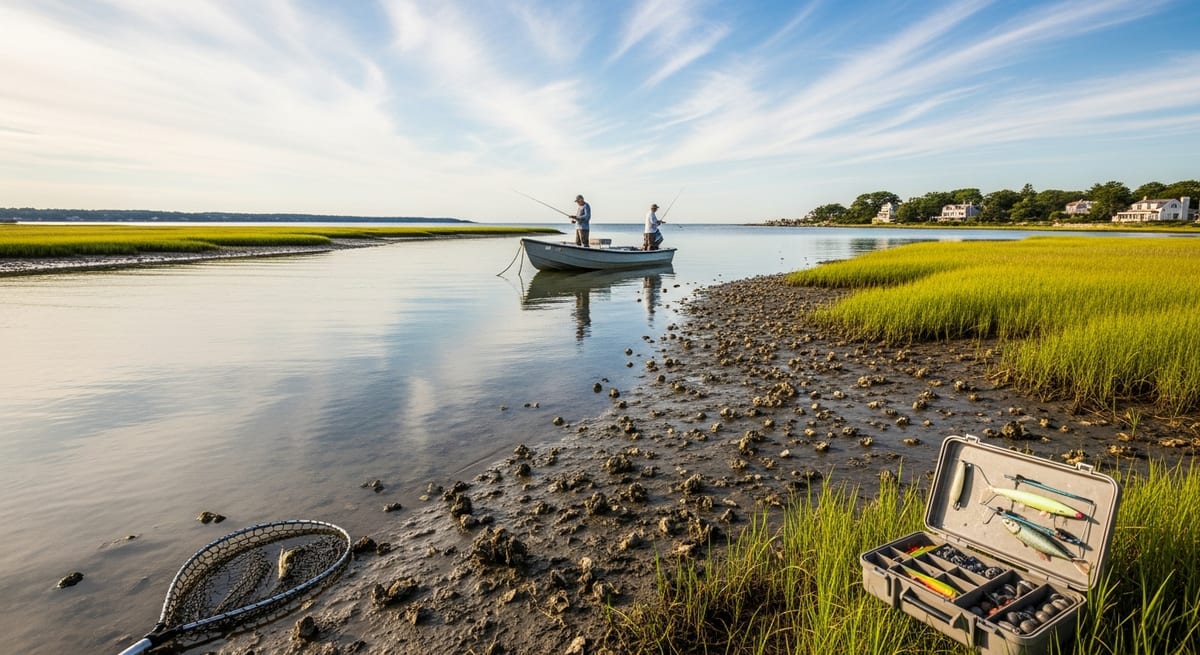
Connecticut's Long Island Sound hits peak fluke production when water temps climb past 65°F, typically mid-June through August, and fish stack up on sandy flats from 15 to 40 feet deep. Fluke, also called summer flounder, are ambush predators that bury into sand and wait for bait to drift overhead. Once you understand that behavior, you can find them reliably all summer long. They're also excellent on the table, which makes keeping a few keepers worthwhile.
CT Fluke Season and Regulations
The Connecticut fluke season typically runs from May 1 through September 30, though the exact dates and bag limits are set annually by the CT DEEP and can shift based on stock assessments. Always verify current regs at portal.ct.gov before you go.
2025 baseline (verify for 2026):
- Minimum size: 16 inches
- Bag limit: 3 fish per person per day
- Season: May 1-September 30
The 16-inch minimum matters. A lot of the fish you'll encounter run 10-14 inches, which means plenty of careful catch-and-release. Keep a measuring board on deck and return undersized fish quickly, fluke handle release well when you don't fuss with them.
Where to Find Fluke in CT Waters
Fluke are bottom-oriented ambush predators. They bury in sand and wait for bait to pass overhead. That tells you everything about where to find them.
Sandy bottoms with some structure nearby. The edges where sand transitions to shell, rock, or grass hold fish. A flat sand desert rarely does.
Productive areas in CT:
New London / Groton / Thames River mouth: The deep channel at the Thames River mouth and the surrounding sandy areas of the eastern Sound are reliable producers. Drift the channel edges and the shallower flats just outside, boat access is straightforward from the Groton or New London town launches.
Niantic Bay / Niantic River: Relatively shallow and sandy, excellent for drifting in summer. The bay holds good numbers of smaller fish, with some bigger ones along the deeper edges near the lighthouse.
Fishers Island Sound: The eastern end of the Sound between the CT coast and Fishers Island produces consistently. Strong tidal flows push bait and concentrate fish.
New Haven Harbor area: Sandy flats in and around the harbor, particularly near the breakwaters, hold summer flounder. More accessible from shore for kayak anglers.
The Race: The western end of Fishers Island Sound where tidal currents run hardest. Bigger fish hold here. Boat handling matters, currents are significant and you'll want to plan your drifts in advance.
Depth: Most CT fluke are caught in 10-50 feet of water. Mid-summer fish often push deeper (30-50 ft) as surface temps rise; spring and fall fish tend to be shallower.
Rigs and Techniques
The Standard Fluke Rig (Spreader/Hi-Lo Rig)
The most common setup in CT waters: a 3-way swivel or spreader rig with a sinker on the bottom and a 12-18 inch leader to a 1/0-3/0 hook. The weight keeps you on bottom; the leader lets the bait drift naturally.
Hook size depends on bait and target size. For typical CT fluke (1-3 lbs), a 2/0 or 3/0 works well. Going after doormat-size fish, move up to 4/0 or 5/0.
Bucktail Jigs
Serious fluke anglers swear by bucktails. A ½ to 1 oz white or chartreuse bucktail jig tipped with a strip of squid or a Gulp! Swimming Mullet is hard to beat, work it slowly along the bottom with short lifts and let it flutter on the fall. Don't overjig it. The pause and drop is what triggers strikes, not the retrieve.
The Drift
Fluke fishing is almost always done by drifting. You're covering ground and keeping your bait close to the bottom. Drift speed matters: 0.5 to 1 knot is ideal.
Too fast and your rig lifts off. Too slow and you're not covering water. Adjust sinker weight (2-6 oz depending on depth and current) to maintain bottom contact throughout your drift.
Using a Drift Sock
On windy days, a drift sock (sea anchor) slows your boat to a fishable speed. If you're blowing through drifts too fast to feel bites, this solves the problem before you start piling on heavier sinkers.
Bait: Live vs. Cut vs. Artificial
Squid is the go-to and it works. Fresh squid in 2-3 inch strips accounts for a lot of CT fluke. It stays on well, has good action in the current, and fish eat it confidently. Many longtime Sound anglers reach for squid first.
Spearing (Silversides): A live spearing on a jig or spreader rig is elite fluke bait. If you can get fresh spearing from a bait shop, use them. When fluke are being picky, live bait often makes the difference.
Killifish (Mummichogs): Another solid live option that's easy to source yourself off tidal flats. Hook through the lips, drop to bottom. Effective and essentially free if you trap them the morning of your trip.
Gulp! Swimming Mullet and Grubs: The Berkley Gulp! line changed how a lot of anglers fish for fluke. Soft plastics soaked in Gulp scent often hold their own against cut bait, especially on slower days. White, pumpkinseed, and new penny are popular colors in the Sound. Rig them on a bucktail jig or spinner rig.
Bluefish Bellies: If you catch a keeper bluefish, cut strips of belly meat. Oily texture, good scent, durable on the hook, and it costs you nothing. Worth keeping in your cooler as a backup bait.
Reading the Bite
Fluke bites feel different from what most freshwater anglers expect. A lot of them register as a light tap or a momentary weight increase, not a hard strike. New fluke anglers miss plenty of fish by pulling too soon or too late.
The rule most guides teach: when you feel the tap, lower your rod tip slightly and let the fish move for a second or two, then sweep up firmly. Fluke grab bait and run a short distance before swallowing. A hard hookset the instant you feel the tap often pulls the hook right out of their mouth.
Watch your line for sideways movement or a change in angle. Fluke often grab and move parallel to the bottom, and the line shifting from straight down to angled away is a reliable bite indicator.
If the bottom seems to snag but it feels like it's moving. That's usually a fish. A hooked fluke lying flat feels like a soggy weight at first before it starts fighting. Don't mistake it for a snag and drop your rod.
Handling and Cleaning
Fluke have a row of small, sharp teeth, not aggressive like bluefish, but enough to remind you they're there. Use the jaw hold: thumb inside the lower jaw, fingers under the chin. They'll flap hard once out of the water, so get a grip before they hit the deck.
For cleaning, fluke are typically filleted using a 5-cut system, different from the 4-fillet approach you'd use on most flatfish, because of how the meat runs along the lateral line. Find a good video walkthrough before you do your first one. It's not hard once you see it done, but it'll save you wasted meat on your first fish.
Fluke is white, firm, and mild. Best eaten the day of or the day after the catch. Floured and pan-fried in butter is the classic preparation, and it's hard to argue with it.
EVERY SATURDAY MORNING
Weekly fishing intelligence
Nationwide conditions, what's biting, and honest gear deals. One email, no noise.
No spam. Unsubscribe anytime.