
CT Sound Fly Anglers Who Wade Niantic, Bluff Point, and the Pawcatuck Mouth Don't All Run the Same Setup. What Coastal Communities Report About Rod Weight, Tide Windows, Fly Patterns, and the Current DEEP Slot Limit
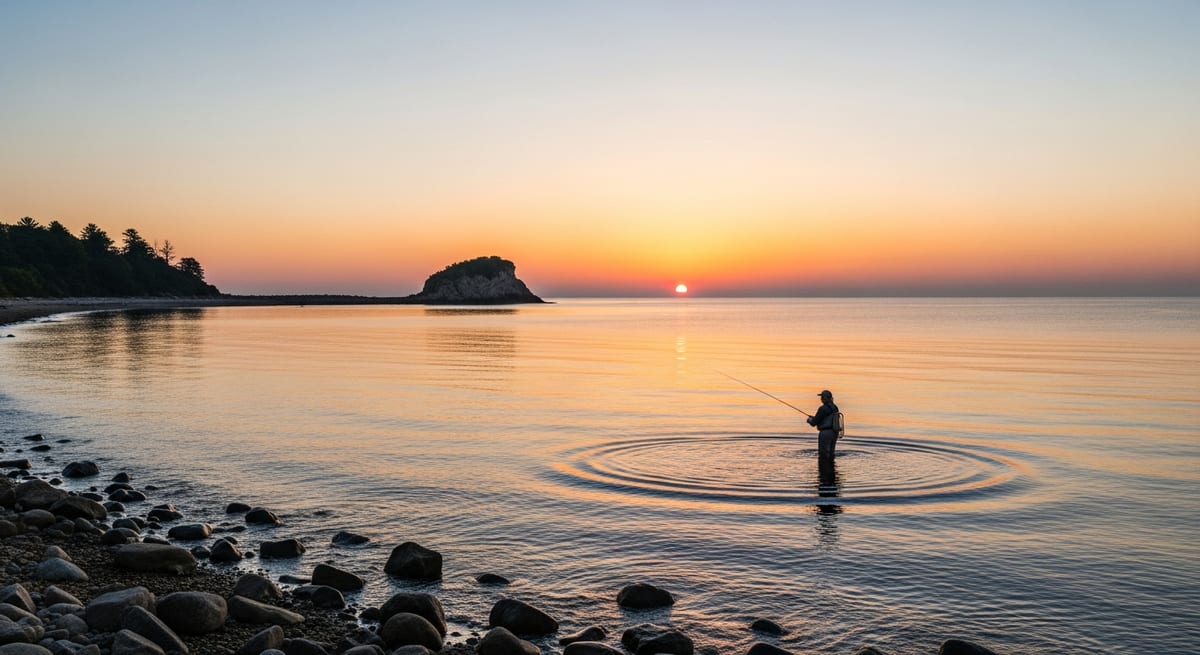
Fly anglers who fish the Niantic River mouth on an early June incoming tide routinely report stripers stacking within two rod-lengths of the grass edge, close enough that a full double-haul is sometimes excess. That compressed distance between fish and angler is what draws coastal fly casters to CT inshore water specifically, rather than making the longer run to the Cape or Montauk. The fish are accessible. What separates a productive session from a skunked one, tide window, line selection, the current DEEP slot limit, comes up in CT fly angling discussions far more often than rod weight or pattern color.
What CT Sound Fly Anglers Report About Rod, Reel, and Line
Rod weight: The 8-weight handles schoolies and mid-range fish in the 24 to 30-inch range without trouble, and many CT fly anglers start there. The 9-weight is what comes up most in Sound community discussions, primarily because CT's exposed coastline produces wind conditions that push an 8-weight toward its limits. Anglers who fish the open Sound and river mouth rips report the 9-weight's ability to push large Clousers into a headwind is its real advantage, not just fish-fighting capability. A 10-weight is used by anglers specifically targeting large fall fish at tidal rips and river mouths.
Reel: A large-arbor saltwater reel with a smooth, reliable drag matters when stripers make their initial run. CT fly anglers in guide reports and forum discussions consistently mention Tibor, Abel, Hatch, and Galvan at the premium tier for Sound work. The Redington Behemoth and Sage Spectrum come up as dependable mid-range options. The Redington Zero runs a lighter drag than the Behemoth; anglers who fish CT schoolie water consider it marginal for fish over 26 inches, and most community feedback suggests it is better suited to smaller, calmer-water applications than regular Sound striper work.
Fly line: CT inshore conditions point to three line choices based on depth and presentation:
- Intermediate sinking line (typically 1.5-2.5 inches per second sink rate): The most commonly cited line choice among CT inshore fly anglers. Keeps the fly at a consistent depth in the water column without dragging bottom in shallow water. Covers the 2 to 15-foot range that makes up most CT inshore fly water.
- Floating line: For surface presentations, poppers and waking flies at dawn and dusk, and for very shallow flats under 3 feet where even a slow sink rate digs bottom.
- Sinking tip or full-sink: Used in deeper tidal rips and river channels where getting the fly down before current sweeps it out of the strike zone is the priority.
Leader and bite tippet: A 6 to 9-foot leader of 15 to 20 lb monofilament or fluorocarbon covers most CT striper presentations. When bluefish are mixed in. A common summer scenario across the Sound, cT fly anglers use both wire bite tippet (30 to 40 lb) and heavy hard mono (60 to 80 lb), with the choice typically coming down to personal preference and how much the stiffer material affects fly action in that session. A short 6-inch bite guard at the terminal end, in either material, reduces cut-offs without significantly affecting most striper fly presentations.
Fly Patterns That CT Sound Communities Consistently Reach For
Clouser Minnow (size 1-1/0): The Clouser is the pattern that comes up most in CT saltwater fly fishing discussions, from wading guide reports to Sound tying forums. The community consensus on color runs to white/chartreuse, white/olive, and white/grey for most CT inshore conditions. The weighted eyes produce a jigging action on the pause that community members report draws follows into strikes during tidal transitions, when bass are holding but not actively chasing.
Deceiver (size 1-3/0): Anglers who fish CT conditions when bass are keyed on larger baitfish, small bunker, mullet moving along the beach, report the Lefty's Deceiver outproducing the Clouser in those windows. White, white/blue, and olive/white are the colorways that appear most in CT tying discussions. The long saddle hackle tail pushes a visible wake that reads clearly in low light.
Gurgler / Poppers: Community reports from anglers working CT flats at first light and last light describe surface takes as violent, sudden events, with fish pushing visible wakes across the shallows before committing. The window CT surface fly anglers report most consistently is the first 30 to 45 minutes of an incoming tide in low light, when bass push up from deeper staging areas onto the flats.
Sand eel imitations (size 2-4): When sand eels are dense along the CT coast in summer through early fall, anglers report that slender flies tied with craft fur or EP fiber in natural grey/olive produce where larger baitfish patterns draw refusals. The community indicator: bass rolling and following a standard Clouser without committing often signals a switch to a smaller, slimmer profile.
Crab patterns (for flats): Anglers who sight-fish the Niantic Bay back flats and similar shallow areas at high tide report that a tan or olive crab pattern drifted in front of a feeding or cruising fish draws confident strikes. The community consensus is that crab patterns work best when a specific fish is visible, blind-casting a crab in moving current produces fewer takes than presenting it directly in the path of a fish the angler can track.
Where CT Fly Anglers Wade, Launch, and Find Fish
Niantic Bay and Niantic River: The back bay behind Niantic Beach is among the most frequently mentioned CT locations in Sound fly fishing discussions. Anglers who fish the area regularly report working the grass edges on the first of the incoming tide, with the river mouth producing most consistently at dawn on the outgoing. The range from shore to fish is often compact enough that sight-casting to visible fish, rather than covering water blind, is a realistic approach in early-morning conditions.
Bluff Point (Groton): The rocky point at the end of the trail is among the most-cited dawn and dusk wading spots for CT fly anglers in public fishing reports. The mile walk from the parking area filters traffic. Anglers who fish Bluff Point on a falling tide report stripers staging behind and beside the rocks on the point's south face before moving off with the current, and the varied structure creates the holding habitat that concentrates fish across tide stages.
Harkness Memorial State Park (Waterford): Public shoreline access to Long Island Sound with rocky points that intercept tidal rips. Community reports from the June through September window consistently describe schoolie fly action as reliable during early-morning sessions. The open shore means wind affects presentations; anglers familiar with the area suggest assessing wind direction before committing to a casting position.
Stony Creek and Indian Neck (Branford): The protected back-bay areas around Branford hold bass through the season across a combination of grass edges, rocky shorelines, and tidal creek mouths. Fly anglers who fish this water describe low-tide flat wading as the most productive approach on foot. Kayak access expands the range of fishable structure considerably, and anglers who fish the area consistently recommend it for reaching back-bay shorelines that are inaccessible to waders.
Pawcatuck River mouth, license note: The Pawcatuck River forms the CT and RI state boundary. Wading sections near the river mouth where fly anglers report stacking schoolies on summer nights are typically on the Westerly, RI side of the state line, requiring a Rhode Island recreational saltwater fishing license rather than a Connecticut one. CT anglers heading to the Pawcatuck mouth should confirm which bank they are fishing from before setting up. The sandbar and channel edges near the mouth are the areas CT fly fishing communities describe for July through August night fishing with Clousers on intermediate lines.
Kayak access: Fly anglers who paddle the CT back bays and tidal marshes consistently describe a kayak as the largest single upgrade to accessible fly water in the Sound system. Anglers who fish the Niantic and Housatonic back systems from kayaks report that an anchored position on a tidal flat, set before sunrise, dramatically increases the quality of early-morning sight-casting to fish that waders and shore anglers simply cannot reach.
What the CT Fly Community Reports About the Strip-Set, Haul, and Retrieve
The strip-set: CT saltwater fly anglers who came to the game from conventional fishing backgrounds consistently report the strip-set as the adjustment that costs them the most fish early on. The instinct to lift the rod tip at a take. The standard set in conventional fishing, bows the rod and often fails to drive the hook into a hard-mouthed striper. The set that CT fly communities describe: a firm, immediate pull with the line hand while keeping the rod angle low, driving the hook with direct line pressure rather than rod leverage. The rod lifts only after the strip-set is complete and the fish is running.
Distance and the double haul: Fly anglers who fish CT's more exposed Sound shoreline regularly report that making the cast when wind is up is the limiting factor of a session, and that the double haul is the technique that determines functional range. Adding a line-hand haul on both the back cast and forward cast generates the line speed for consistent 60 to 80-foot casts with heavy saltwater flies in conditions where an unassisted forward cast falls short. Community members who fish the Sound suggest pre-season practice on open grass with the actual saltwater setup, not a trout rod on a pond, makes the haul automatic before the first tide of the year.
Retrieve: The strip-pause is the baseline retrieve that Sound fly anglers report works across most CT striper situations: 12 to 18-inch strips with brief pauses that let the fly drop slightly and the bucktail breathe between movements. Community experience is that retrieve speed and pause length should be varied early in each session rather than defaulted to the last session's answer. During active feeding near the surface, CT fly anglers consistently report that a fast, steady strip with minimal pause draws more committed takes than the standard strip-pause.
Reading conditions: Anglers who regularly fly fish the CT coast report that stripers visibly feeding on the surface on a calm, incoming morning are the most approachable fly targets on the Sound. The practice that CT fly communities describe is casting to the edges of a blitz rather than into the center. Fish holding on the perimeter of feeding activity are less pressured and more likely to commit. On days with no surface activity, community reports suggest blind-casting to structure, rock edges, dock pilings, creek mouths, with an intermediate line as the most reliable method for locating fish, particularly on unfamiliar water.
CT DEEP Striper Regulations: What Every Sound Fly Angler Should Verify
Per the CT DEEP Marine Fisheries Division, Connecticut recreational striped bass regulations follow ASMFC coastal framework guidelines, which have been revised meaningfully over the past several seasons. The current regulatory structure CT fly anglers should confirm before fishing: a minimum size threshold (the 28-inch floor that has governed recent seasons), a one-fish daily bag limit, and a defined open season window. Check the current slot limit's upper bound and season dates against the published CT DEEP Marine Fisheries Guide each year, as the framework has been adjusted annually in recent seasons.
The 28-inch minimum means the majority of schoolie-class fish typically encountered on CT shallow flats. Fish in the 18 to 24-inch range that make up the bulk of Sound fly angler catches, are not legal to keep under current regulations. Community discussions across CT saltwater fishing forums reflect a strong release ethic for fly-caught schoolies regardless of size, consistent with the conservation framework the regulations are designed to support.
CT anglers fishing water near the RI border, including the Pawcatuck River mouth, should carry both CT and RI Marine Fisheries regulation summaries, as state rules may differ and the physical boundary is the center of the river channel. Confirmed regulation source: CT DEEP Marine Fisheries Division at marinefisheries.ct.gov, updated each calendar year. Verify the current slot limit, open season dates, and any gear restrictions against the published guide before fishing each season.
EVERY SATURDAY MORNING
Weekly fishing intelligence
Nationwide conditions, what's biting, and honest gear deals. One email, no noise.
No spam. Unsubscribe anytime.