
Fly Fishing CT Tidal Water for Stripers and Blues. The Window Is Shorter Than the Season.
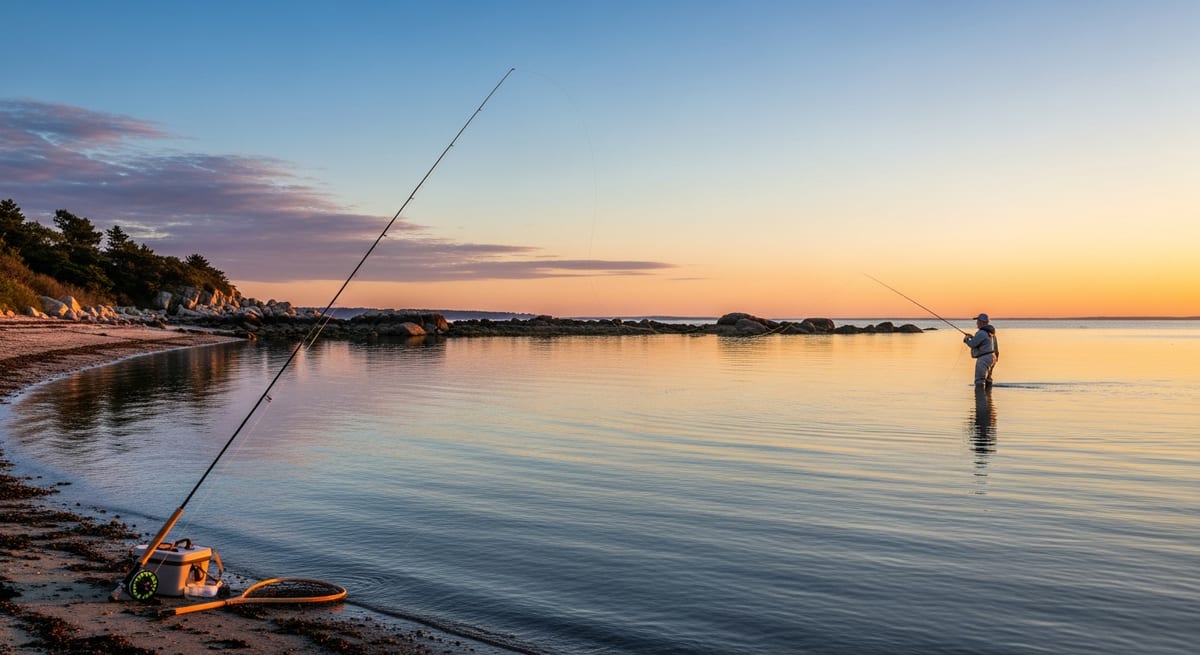
Anglers fishing the Housatonic mouth in Milford and Stratford describe a consistent pattern: the last two hours of an outgoing tide concentrates stripers and bluefish in current seams within casting range of the bank. No boat. Just moving water and fish feeding in predictable spots. The productive fly fishing window in most years runs late May through September. The "April through November" range cited in most guides overstates what CT tidal water actually delivers on the fly consistently. Connecticut's tidal rivers and estuaries have produced serious saltwater fly fishing for decades, but anglers who fish it regularly describe the pursuit less as a long season and more as a series of tide windows and water temperature triggers. CT DEEP's current marine regulations, including the striped bass slot limit that's been in effect through the 2024-2025 season, shape how that window plays out on the water.
Gear That Holds Up in Salt
Salt is hard on equipment. Fly gear for CT tidal water needs to handle corrosive conditions, heavier flies, and longer casts into coastal wind, but the right setup is well-established among anglers who've worked through it.
Rod: A 9-foot 9-weight is where most CT saltwater fly anglers settle after a few seasons. It handles smaller stripers and snappers without being overgunned, and has enough backbone for bluefish and larger bass in current. Salt-rated rods have sealed reel seats and corrosion-resistant hardware, worth confirming before you buy.
Reel: Smooth, reliable drag matters more than maximum stopping power. Stripers and bluefish run hard and fast. Many CT fly casters load 150-200 yards of 30 lb Dacron backing as a working starting point, though the right amount varies with the water and the fish. Rinse the reel with fresh water after every saltwater outing. Anglers who skip this on a "quick trip" tend to replace drags earlier than they'd like.
Line: An intermediate sinking line is the most widely used choice among CT saltwater fly casters. It sinks slowly, roughly 1-2 inches per second, and keeps the fly in the target zone below surface turbulence without snagging bottom in the shallow estuary water where most of the state's accessible fly fishing happens. Full floating lines work for surface poppers and crease flies. For deeper channels and stronger current, a fast-sinking shooting head in the 300-400 grain range can reach fish that an intermediate line won't. The right grain weight depends on current speed and depth, and input from a local fly shop familiar with CT tidal water is worth getting on that specific call.
Leader and tippet: A 7-9 ft tapered saltwater leader in 16-20 lb tippet handles most striper fishing. For bluefish, a 6-8 inch bite tippet of 40-60 lb fluorocarbon or heavy mono is standard practice among CT saltwater fly anglers. Bluefish will sever lighter tippet on the first strike.
What CT Stripers and Blues Are Actually Eating
Fly selection in CT tidal water is as much a seasonal question as a pattern question. The fish shift what they're keyed on from spring through fall, and anglers fishing the same estuaries report starkly different results depending on when they arrive.
Clouser Minnow: The Clouser's weighted eyes sink the fly quickly; the bucktail and flash profile imitates a wide range of baitfish. CT fly casters consistently carry white/chartreuse, white/olive, and all-white in sizes 1/0 and 2/0 as their baseline. Strip-pause-strip retrieves are the standard approach, and the consensus among CT saltwater fly anglers is that the Clouser holds up across a wider range of conditions than any other pattern in the bag.
Deceivers: Lefty Kreh's Deceiver moves water and pulses with life in the 3-5 inch range. Most productive when bass are keyed on larger baitfish. The Housatonic and Connecticut River tidal reaches both see herring runs in spring that shift what the fish want, and larger-profile patterns match better in those windows.
Crease flies and poppers: Surface poppers produce visible, explosive strikes when bass are actively working bait near the surface. Crease flies, foam-bodied, flat-sided patterns, are particularly effective during surface feeds in low-light conditions. The hookup rate on top-water is lower than subsurface presentations, but anglers fishing CT estuaries describe it as a different category of experience when it comes together.
Big baitfish patterns: When adult menhaden, bunker in the 8-12 inch range, show up along the CT coast in late summer, many anglers report that standard-sized flies get ignored entirely. Large hollow fleye patterns in white/gray/brown profiles in the 6-8 inch range match the prey in those conditions. Casting them comfortably requires a 10-weight setup; the results when bass are locked on big bunker can be proportional.
Where CT Fly Anglers Focus, and Which Tides Actually Produce
The most consistent saltwater fly fishing in Connecticut happens on moving water. Experienced fly casters in the state describe a fairly reliable tidal playbook: the hour before and the two hours into a tide change, incoming or outgoing, concentrates fish in predictable current seams and ambush points. Slack tide is consistently slow.
Tidal rivers: The lower Connecticut River, from the Old Saybrook and Essex area through the upper tidal reach, holds stripers in current seams and eddies in spring and early summer. The Housatonic in Milford and Stratford is among the most consistently cited tidal fly fishing areas in CT, with accessible bank fishing at the mouth and fish pushing through on both tides. The Thames at New London draws stripers and bluefish through summer.
Estuaries and bays: Niantic Bay, Clinton Harbor, and the Westbrook tidal creeks offer shallow, wadeable water that concentrates fish during tidal movement. Anglers fishing these back-bay areas through summer report both stripers and blues working bait near the edges, particularly during early morning outgoing tides.
Rocky shoreline and jetties: The jetties at the Housatonic mouth, Hammonasset Point, and the East Haven shoreline are accessible shore fly casting locations over structure that holds fish at low light. First light and last light are the windows CT fly anglers fishing these spots describe as consistently most productive.
CT DEEP Regulations: Check CT DEEP's current Marine Fisheries regulations before fishing. Under current CT regulations, striped bass in CT marine waters carry a one-fish bag limit with a slot limit. Fish must fall within a defined size range to retain; undersized and oversized fish are catch-and-release. Bluefish carry a three-fish daily bag limit under current ASMFC guidelines.
Slot windows and size minimums have shifted in recent years and vary by waterbody type; the CT DEEP Marine Fisheries bulletin is the authoritative source for the current season. Anglers on CT fishing forums consistently flag that the slot limit catches people off guard. A 36-inch striper has to go back.
Reading the Retrieve, what the Fish Tell You
Tidal water fly fishing rewards attention to the fly more than almost any other variable. CT fly casters who work the rivers and estuaries regularly describe the same two observations: vary the strip cadence until the fish respond, and don't strike until you feel weight.
Strip cadence: After the cast, count the fly down to the target depth, on an intermediate line, roughly two seconds per foot of depth in moderate current, then begin the retrieve. Short, quick strips of 6-8 inches imitate a fleeing baitfish. Longer strips of 12-18 inches with a deliberate pause imitate something wounded. Experienced anglers fishing CT tidal water report that strikes tend to come on the pause, not the strip itself.
Watching the fly: When water clarity allows, following the fly visually changes the dynamic. A striper tracking a fly typically appears as a dark shadow or a wake behind the pattern before it commits. The common error anglers describe, striking at the visual, pulls the fly away before the fish has taken it. Wait for the weight.
Night fishing for larger bass: Some of the most consistent reports of larger stripers in CT tidal water come after dark. Bass that hold in deeper water or avoid open structure during the day move shallow under cover of darkness. Anglers fishing CT tidal rivers at night describe using large, dark patterns, black Deceivers, all-black Clousers, worked slowly near structure with deliberate retrieves. The larger fish are typically nocturnal in the warmer months, and anglers targeting size specifically tend to shift their sessions accordingly.
The CT Fly Fishers Association and several Trout Unlimited chapters with active saltwater programs are among the most reliable sources of current tidal fly fishing reports in the state. Their member forums and outing reports track what's working on specific CT rivers and estuaries through the season, worth following before you plan a session.
EVERY SATURDAY MORNING
Weekly fishing intelligence
Nationwide conditions, what's biting, and honest gear deals. One email, no noise.
No spam. Unsubscribe anytime.