
Most New CT Anglers Head for Salt First. The Regulars Who Stayed With It Usually Started on Fresh Water.
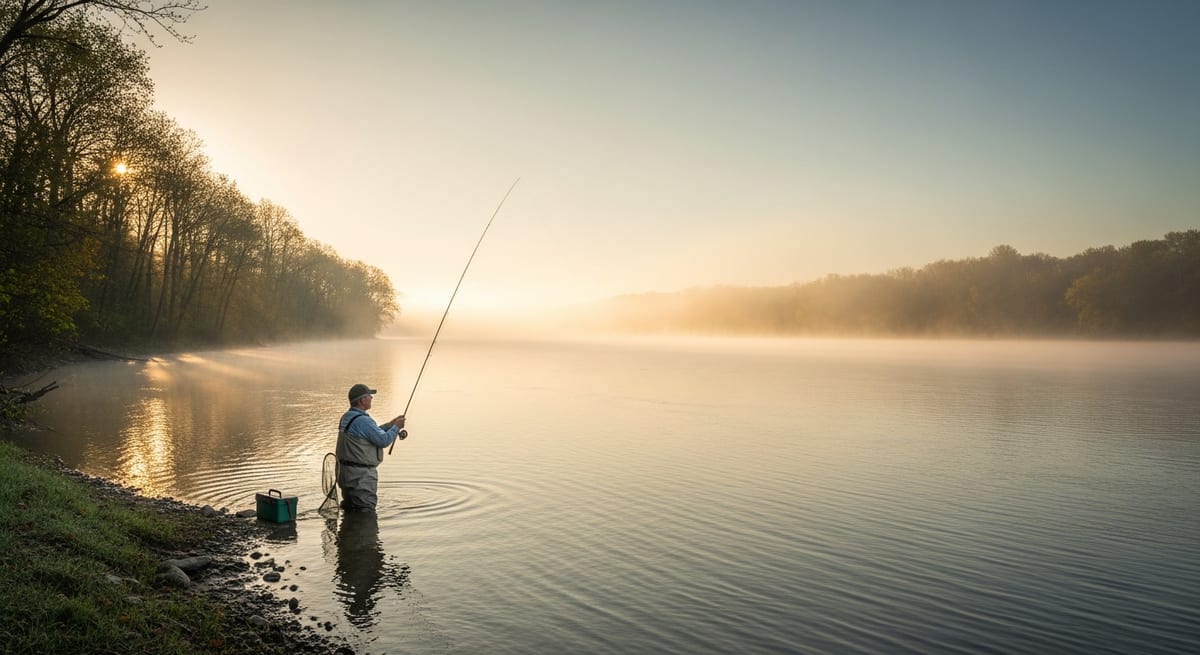
Connecticut issues free saltwater registrations, no annual fee, no stamp required, while freshwater licenses require both a base license and a separate Trout and Salmon Stamp for stocked rivers. Yet the consensus among CT anglers who fish both runs consistently in the same direction: start on fresh water first. That's not a knock on salt fishing. The Sound holds legitimate striped bass from May through November, and the river-mouth access at Old Saybrook and Groton produces fish when the tide is right. But the learning curve on salt is steeper, species windows are narrower, tidal timing matters more, and the gear demands are higher. The fundamentals you'd build on the Farmington or at Candlewood translate directly to the Sound. The reverse is harder. What follows covers how CT's two fisheries actually differ, from paperwork to gear to where you're physically going to fish.
The Paperwork: Why Salt Is Free and Fresh Costs More
Freshwater requires a paid CT fishing license, check ct.gov/deep for current pricing, as fees change from year to year. A separate Trout and Salmon Stamp is required on top of the base license to target trout and salmon specifically. Both are available online through CT DEEP or at major sporting goods retailers. Regulations cover size limits, bag limits, and season windows by species and water body.
Saltwater requires a Connecticut Saltwater Angler Registration (CSAR). It's free, obtained online through CT DEEP, and covers most inshore species from shore. Striped bass carry the strictest rules: size and bag limits are set coastwide by the Atlantic States Marine Fisheries Commission (ASMFC) and adjusted based on stock assessments, limits have shifted multiple times in recent seasons. Bluefish, fluke, tautog, and scup all have their own season windows and size limits published in the annual DEEP Marine Fisheries Bulletin.
The counterintuitive reality: saltwater is cheaper to start on paper. The tradeoff is that marine regulations are more complex and change more frequently than freshwater regs. CT anglers who fish the Sound seriously check the DEEP Fisheries Bulletin each spring before the May opener rather than assuming last year's limits still apply.
Gear: One Setup or Two
Freshwater setups run lighter. A 6.5-7 foot medium-light spinning rod paired with a 2500-series reel, 10 lb braid, and an 8 lb fluorocarbon leader handles most CT freshwater situations, stocked trout on the Farmington, bass on Candlewood or Bantam Lake, panfish at any accessible town pond. Anglers at CT bass club threads and trout forums consistently name Ugly Stik and Shimano Sienna combos as the entry-level setups with the best durability-to-price ratio. Outfits in this class typically run $100-$175 at major retailers, though prices shift seasonally.
Saltwater setups run heavier and require corrosion resistance. A 7-9 foot medium-heavy spinning rod with a 3000-4000 series saltwater-rated reel handles most shoreline applications, jetties, state park beaches, river mouths. Line is typically 20-30 lb braid with a fluorocarbon leader; bluefish cut through lighter material aggressively, and regulars fishing the Sound run 50 lb leader when blues are actively feeding. Dedicated shoreline salt combos in this class typically start around $150-$300, with quality at the upper end.
Rinsing saltwater gear with fresh water after every session isn't optional. It's what separates a reel that lasts a decade from one that corrodes by year two.
The crossover reality: A freshwater medium-heavy bass outfit (7 ft medium-heavy, 3000 reel) handles light saltwater applications, smaller stripers and blues from shore. CT anglers testing the Sound before committing to a second setup frequently fish what they already own. Not ideal, but workable enough to learn on before investing in dedicated salt gear.
Where You're Actually Going to Fish in Connecticut
Freshwater access is genuinely deep across the state. CT DEEP maintains stocked rivers, hundreds of public boat launches, and access agreements on private land. The Farmington River's Trophy Trout section in New Hartford and the Housatonic's catch-and-release corridor near Cornwall are the most-fished public trout water in Connecticut. Both show up consistently in DEEP creel reports as high-productivity public fisheries. The Salmon River in Colchester is a strong fall option, particularly during the brown trout run. For bass and panfish: Candlewood Lake, Bantam Lake, and Shenipsit Lake all have public launches and populations that CT bass anglers return to year-round.
The annual DEEP stocking report lists exact stocking dates and locations by town and river section. CT trout anglers who've been at it a season develop the habit of checking it before heading out rather than arriving and hoping.
Saltwater access is tighter, but what exists produces. A large portion of CT's coastline is private, which means access clusters around state parks and DEEP-managed shore points. Hammonasset Beach State Park, Rocky Neck, Bluff Point, and the jetties around New Haven and Groton are the spots CT shore anglers return to consistently. Regulars fishing the Sound cite the river mouths, connecticut River at Old Saybrook, Thames River at New London, as the locations that hold striped bass during tidal transitions, particularly in June and September.
Seasonality shapes the choice: Freshwater runs year-round, including a legitimate ice fishing season on Candlewood and Shenipsit. Saltwater is effectively May through November for most species, with tautog available into December on rocky structure. CT anglers who fish both environments tend to run the Farmington in spring and fall, chase stripers on the Sound through the summer and fall peak, and return to ice once the season locks in.
Which to Build On First
Start freshwater if you're within driving distance of a stocked river or a bass pond, which covers most of CT. Panfish and stocked trout are the most forgiving species a new angler can learn on. They're abundant enough to provide consistent action, catchable on simple setups, and the mistakes you make on them don't carry the consequence they do when a striper runs your line around a jetty rock.
CT guides and club regulars who work with new anglers consistently describe the same progression: panfish first to build hookset timing, trout on moving water to understand current and presentation, then bass to learn structure and retrieve variation. By the time anglers who follow that path get to salt, they're not starting from zero.
Start saltwater if you live near the coast, you're specifically drawn to striped bass or bluefish, or you're prepared to invest real time in understanding tidal timing and species-specific windows before consistent action arrives. The learning curve is steeper, shore striper fishing rewards anglers who read water and show up at the right tidal stage, but the species and setting are hard to match anywhere in the Northeast.
The sequence most CT anglers who stay with the sport get right: fresh water through the first season, salt starting in spring of the second. By then the fundamentals are solid enough that the additional complexity of the Sound adds to what you know rather than overwhelming it. Connecticut is one of the few states where both fisheries are legitimate and accessible within the same hour's drive. Most anglers who stick with it fish both eventually. The question is which to build on first, and on that, the regulars are consistent.
EVERY SATURDAY MORNING
Weekly fishing intelligence
Nationwide conditions, what's biting, and honest gear deals. One email, no noise.
No spam. Unsubscribe anytime.