
How to Read Water and Find Fish: The Skill That Separates Good Anglers from Great Ones
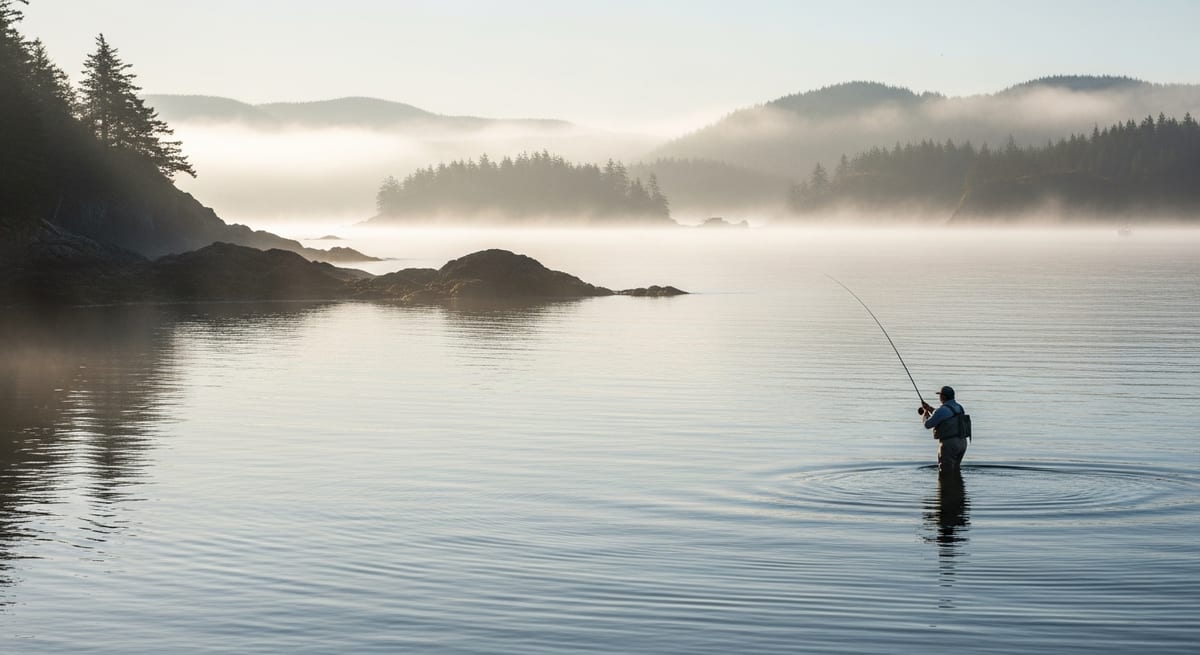
Every body of water holds fish, but fish aren't distributed randomly. They use specific habitats for specific reasons: cover for ambush predators, current breaks for energy conservation, temperature refuges in summer heat, depth for safety. The angler who understands why fish are where they are, not just where they happen to be today, is the angler who catches fish consistently. Here's how to develop that eye.
The Core Principle: Fish Are Where the Food Is (and Where It's Safe)
Fish make a constant tradeoff between two things: access to food and safety from predators. The best fishing spots satisfy both: a position where a predatory fish can easily intercept prey while remaining protected from its own predators (larger fish, ospreys, herons, anglers).
Structure is the physical element that creates this tradeoff point. Structure can be:
- Changes in depth (drop-offs, ledges, shoals)
- Physical objects (rocks, logs, docks, bridges, weeds)
- Current seams (where fast water meets slow water)
- Temperature or oxygen transitions in the water column
Fish use structure because it concentrates prey. Baitfish, crayfish, and insects all relate to structure. Where baitfish concentrate, predatory fish follow. The angler's job is to identify the structure, infer where fish are positioned relative to it, and present a lure or bait to that exact position.
The secondary principle: fish conserve energy. A largemouth bass sitting in heavy current expends enormous energy just staying in position. A bass positioned behind a boulder, letting the rock break the current, expends almost none. The ideal position lets a fish hold with minimal effort, then make short explosive movements to intercept prey. This is the position to target.
Reading Freshwater Lakes and Reservoirs
Points: A point is where land extends into the water. Underwater, points taper into depth, from shallow near shore to deep at the tip. Points are travel corridors for bass moving between shallow feeding areas and deep holding water. Fish the transition zone where the point breaks from 8 feet to 15+ feet. In spring, fish the shallow face of points where bass stage pre-spawn. In summer, fish deeper off the tip.
Drop-offs and ledges: Anywhere the bottom transitions sharply from shallow to deep is a holding area for bass, walleye, and stripers. From a boat with sonar, identify the exact depth break and fish parallel to it. Fish rarely sit directly on the ledge. They use it as a reference point and suspend slightly above or below. From shore, cast past the ledge and retrieve back through the break.
Coves and bays: Shallow coves warm fastest in spring, drawing bass into pre-spawn staging. In summer, coves with vegetation hold bass during morning hours when they feed in the shallows. The mouth of a cove (where it opens to the main lake) is a natural concentration point. Fish funnel through this bottleneck.
Vegetation: Aquatic weeds are both habitat and hunting grounds. Largemouth bass use vegetation for ambush cover throughout the growing season. The productive zone is the weed edge, not inside the weeds, but along the outside edge where clean water meets the vegetation. Bass position here to ambush baitfish that move along the weed wall. Fish parallel to the edge with lures that run just at the weed top (swimbaits, spinnerbaits, shallow crankbaits).
Docks and boat houses: Shaded, structured, and often over deeper water, docks check every box for bass cover. The shade provides refuge from bright midday sun. The pilings create structure. Large docks with deeper water under them hold fish year-round. Fish the back of a dock (furthest from open water) for the resident fish, and the front edge for transitional fish.
Submerged structure on reservoirs: Connecticut's reservoirs cover old river valleys, farms, and forests. Old stone walls, building foundations, road crossings, and hedgerows sit on the bottom. When you find one on sonar, mark it. This structure holds fish unlike anything else in the lake because it's rare, it provides complex habitat, and few other anglers know it's there.
Reading Rivers and Streams
Moving water has its own logic. Fish in rivers face current constantly. They use structure to create low-energy holding positions with immediate access to the food carried by the current.
Current seams: Where fast water meets slow water is a seam, visible as a rippled line on the surface. Current seams are where the greatest amount of food drifts and where fish can hold without fighting current. A trout holding just inside the seam faces into the current, eating everything that passes. Cast your fly or lure above the seam and drift it naturally through it.
Eddies: Behind any obstruction, boulder, bridge piling, log, bend in the bank. An eddy forms where water circles back upstream. Eddies are food traps. Dead insects, drifting nymphs, and disoriented baitfish collect in eddies. Fish position here to pick up food with minimal effort. The eddy below a boulder is the first place to cast in any river stretch.
Pools: Deep, slow sections of river where current slows and water deepens. Pools hold trout and bass in summer as the deeper water maintains cooler temperatures. Fish hold in the head of the pool (where fast water enters), along the sides where depth and current meet, and in the tail of the pool where water speeds back up. Each position holds different fish, smaller fish in shallower tail sections, larger fish in the deep main pool.
Riffles and runs: Shallow, fast water over gravel and rock. Trout feed actively in riffles during insect hatches. The broken water provides camouflage and the current delivers food quickly. Nymphing through riffles is often more productive than fishing pools during non-hatch periods. Riffles also hold smallmouth bass and other species.
Undercut banks: Banks where current has eroded the soil below the waterline, creating a cave-like overhang. Fish hold under undercut banks for shade, protection from aerial predators, and ambush position. A large brown trout under an undercut bank is nearly uncatchable by conventional casting. It requires drifting a fly or worm beneath the overhang with precise presentation.
Bridge pilings: In rivers, bridge pilings create current breaks downstream. Bass and catfish position behind pilings in the eddy zone, picking off anything drifting by. Cast slightly upstream of the piling and drift your presentation into the downstream eddy. Bridge pilings also hold fish on tidal rivers, particularly at tide changes when current reverses.
Reading Saltwater Coastal Environments
Saltwater fishing adds the dimension of tide, which fundamentally changes which structure is productive at any given time.
Rocky points and jetties: Points in saltwater function like freshwater points, but tidal current makes them dramatically more productive. As the tide runs past a rocky point, baitfish and crustaceans get swept along. Striped bass, bluefish, and weakfish position off the down-current side of the point, intercepting food carried by the current. Fishing a rocky point on an outgoing tide often means casting up-current and letting your presentation sweep through the strike zone.
Inlets and river mouths: Where rivers and tidal channels empty into the Sound are concentration points. Baitfish pour out with the outgoing current; stripers position at the mouth to intercept them. Some of Connecticut's most reliable striper fishing is at the mouths of the Connecticut River, Housatonic River, Thames River, and numerous tidal creeks during the outgoing tide. Learn the tidal timing for your local inlet and be there on the drop.
Current seams on the Sound: Even in open water, tidal current creates seams where water of different velocities meets. Seams are visible on calm days as rips, choppy, disturbed water where fast current meets slower water. Bluefish and stripers work these rips, driving baitfish against the seam and feeding on the disoriented fish. If you see a rip from a boat, fish it immediately.
Sandy beach structure: Sandy beaches look featureless but have irregular bottom topography, bars, troughs, and cuts. Troughs run parallel to the beach and hold water at low tide; fish the edge of troughs as baitfish concentrate there. Cuts are gaps in sand bars where tidal water flows, creating natural channels that bass use as travel routes. The most reliable surf fishing location on any beach is where you see a trough, cut, or point in the shoreline.
Using Technology to Read Water
Sonar fish finders: Modern fish finders show bottom composition (hard vs. soft), depth contours, and fish marks in real time. Learning to interpret sonar, distinguishing bait schools from gamefish marks, identifying bottom transitions, reading suspended fish depth, is a significant skill upgrade. Start by learning to identify structure (drop-offs, humps, submerged objects) before trying to interpret fish signals.
Contour maps and apps: Most CT lakes have publicly available bathymetric maps (depth contour maps) through CT DEEP and through apps like Navionics and Fishidy. Study these before fishing a new lake, identify the deep holes, the submerged points, the channel edges. The best spots on any lake are often obvious on a contour map, and having that information before you arrive saves hours of exploration.
Google Earth and satellite imagery: Aerial imagery shows what's underwater in clear, shallow water. Submerged rocks, weed patches, and channel edges are often visible from above. Check satellite imagery of CT reservoirs and tidal flats before fishing. The information is free and surprisingly useful.
Water color and clarity: Turbid (murky) water after rain concentrates fish along edges and forces them shallower. They can't hunt effectively in the dark water away from structure. Clear water pushes fish to shadows and structure for security. Matching your presentation to water clarity (bright colors in murky water, natural colors in clear water) and understanding how clarity affects fish location is part of reading the conditions.
Developing the Eye: A Practical Approach
Reading water is a skill that develops over years, but there's a way to accelerate it. The anglers who learn to read water fastest are the ones who actively think about structure every time they're on the water, regardless of whether they're fishing.
The pre-fish walk: Before fishing a new location, spend 10 minutes walking the bank and studying the water. Where does it deepen? Where is there cover? Where does current change? What are the bird activity patterns (herons and kingfishers tell you where the shallow fish are; ospreys tell you where baitfish are in open water)?
The observation cast: When you find a productive location. A spot that consistently produces fish, spend time understanding why. What structure is present? What's the depth? What direction is the fish-holding current? Building a mental model of why this spot works helps you identify similar spots you've never fished.
Keep a log: A simple fishing log, location, conditions, what worked, what didn't, and a sketch of the structure where you caught fish, builds a searchable library of reading-water knowledge over time. Reviewing past logs before fishing a new location often reveals patterns you didn't notice in real time.
Fish with better anglers: One afternoon on the water with an experienced angler who explains why they're casting where they're casting is worth a year of solo experimentation. Local fishing clubs, guided trips, and youth mentorship programs in Connecticut all provide this opportunity.
EVERY SATURDAY MORNING
Weekly fishing intelligence
Nationwide conditions, what's biting, and honest gear deals. One email, no noise.
No spam. Unsubscribe anytime.