
Kayak Fishing in Connecticut: How to Get Started on CT Waters
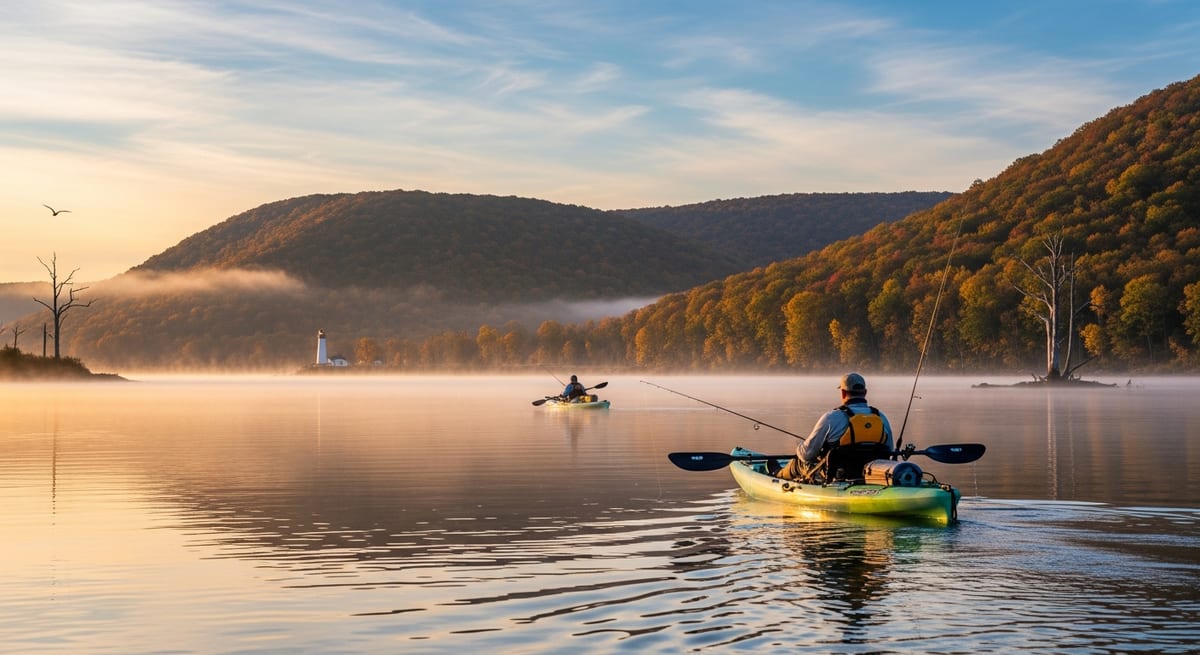
A falling tide at the mouth of the Hammonasset River in June will push stripers onto eelgrass flats that shore anglers can't reach and trailered boats won't risk. The kayak angler working those edges at first light has that water entirely to themselves. CT's shallow coves, backwater estuaries, and small pond systems that are too tight for a boat become completely fishable from a kayak. You can back into a corner of a bass pond that nobody's touched in years, or run a striper flat at dawn without another angler in sight. And you can do all of it for the cost of a mid-range rod and reel combo.
Choosing a Kayak for CT Waters
Where you fish in CT shapes every equipment decision. There's a real difference between a July morning on a Litchfield County pond and a June sunrise drift along the Hammonasset shoreline, different water, different conditions, different kayak.
Sit-on-top fishing kayaks (the CT angler's go-to): Stable, self-draining, and rigged for fishing out of the box with rod holders and gear tracks. Easy to get on and off when you want to wade a flat. Handles bass ponds, tidal estuaries, and Sound inshore fishing without much compromise. Popular models: Old Town Topwater 106, Wilderness Systems Recon 120, Pelican Catch 110 HDP. Budget $600-$1,200 for something that won't frustrate you.
Sit-inside kayaks: More efficient for covering open water and warmer during the shoulder seasons when you're enclosed. Less practical for fishing, gear access is limited and getting in and out is awkward when you want to wade a cove. Better suited to river runs or anglers who prioritize the paddle over the fishing.
Pedal-drive kayaks (hands-free fishing): Foot pedals move the kayak while your hands stay on the rod. Excellent for trolling and for working grass edges without constantly juggling a paddle and a cast. More expensive ($1,200-$2,500+) and heavier. Old Town Sportsman Autopilot and Hobie Mirage Compass are the two most common CT setups. Worth serious consideration if Long Island Sound or a large lake like Candlewood is your primary water.
Inflatable kayaks: Brands like Aquaglide and Sea Eagle have made this a legitimate option, easier to store and transport if you don't have a rack. Not as rigid or durable as hard-shell. Fine for calm freshwater ponds; skip them for the Sound.
Essential Kayak Fishing Gear
Safety (the stuff you don't skip):
- PFD, cT law requires one aboard per person; most experienced kayak anglers wear it rather than stow it, especially in cold water where capsizes happen fast
- Whistle or signaling device, required
- White light for early morning or low-visibility runs
- Leash on your paddle. You'll be glad you have it the first time you grab a fish
Navigation:
- Phone with GPS in a waterproof case, fine for freshwater and sheltered estuaries
- Handheld VHF radio for Sound fishing, lets you monitor Channel 16 for distress and hailing, and communicate with Coast Guard or nearby vessels if conditions change
Rigging:
- Rod holders (flush-mount or RAM mount). Most fishing kayaks include 2-4; add more if you troll
- Gear track (RAM or Yakima compatible) for mounting accessories
- Anchor trolley system, cheap ($20-$40) and one of the most useful upgrades on the water; lets you reposition the anchor point bow, midship, or stern depending on current and wind
- Fish ruler taped to the deck
- Paddle leash
Storage:
- Milk crate or gear crate behind the seat for tackle and tools
- Dry bag for phone, keys, and wallet
- Small cooler or insulated fish bag, especially important in CT summer heat
Where to Launch in Connecticut
Freshwater: Most CT state boat launches are open to kayaks. The CT DEEP boat launch directory lists them by region. Bantam Lake, Lake Zoar, Candlewood Lake, and most of CT's larger lakes have accessible ramps or car-top launch spots. Smaller ponds often have road-accessible banks where you can hand-carry a kayak without a fee. For Saugatuck Reservoir, check current access policies with the Aquarion Water Company before heading out, access rules for that watershed have shifted over the years.
Saltwater / Long Island Sound:
- Hammonasset Beach State Park (Madison): Good access to the Hammonasset River estuary, tidal channels, eelgrass flats, and sheltered coves. Striper fishing typically picks up in May and holds through early fall; the falling tide around the river mouth and adjacent cove edges tend to produce best, especially early morning before the beach crowds arrive.
- Rocky Neck State Park (East Lyme): Saltwater launch with access to Niantic Bay and surrounding structure. Reliable for scup and fluke through summer and stripers into the fall run.
- Selden Island / Hamburg Cove (CT River): One of the most underused kayak spots in the state. Freshwater and brackish bass, yellow perch, and stripers push well upriver in spring and fall.
- Clinton Town Boat Launch: Quick access to Clinton Harbor, Hammonasset tidal flats, and nearshore Sound water.
- Stonington Borough: Eastern CT launch with excellent striper and scup water in season.
Tidal rivers (the kayak's home turf): The Niantic River, Mystic River, Saugatuck River, and the lower tidal sections of the Housatonic and Connecticut rivers are ideal kayak water, sheltered from Sound chop, full of structure, and loaded with estuarine species. Striper, bluefish, weakfish, and fluke all push into these systems on the incoming tide. The upper tidal limits often hold largemouth bass alongside the saltwater mix.
Fishing from a Kayak: Practical Tips
Rod management: Keep rods in holders whenever you're paddling. A rod laid across the deck or dragging in the water means broken tips, tangled line, or lost gear. Flush-mount holders behind the seat handle vertical storage on the move. A forward-facing holder on the gear track lets you run a trolling lure while you paddle without thinking about it.
Rigging for CT eelgrass and shallow water: A lot of CT's best kayak water. The Hammonasset estuary, Niantic River flats, Bantam Lake's weed edges, is shallow and clear. In gin-clear water, drop your leader weight: 12-15 lb fluorocarbon will outfish heavier mono when stripers or bass can see your presentation up close. Weedless rigs (Texas-rigged soft plastics, weedless poppers, single-hook swimbaits) cut down the hang-ups and let you work the grass edges where the fish actually are.
Anchor vs anchor trolley: The anchor trolley lets you reposition the anchor attachment point anywhere along the kayak, bow into wind, midship for a side presentation, stern for fishing downstream in current. A 3-5 lb folding grapnel anchor on 30 feet of line is all you need for CT freshwater and shallow inshore saltwater. You'll use it more than you expect.
Casting and landing: Short, accurate casts beat long ones when you're fishing 18 inches above the water. You're already close to your target. A 6.5-7 foot rod handles the tight quarters of a kayak cockpit better than a 7.5-footer. For bass and smaller fish, lip-land from the seat without drama. For bigger stripers or fluke, clip a small landing net to the crate, don't lean hard over the rail when a fish surges at the wrong moment.
Trolling: One of the biggest advantages of a kayak on CT saltwater is trolling at natural paddling speed. Clip a diving plug (Bomber Long A, Yo-Zuri Crystal Minnow, Mann's Stretch) into a forward rod holder and work parallel to shoreline structure or along a grass edge. Paddling speed, typically 2-3 mph, is right in the zone for most of these lures. Stripers, bluefish, and weakfish all fall to this approach in the Sound and tidal rivers.
Saltwater Kayak Safety on Long Island Sound
The Sound is not a pond, and it doesn't forgive mistakes the same way. A kayak angler in trouble out there is a real emergency, take it seriously before you leave the ramp.
Before you leave shore: Pull the NOAA marine forecast at weather.gov/okx and look at wave height and wind speed specifically, not just the general weather. Sustained winds over 12-15 mph make for miserable paddling and can push you off course faster than expected. File a float plan with someone on land: launch spot, where you're fishing, when you'll be back. Leave with a full phone charge and your VHF in your pocket, not buried in the crate.
Picking your window: The best Sound kayak fishing happens on summer mornings before the sea breeze builds, typically before 10 AM, when the water is dead calm. Overcast days with light wind fish well all day. Offshore winds, afternoon seabreezes pushing 15+ mph, or any building front are days to skip the Sound and fish a tidal river instead. The Sound will still be there tomorrow.
Fog: Summer morning fog on the CT coast is common and can close in faster than you expect. If visibility drops under 200 yards, stay ashore or move to the tidal rivers. Boat traffic in the Sound does not see kayaks in fog, and most of those boats aren't slowing down.
EVERY SATURDAY MORNING
Weekly fishing intelligence
Nationwide conditions, what's biting, and honest gear deals. One email, no noise.
No spam. Unsubscribe anytime.