
CT Kayak Anglers Who Push Into Back Marsh Channels Consistently Find Stripers and Bass Beyond Powerboat Range
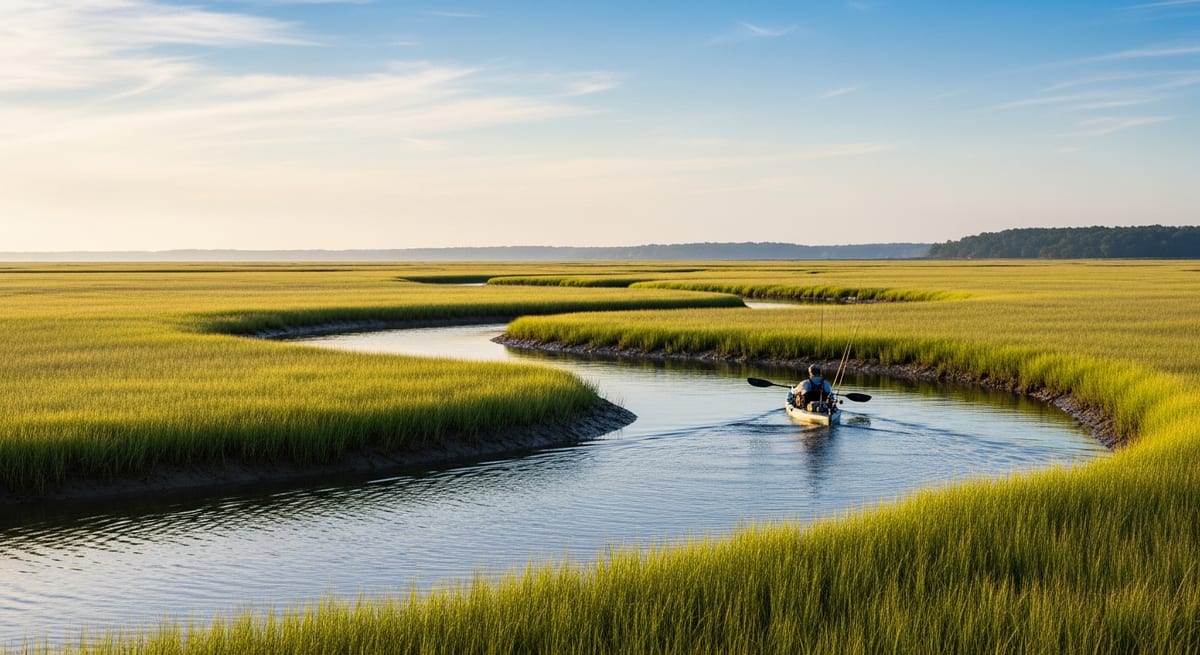
The Water Powerboats Can't Touch
Stripers feeding in water less than 18 inches deep, tight to marsh grass edges where no powerboat can follow, are a consistent June and July pattern in Connecticut's tidal back channels, according to angler reports from the Niantic River and lower CT River estuary system. These fish hold in structure that's physically inaccessible to any hull with a motor or meaningful draft.
That's the practical case for a fishing kayak in Connecticut: not lower launch costs, but access to water the powerboat fleet structurally can't work. The tidal marshes, shallow back coves, and skinny estuarine channels that bracket CT's river systems are, by the account of anglers who fish them regularly, among the state's most consistently productive striper and bass habitat, and they stay that way partly because pressure stays low.
The pattern that comes up repeatedly in CT kayak fishing forums and community discussions is anglers defaulting to the same exposed main-channel points that powerboats target. Kayak anglers who shift into the back marsh consistently report better catch rates, less competition, and fish that haven't been educated by powerboat traffic. Low profile and quiet approach put you inside casting range of fish that flush from engine wakes before most anglers ever see them.
For CT anglers, the kayak's advantages fit the state's water well: shallow tidal estuary systems, backwater marshes, and the far-shore coves on inland lakes that powerboats effectively leave alone.
Picking a Kayak That Actually Fishes
Sit-on-top vs. sit-inside: Sit-on-top kayaks are the standard choice for fishing. They're stable, self-draining, and allow anglers to stand, pivot, and reach rod holders without fighting the hull. Sit-inside kayaks limit movement and are difficult to re-enter after a capsize. Every kayak built specifically for fishing is a sit-on-top, reflecting what actually works when landing a striper or managing tackle on the water.
Key specs for fishing:
- Width (stability): Kayak anglers familiar with CT waters commonly describe 31-36 inch beam as the range where standing and casting becomes practical, though the right fit depends on body weight and fishing conditions. Narrower boats are faster but demand more balance attention.
- Length: 10-13 feet covers most CT freshwater and estuary situations. Longer boats track better for open Sound crossings; shorter ones turn easier in tight marsh channels.
- Weight capacity: Factor in bodyweight, gear, tackle, and a cooler. Capacity in the 400-500 lb range is generally cited as sufficient for most CT outings.
Popular fishing kayak brands: Hobie (pedal drive), Old Town (Sportsman series), Wilderness Systems, Perception, and Native Watercraft are the names that appear most consistently at CT launches and across CT fishing community threads and forums. Reviews from CT kayak anglers on both the Hobie and Old Town Sportsman lines consistently describe them as durable, capable in salt, and well-suited to the kind of mixed fresh-and-tidal fishing the state offers.
Pedal drive vs. paddle: Pedal-drive kayaks let you fish hands-free, always ready to cast or fight a fish without scrambling for a stowed paddle. Pricing on pedal rigs has shifted year to year; as of spring 2026, the consensus on kayak fishing forums puts entry-level pedal setups roughly in the $1,800-$2,200 range, with premium configurations commonly above $3,000. Worth the investment for anglers who are on the water consistently; a well-chosen paddle kayak handles the job for anglers still gauging their commitment.
Safety Before You Push Off
Required by CT law:
- Personal flotation device (PFD) on board and within reach at all times
- Whistle or sound-producing device
- White light for use during low-visibility conditions
The safety practices CT kayak anglers consistently recommend: Wind conditions on Long Island Sound shift faster than forecast, and the Sound stays cold well into June. Anglers who fish the Norwalk Islands and offshore grounds regularly note that wearing a PFD rather than sitting on it is standard practice for any solo open-water trip, conditions that look manageable at the launch ramp can build quickly on the return leg.
- Leash your paddle to the kayak, losing it in moving water or a stiff breeze is a genuine emergency, not a minor inconvenience.
- File a float plan: tell someone your launch point, intended route, and expected return time.
- Carry a VHF radio or fully charged waterproof-cased phone for any open Sound trips. Cell coverage has documented dead zones off the Norwalk Islands and east of several river mouths along the CT coast.
- Dry bag for your phone, wallet, and anything that can't get wet.
CT Waters Worth Putting In For
Saltwater / tidal:
Niantic River and Niantic Bay The river's marsh channels rank among the most frequently cited kayak striper destinations in eastern CT angler reports. Fish from mid-May through October, with June-July and September-October described as the most reliable windows. On an incoming tide, a 3-inch white paddle tail on a 1/4 oz jighead worked parallel to grass edges, kept tight in the shallows rather than cast long, draws consistent reports of strikes from anglers in the CT kayak fishing community. Multiple launch points along Route 156 make access practical.
Connecticut River (tidal section) The lower CT River's tidal marshes hold stripers from late May through early October. Haddam Meadows State Park and the Essex area ramps are the access points CT anglers describe most often for kayak launches. On the outgoing tide, a 4-inch Hogy soft plastic rigged weedless and worked through current seams finds fish stacked along channel edges. A technique that comes up repeatedly in eastern CT striper discussions as more productive than blind-casting in open water.
Mystic and Stonington area Protected harbors and coves make this forgiving water for fluke and snapper blues, particularly July through early September. Anglers who fish these coves regularly describe drifting a white or chartreuse bucktail tipped with a Gulp! Alive Shrimp in 10-18 feet over sandy bottom as the consistent local approach: short hops, let it settle, move slowly along the drift.
Norwalk Islands A paddle from Calf Pasture Beach opens up fluke, tautog, and striper grounds that see considerably less summer pressure than the main Sound. Anglers who make the crossing describe fluke most consistent June-August and tautog responding well in the 50-60°F water windows in April and again October-November. VHF or waterproof communication is consistently recommended for this stretch. This is real open water, and conditions change.
Freshwater lakes:
Candlewood Lake The coves and rocky transition points hold largemouth reliably from late April through early October. Local kayak angler reports describe soft plastic stick baits Texas-rigged slowly along submerged rock piles in the northern arm coves as productive through the post-spawn period in June. Weekend powerboat pressure builds fast. Anglers who fish Candlewood by kayak consistently say the morning window before 8 AM is a different experience entirely.
Bantam Lake (Litchfield) One of the larger natural lakes in the northwest highlands, Bantam produces consistent bass and panfish along wooded shorelines. Mid-May through June is widely described as prime bass season before heat moves fish deeper. Topwater frog patterns through weed edges at dawn get regular mentions in CT kayak bass discussions as worth having in the box for this water.
West Hill Pond (Barkhamsted) Clean water, comparatively light powerboat traffic, and managed catch-and-release pressure in certain sections give this lake a consistent reputation among northwest CT kayak anglers for both trout and bass. CT DEEP spring stocking typically runs March through May, early-season timing aligns with stocking activity, and the fishery sees less pressure than comparable eastern CT lakes.
Mansfield Hollow Lake Reliable bass and panfish in accessible, calm water. Anglers from eastern CT regularly describe it as underrated and lightly pressured on weekdays. A kayak-friendly lake that rarely makes the first-choice list but consistently produces for those who put in.
Access, Registration, and Rules Worth Knowing Before You Launch
Connecticut regulates kayak access in a few ways that catch newcomers off guard. Verify current rules at ct.gov/deep before launch, as regulations can change.
Registration: Human-powered kayaks generally do not require registration in Connecticut, confirm the current requirements at ct.gov/deep before your first launch, as applicable rules can shift. Adding a trolling motor changes the picture: any motorized kayak needs to be registered.
Public launches: CT DEEP maintains a public boat launch list at ct.gov/deep. Most accommodate kayaks at no cost or a minimal day fee. State parks, town parks, and designated beach access points generally allow kayak launches, posted signage varies significantly by municipality and is worth checking before you load the car.
Freshwater access: Most CT lakes and rivers have accessible public launch points. Private shoreline is private regardless of water access, verify before crossing land to reach the water.
Saltwater license: A CT Marine Recreational Fishing License is required for saltwater kayak fishing, same as any other method. A combo freshwater/saltwater license is available through the CT DEEP online portal and is worth the few extra dollars for anglers fishing both. As of spring 2026, the online licensing system is straightforward. The saltwater license requirement catches a number of anglers off guard at the ramp each season. The fines are not minor.
EVERY SATURDAY MORNING
Weekly fishing intelligence
Nationwide conditions, what's biting, and honest gear deals. One email, no noise.
No spam. Unsubscribe anytime.