
Shiners Under a Slip Float on Bantam's Grass Lines Produce Bass That Won't Touch a Plastic in Cold Water. What CT Impoundment and Coastal Communities Report About Live Bait Windows, Species-Specific Selection, and Keeping the Bucket Alive
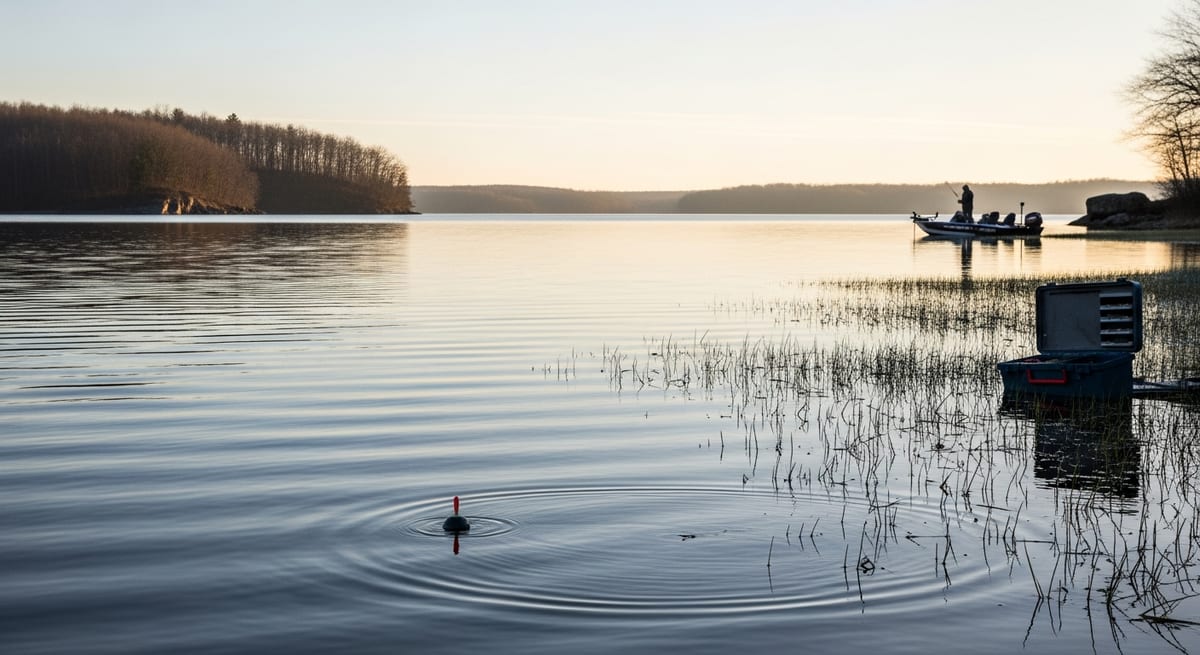
Anglers who fish Bantam Lake's western grass lines in early May report the same pattern year after year: float rigs with 5-inch golden shiners produce bass in the 48-60°F temperature band when topwater and crankbait presentations go untouched. The same observation surfaces from Candlewood's northern coves in late October, from Lillinonah's deep channel edges after a cold front, and from anglers drifting nightcrawlers through Farmington River tailwater pools in March. Live bait earns its reputation not as a universal answer, but in specific windows, cold water, post-frontal pressure drops, and heavily fished impoundments, where scent and natural movement do work that most artificials can't replicate consistently. Knowing which baits, rigs, and conditions make the difference is where the CT angling community's accumulated knowledge pays off most.
Post-Frontal, Cold Water, Heavy Pressure: The Windows CT Anglers Reach for the Bait Bucket
Cold water (below 55°F): Bass, trout, and perch in cold water move slower and won't reliably chase moving presentations. Anglers fishing Lillinonah and Candlewood in November and early March consistently report that live nightcrawlers drifted through pool tail-outs get eaten when jigs and blade baits go untouched. Water temperature, not calendar date, is the reliable trigger, cT DEEP monitoring data for the 2024-2025 season shows surface temperatures on major impoundments can lag weekly air temperature swings by four to seven days.
Post-frontal slowdowns: Cold fronts trigger a lockdown response in most CT freshwater species. Anglers on the Housatonic above Derby describe the post-front window consistently: live minnows and crawlers get bites in deep channel edges where hard baits stop producing entirely. The live bait's scent provides attractant cues that don't require fish to track and commit to a moving presentation.
Heavily pressured CT impoundments: Candlewood, the most fished lake in the state, holds bass that have seen thousands of reaction-bait presentations. The consensus among anglers who fish its eastern coves regularly is that a live 4-5" golden shiner under a slip float in late April produces quality fish that finesse plastics on the same water often don't. Under CT DEEP's 2025 freshwater bass regulations, the season on Candlewood opens June 1. The weeks leading up to that date, when bass stage on grass edges in pre-spawn condition, are when live shiner reports peak across local angling communities.
What CT Bait Shops Stock First, and What That Tells You About Local Priorities
Golden Shiners: The bin that empties first at CT shops near Candlewood and Bantam on opener weekend. Anglers fishing Bantam's western flats and Lillinonah's grass-line edges in early May report that 4-6" golden shiners, hooked through the back just behind the dorsal fin on a #1 or #1/0 hook, produce the largest bass of their spring season. Fish that weren't eating soft plastics the same morning. Shiner availability runs thin by mid-morning on high-traffic weekends near these waters; calling ahead or arriving before 7am is the community's consistent advice.
Nightcrawlers: The most broadly effective CT freshwater bait across species and seasons. Use a full crawler on a #4-#6 hook for bass on Pachaug Pond and the Salmon River; a half worm on a smaller hook for trout on the Farmington below the Hogback Dam pools, where CT DEEP stocks trout from late March through May under the 2025 freshwater regulations. Catfish on the lower Housatonic take nightcrawlers fished on bottom rigs in tidal current.
Crayfish: Gathered from shallow riffles by turning rocks in the Farmington and Salmon River, or purchased at a small number of CT bait shops. The consensus among smallmouth anglers who wade the Housatonic above Derby is that a live crayfish on a #2 hook, hooked lightly through the tail and allowed to crawl along rocky bottom, outperforms crayfish-profile soft plastics in summer low-water conditions, particularly on the flats above the Shelton dam.
Bloodworms and Sandworms: Essential for CT saltwater. Anglers targeting striped bass, tautog, and fluke from Niantic Bay through the Pawcatuck River mouth reach for bloodworms and sandworms when conditions call for a slow or stationary presentation. Available at coastal CT tackle shops from Old Lyme through Stonington. Under CT DEEP's 2025 striped bass regulations, the coastal slot is 28-35 inches with one fish per day, worth confirming before a saltwater live-bait trip.
How CT Anglers Present Live Bait: Float, Free-Line, and Bottom Rigs
Slip float: The most common live-bait setup on CT impoundments. Set the stop peg so the shiner or minnow hangs 18-24 inches above the bottom or within the target depth zone. Anglers fishing Candlewood's mid-lake humps and Bantam's grass edges typically use 1.5-2" diameter floats, weighted to stand, with a single split shot 6-8 inches above the hook. The float's movement telegraphs every run, including the slow, deliberate takes that cold-water bass produce.
Free-line (no weight, no float): Reserved for shiners fished over shallow grass, where unrestricted movement produces the most natural presentation. Hook the shiner through the back and let it swim without additional weight. Anglers who target bass over Bantam's late-spring grass flats describe the free-line shiner as their highest-percentage method for quality fish. The shiner's panicked behavior draws strikes from bass that a retrieve would alert.
Carolina-rig bottom presentation: An 18-24" fluorocarbon leader behind a 3/4 to 1 oz sliding sinker puts live bait on the bottom at a fixed position. This is the setup Housatonic catfish anglers use in the lower tidal section and what Farmington tailwater trout anglers adapt for bottom-feeding fish in heavy current. Use enough weight to hold position without dragging the bait out of the strike zone.
Minimal-weight crawl for crayfish: A live crayfish on a #2 hook with no more than a single small split shot crawls naturally across rocky substrate. Smallmouth anglers who fish the Housatonic flats above the Shelton dam in July and August describe this presentation as their most consistent summer method. The crayfish moves under its own power, and the light weight doesn't restrict its natural behavior.
The Bait Bucket Problem: Why Live Bait Dies Before Noon, and What CT Anglers Do Differently
Dead bait catches fewer fish than live bait, and the difference is more pronounced on clear-water CT impoundments where bass have time to inspect before committing. The most common failure point isn't hooking technique. It's temperature management.
Aeration: A battery-powered aerator in a 5-gallon bucket keeps shiners and minnows viable all day in temperatures below 70°F. Anglers fishing summer bass on Candlewood report losing bait quickly on hot July days when the bucket sits unshaded on an aluminum boat deck, water in an exposed black bucket can climb above 85°F within an hour. Move the bucket below the gunwale or tether it over the side when boat-fishing in open water.
Temperature control: Shiners and fatheads weaken above 68-70°F. A small amount of ice added incrementally, not a full-scoop cold shock, keeps water in the 60-65°F range on summer mornings. A 5-gallon bucket comfortably holds 15-20 shiners; overcrowding depletes oxygen and compounds the heat problem faster than either factor alone.
Nightcrawler storage: Keep crawlers in their original bedding in a cooler out of direct sun. A worm box stored at 45-50°F in an ice chest holds crawlers viable for a full weekend of fishing. Worms exposed to boat-deck heat in July lose effectiveness within 30 minutes. A detail that explains why early-morning sessions with fresh crawlers often outproduce afternoon outings using the same worms.
EVERY SATURDAY MORNING
Weekly fishing intelligence
Nationwide conditions, what's biting, and honest gear deals. One email, no noise.
No spam. Unsubscribe anytime.