
CT Anglers Fish Four Different Species Windows. Each One Demands a Different Hook.
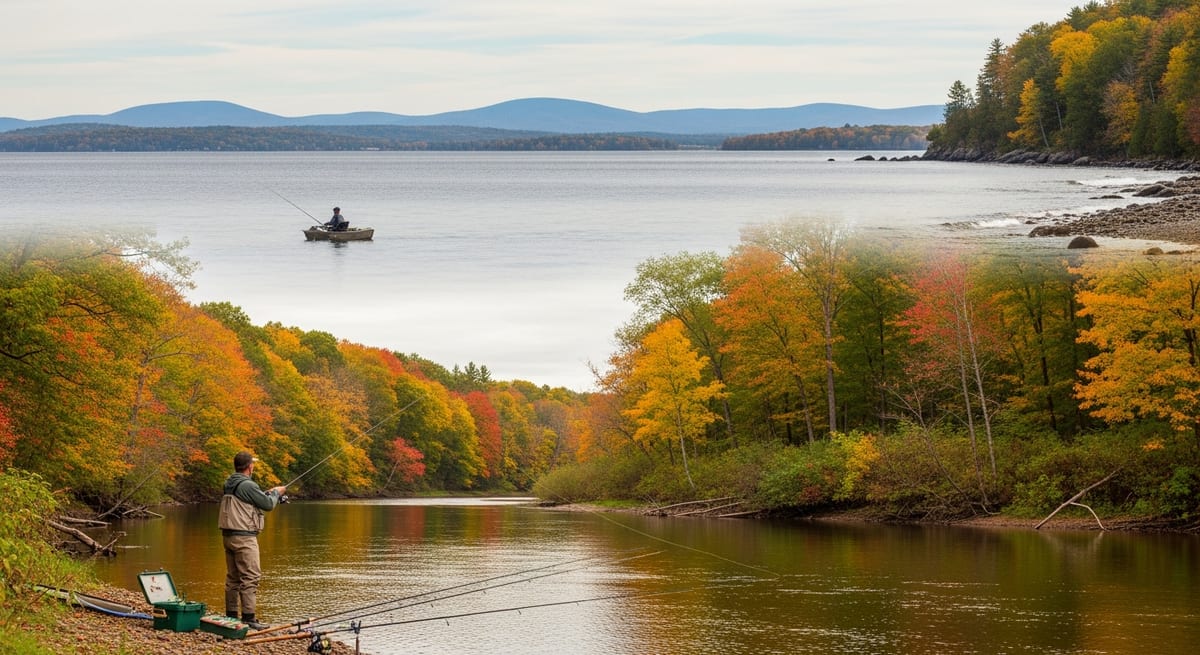
Connecticut DEEP's non-offset circle hook mandate for striped bass bait fishing catches anglers off guard every spring on Long Island Sound, even several seasons after it took effect. That regulation exists because circle hooks corner-hook fish rather than deep-hooking them, and striper survival on the release directly affects long-term population health. It's one example of why hook style isn't a secondary detail for CT anglers. For DEEP-stocked trout on the Farmington or Housatonic, bass in Connecticut River backwaters, or summer fluke across the Sound's inlets, the hook choice shapes how naturally bait moves, how cleanly fish are landed, and whether the rig is legal in the first place.
Hook Sizing: Why the Numbers Run Backwards (Until They Don't)
Hook sizing runs in two opposite directions joined at a single boundary, which is why it trips up even experienced anglers who haven't thought about it in a few seasons.
From #12 down to #1, smaller numbers mean larger hooks. Cross into aught territory and the logic flips: 1/0, 2/0, 3/0, 4/0, 5/0, 6/0, bigger number, bigger hook. Think of it as two ladders running in opposite directions, joined at the #1/#1/0 step.
Reference points that CT anglers tend to internalize quickly: a #12 is a tiny panfish hook, a #6 or #8 works well for trout on a worm, a 1/0 suits bass on live bait, and a 4/0 or 5/0 handles cut bunker for stripers on the Sound.
One detail flagged by CT river regulars: wire gauge matters for larger brown trout. Heavier-gauge hooks hold up to a strong Housatonic or Farmington brown that a standard-wire hook can bend out under. For general stocked-trout fishing it's a non-issue; for wild trout management areas, the upgrade is worth it.
J-Hooks for CT Trout Season and Panfish
J-hooks, straight shank, curved bend, upward-facing point, are the standard for DEEP stocked trout season and panfish across Connecticut's lakes and ponds. They require an active hookset: feel the bite, then jerk to drive the point home.
CT trout applications:
- DEEP-stocked rainbow, brown, and tiger trout on PowerBait: #10-#14
- Worm presentation on the Farmington or Housatonic tailwaters: #8-#12
- Live minnow on Candlewood Lake or Lake Lillinonah: #6-#8
Panfish, size up for CT crappie:
- Bluegill on worm or small jig: #8-#10
- Crappie with minnow or tube jig: #6-#8 (anglers fishing Candlewood Lake for slab crappie commonly run #6; the #8 tends to run small for the larger fish in that population)
Offset vs. straight shank: An offset J-hook, where the point angles slightly sideways, improves hookup rate with soft plastics but can cause line twist with live bait. For live worms and minnows, a straight-shank J-hook presents more naturally.
J-hooks carry a higher deep-hooking rate with live bait than circle hooks, which is why CT anglers increasingly reserve them for soft plastic work and use circles for cut or live bait where fish survival matters.
Circle Hooks and the CT Striper Mandate
Circle hooks have a point that curves sharply back toward the shank. As line pressure builds, the hook rotates inside the fish's mouth and seats in the corner of the jaw, not the throat. Deep-hooking rates drop substantially compared to J-hooks on live or cut bait, and corner-hooked fish release with far better survival odds.
The CT DEEP regulation: Effective with the 2023 season, Connecticut requires non-offset circle hooks when fishing natural bait for striped bass in state waters, long Island Sound, the Connecticut River, coastal estuaries, and tidal tributaries. The mandate covers cut bunker, live eels, chunk herring, mackerel, and other natural presentations. Artificial lures are not affected. Verify details in the current CT DEEP Anglers Guide before each season, as regulations can be updated year to year.
Anglers who fish the Sound's spring striper run from shore or boat report the adjustment takes only a few outings. The technique shift: wind down until you feel steady weight, then lift with smooth, continuous pressure, no hard jerk. Snapping hard pulls the hook free before it can rotate and set. The instinct from years of J-hook fishing works directly against the circle hook geometry.
Sizing: Circle hooks typically run slightly larger for equivalent applications. A 4/0 non-offset circle where a 2/0 J-hook would have done the job. Sizing varies enough between manufacturers that checking the packaging or asking at a local shop is more reliable than any fixed conversion rule.
Circle hooks are also the right call for catfish on cut bait and any live-bait setup where fish are being released.
Soft Plastic Hooks for CT River Bass and Sound Fluke
The Connecticut River bass fishery, largemouth in the backwater coves from Haddam north, smallmouth on the main-channel gravel, runs heavily on soft plastics, and so does summer fluke fishing across the Sound's inlets and the Thames River corridor. Each has a distinct hook requirement.
Offset worm hook (Texas rig, Carolina rig): Standard for weedless presentations around CT's grass-edge structure and submerged timber. The offset at the hook eye locks the soft plastic in place on the shank; the buried point passes through cover cleanly. Sizes: 1/0 for finesse worms, 3/0 for 6-7 inch worms, 4/0 for large creature baits and craws. CT River bass anglers report that matching hook size to bait length, rather than sizing up, produces cleaner hooksets on the fall.
EWG (Extra Wide Gap) hook: The gap creates clearance between the hook point and the bait body, which prevents thick swimbaits or creature baits from blocking hook penetration on the strike. Sizes: 3/0-5/0 for most CT bass applications. Anglers targeting spring bass on large swimbaits in CT River backwaters often size up to 5/0 for the additional clearance.
Wacky rig hook: A size 1 or 1/0 wide-gap hook through the middle of a Senko-style worm. The bait hangs horizontally and flutters on the fall, among the most consistent presentations for heavily pressured bass in CT ponds and river coves. Purpose-built wacky hooks with a wire keeper extend bait life noticeably.
Fluke in Long Island Sound: For bucktail and grub rigs on summer flounder from Niantic Bay through the Thames River mouth, the consensus among CT boat and shore anglers runs to a wide-gap hook in the 2/0-4/0 range, matched to bait size. Fluke strike fast and take the bait deep, hook sharpness matters as much as size here.
EVERY SATURDAY MORNING
Weekly fishing intelligence
Nationwide conditions, what's biting, and honest gear deals. One email, no noise.
No spam. Unsubscribe anytime.