
Most of CT's Biggest Stripers Come Off Live Bunker and Eels, Not Lures. The Slot Limit That Applies to Every One of Those Fish Is the Detail Most Live Bait Guides Skip.
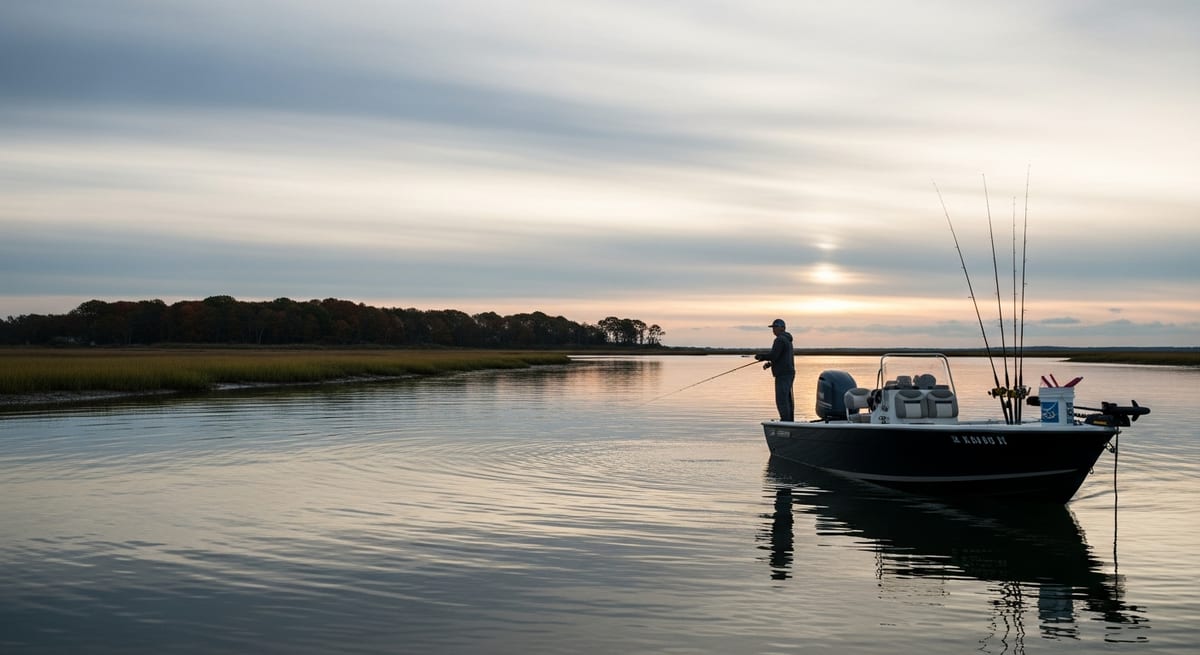
Public trip reports, charter captain debrief posts, and striper database entries from Long Island Sound over multiple recent seasons show a consistent pattern: the largest stripers. Fish above 35 inches and into the 40-pound class, arrive on live bunker and eels far more often than on artificials. Making the switch from lures to live bait typically involves a learning curve CT anglers describe in two parts: building a bait care system that keeps fish alive long enough to fish effectively, and developing patience at the moment of the strike. What most published guides on this topic skip is the regulations layer, cT DEEP slot rules apply to every striper regardless of how it was caught, and the fall jetty scene is where enforcement is most active.
What CT Guides and Serious Shore Anglers Reach for When Trophy Fish Are the Target
Menhaden (Bunker): Menhaden, called bunker throughout CT and the broader Northeast, are the primary live bait used by CT striper fishermen from spring through the fall migration. Anglers who fish Long Island Sound consistently describe bunker as the bait that draws the biggest, most sustained feeding response from larger stripers. The oily, calorie-dense profile appears to produce a level of striper attention that other baitfish match less reliably. A pattern noted repeatedly in CT striper community threads and confirmed through bait shop reports from shoreline towns between Clinton and Groton.
Finding bunker: Schools show themselves as oil slicks on flat water, dark masses visible in clear shallows, or by bird activity, gannets working in tight groups, cormorants diving repeatedly, terns strafing the surface. In spring, bunker push into Long Island Sound in May, concentrating near the mouths of the Thames, Connecticut, and Housatonic Rivers. By midsummer, schools are distributed across the Sound.
American Eel: CT structure anglers who target very large stripers at night rely heavily on live eels. The consensus among LIS night fishermen, expressed consistently in CT striper forums and in bait shop reports from Clinton, Westbrook, and Old Saybrook, is that eels fished near hard structure (rocky points, jetty ends, bridge pilings, river mouths) produce trophy-class fish that don't engage as reliably on daytime lure presentations. Eels are stocked at most CT bait shops throughout the season and keep well with minimal setup.
Atlantic Mackerel: Mackerel show up in CT waters in late spring and early summer, but availability varies enough year to year that CT bait dealers and charter captains treat them as a bonus bait rather than a planned resource. In years when mackerel are running in the Sound, they make effective live bait for stripers and bluefish. Most CT anglers who fish live bait seriously build their plans around bunker and eels rather than counting on mackerel being available in any given season.
Snagging and Keeping Bunker: What Boat Anglers on Long Island Sound Have Worked Out
Snagging bunker from a located school is a standard early-morning routine for CT striper boats. When a school is visible, anglers typically report having live bait in the water within 20 minutes of locating fish.
Snag rig: A weighted treble hook rig. A 3-5 oz sinker on a two-foot dropper with a 3/0-5/0 treble hook below it. Cast into or just past the bunker school and retrieve with sharp upward rod sweeps. The treble snags fish from below. This is the approach used throughout CT and documented consistently on Sound striper forums.
Snag rod: Medium-heavy to heavy spinning or casting rod with 20-30 lb braid. A faster-action rod telegraphs the snag and allows a quick hookset before the fish can pull free.
Keeping bunker alive: Bunker are fragile, and CT anglers who have run live bait for a season or two typically invest heavily in livewell setup. The general consensus among CT guide and charter operations points toward a round livewell (which lets fish circulate without hitting corners), continuous oxygenated water flow, and cooler water, particularly in July and August when Sound temperatures climb. Adding ice to bring livewell temperature down during summer runs is a widely reported practice among CT boat anglers and extends bait life during the hottest part of the season.
If you can't keep them alive: Fresh-dead bunker and butterflied bunker chunk still produce. Chunk bait: 2-inch sections fished on circle hooks on the bottom, accounts for a substantial share of CT striper catch each season when live bait isn't viable. Many CT boat anglers keep chunk rig rods set up alongside live-bait rods as standard practice.
The Live-Lining Technique CT Sound Anglers Have Settled On
Live lining, drifting a hooked bunker with minimal weight to allow natural swimming movement, is the standard live-bait presentation on Long Island Sound. The technique is widely documented across CT striper forums, guide reports, and public trip logs spanning multiple seasons.
Rigging: Hook the bunker through the nose (ahead of the dorsal fin) or through the back just ahead of the dorsal fin. Nose-hooking produces more natural swimming behavior; back-hooking provides a more secure hold and positions the hook more favorably at the strike. A 7/0-9/0 circle hook in Owner, Gamakatsu, or Mustad is standard across most CT boat operations.
Leader: 50-80 lb fluorocarbon leader, 3-6 feet long, attached to 30-50 lb braided mainline via a barrel swivel.
Presentation: In current, let the bunker swim with minimal line tension. The bait will work down-current, producing the erratic swimming behavior that triggers feeding stripers. CT anglers who fish live bunker regularly report that resisting the urge to set the hook immediately, letting the fish run briefly (3-5 seconds), then coming tight with steady pressure, is one of the most important adjustments for anglers new to the technique. Circle hooks require steady pressure to find the corner of the mouth; a hard upward sweep typically pulls the hook out of position before it can set.
Drifting: Kill the engine and drift over productive structure, underwater ledges, current rips, and points where bunker have been showing. Running multiple rods at different depths, surface, mid-column, and near bottom, covers the water column efficiently and is standard practice documented in CT Sound guide reports.
Night Eels at Structure: What CT Shore Anglers Time the Bite To
Among CT striper anglers who specifically target trophy-class fish from shore, night eel fishing at hard structure surfaces repeatedly in online trip recaps, bait shop reports from the Clinton and Westbrook waterfront, and CT striper community threads. The approach requires less gear than live lining from a boat but demands patience with bait handling.
Hooking eels: Hook through the lower jaw and out the upper jaw, or through the lip only. Avoid hooking through the body. It shortens the eel's effective fishing life. Keep eels in a cooler with ice (cold but not freezing). Cold eels are slower and easier to handle; once they warm in the water they become highly active, which is what puts them in front of fish near structure.
Rigging: 6/0-8/0 wide-gap hook, 50-60 lb fluorocarbon leader, attached to 30-50 lb braid. A barrel swivel is optional but helps manage line twist over a long session.
Presentation: Cast to structure, jetties, rocky points, bridge pilings, rocky outcroppings, and maintain light tension. Eels naturally work toward the substrate, which positions them in the zone where large stripers hold during dark tides.
When CT structure anglers time the eel bite: The most consistent action is reported on the last two hours of the outgoing tide and the first two hours of the incoming. That timing comes up most frequently in CT striper community threads and public trip logs at tidal structures like the Niantic Bay jetty, the Westbrook harbor mouth, and rocky points along the Groton and Old Lyme shorelines. Anglers who have fished the same locations over multiple fall seasons often develop their own tide-window observations that diverge from the general pattern. Moving every 30-45 minutes without action is standard reported practice among shore anglers who cover these runs consistently.
Where CT Anglers Concentrate Live Bait Efforts, and When the Season Peaks
Spring (May-June): Live bunker fishing becomes viable when schools push into the Sound, typically beginning in early May. The CT River mouth near Old Saybrook appears consistently in striper reports across multiple seasons as an early-season congregation point. Fish follow bunker schools up the tidal influence of the river. The Thames and Housatonic mouths also show early spring activity as bunker arrive.
Summer (July-August): Schools scatter across the Sound. Productive boat fishing shifts toward locating active bait, diving birds, surface oil slicks, rather than fishing fixed spots. Shore anglers who fish summer nights at Niantic Bay, Harkness Memorial State Park, and accessible jetties in Clinton, Westbrook, and Old Saybrook report consistent eel-bite activity on favorable tides.
Fall Migration (September-November): The period CT striper anglers consistently identify as the most productive window for live bait. Large adult bunker push through the Sound ahead of migrating fish, and public reports from September and October document encounters with the largest stripers of the year. Fish in the 30-to-50-inch range, at shore-accessible locations in a way that rarely occurs during the rest of the season.
Anglers fishing Griswold Point in Old Lyme, Avery Point in Groton, and rocky structure near Harkness State Park describe fall conditions where trophy-class stripers are reachable from shore or by kayak. CT kayak anglers who fish the fall run report access to striper-holding structure, submerged ledges, rocky points. That neither shore casters on foot nor trailered boats can approach effectively. Kayak-caught trophy stripers on live bunker from fall Sound locations appear regularly in CT striper trip reports.
CT DEEP Striper Regulations: What Every Live Bait Angler Needs to Verify Before the Season
This is the section most live bait guides skip, and the gap that produces the citations CT DEEP officers issue each season at jetties, access points, and boat ramps across the Sound.
Connecticut striper regulations operate under ASMFC management and have shifted repeatedly in recent seasons in response to coastal stock assessments. As of recent seasons, CT has enforced a slot limit restricting legal harvest to fish within a defined size window, with a one-fish-per-day bag limit per angler. The specific slot measurements and any mid-season adjustments are published by CT DEEP Fisheries at portal.ct.gov/DEEP. That is the authoritative source, and anglers who fish the Sound seriously verify current regulations there before each season opens and after any mid-season ASMFC management announcement.
Several points that CT live bait anglers specifically flag in community discussions:
- The slot limit applies regardless of how the fish was caught. A striper taken on live bunker is subject to the same size window as one taken on a plug, no exception for bait type or method.
- Night eel fishing at jetties is one of the most common settings for inadvertent slot violations. Measuring a striper accurately in the dark on a wet, slippery jetty surface is harder than measuring one at the dock in daylight. CT anglers who fish eels at night consistently report keeping a headlamp and a measuring board accessible as standard setup.
- CT DEEP enforcement on stripers in the Sound is active, including shore patrols at publicly accessible jetties, state park access points, and boat ramp areas during peak fall migration weeks.
- Regulations can update mid-season in response to federal management actions. What was legal in May may not be legal in September. The DEEP Fisheries website is the only reliable source, secondhand reports from bait shop signage or other anglers should be confirmed against the current official posting.
The community consensus on this point is direct: trophy-class live bait fishing draws attention, and CT DEEP officers know which jetties and structures see the heaviest live bait activity during the fall run.
EVERY SATURDAY MORNING
Weekly fishing intelligence
Nationwide conditions, what's biting, and honest gear deals. One email, no noise.
No spam. Unsubscribe anytime.