
Farmington TMA Regulars and Salmon River Fly Casters Match Different Insects in the Same Two-Week Window Every May. What CT's River-by-River Hatch Calendar, HFFA Emergence Charts, and TMA Community Reports Reveal About Choosing the Right Fly When Trout Are Rising
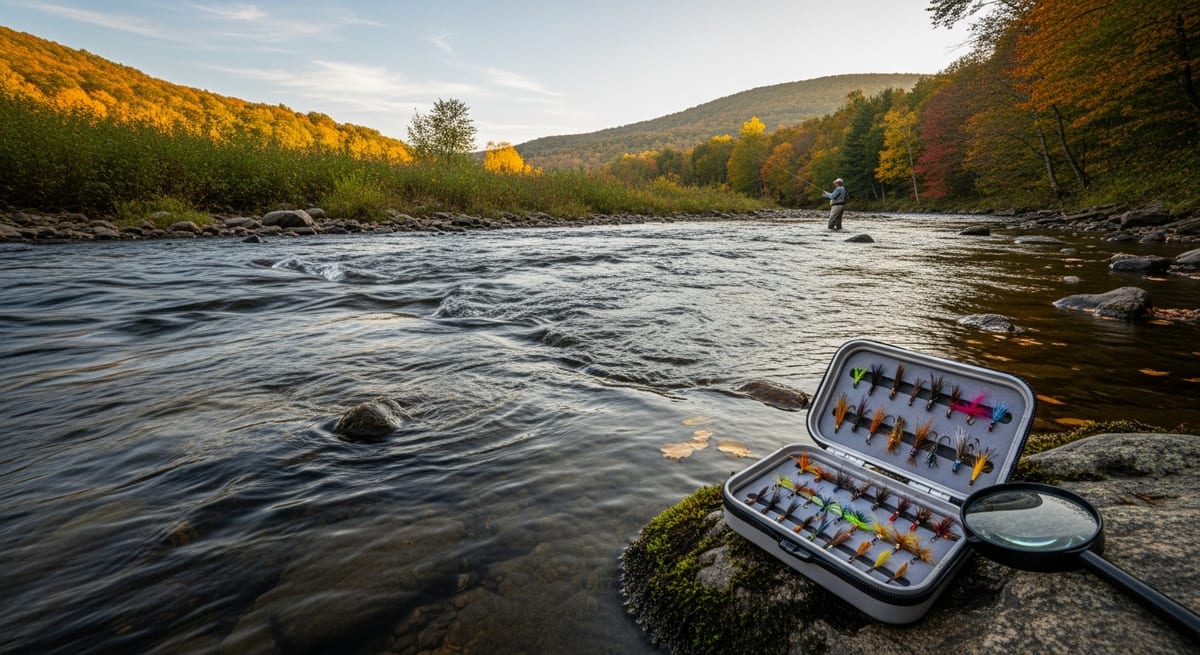
During the Hendrickson emergence on the Farmington TMA, typically the last two weeks of April. Anglers fishing the Riverton pools and Satan's Kingdom stretch report a specific frustration: rising trout that refuse every dry fly presented until the pattern, size, and drift align with what's actually in the film. Recognizing what those fish are eating, and presenting an imitation that fits the size, color, and posture of the natural, separates the productive sessions from the fishless ones. Hatch matching is not an academic exercise; on CT's technical catch-and-release water it's a functional skill. On Connecticut rivers, five insect groups, hendricksons, BWOs, caddis, sulphurs, and tricos, account for the majority of selective rise activity worth targeting, each with distinct river-specific timing that varies between the Farmington, Willimantic, and Salmon River.
How to Read What Trout Are Eating
Identifying what trout are eating starts with watching the rise form before reaching for a fly box:
Surface rises: If fish are breaking the surface, they're eating at or near the film. Gentle, slow sipping rises, common on the Farmington TMA during sulphur evenings in late May, indicate emergers or spinners. Splashy, aggressive rises point to caddis adults skittering across the surface. A large dorsal fin roll without much surface disturbance usually means a sizable brown taking a large mayfly dun.
Subsurface flashes: Fish flashing below the surface without breaking are eating nymphs in the water column. On the Willimantic below Eagleville, anglers frequently report this behavior during BWO windows, no dry fly needed, switch to a soft hackle or nymph fished on a dead drift.
Sampling the water: Check the surface current for drifting insects. A cupped hand or capture net in the flow shows what nymphs are actually present. Check streamside vegetation, willows along Farmington TMA banks and tag alder along the Willimantic often hold clinging adult caddis or spent mayfly spinners that reveal exactly what stage is emerging.
Hatch timing by CT river: BWOs emerge on cool, overcast days in April and again in September-October, farmington and Willimantic regulars note they can trigger feeding even on 45°F afternoons. Hendricksons track water temperature more than calendar date, typically starting when water holds steady in the high 40s to low 50s°F. Knowing each river's seasonal pattern helps anticipate rather than react.
Trial and error: Present a dry fly to rising fish. If they refuse, downsize the fly, change pattern, or switch to an emerger. A refusal carries information, size too large, wrong profile, or wrong stage of the hatch.
CT's Five Core Hatch Windows by River
Farmington TMA regulars, HFFA hatch charts, and Salmon River community reports point to five insect groups that cover most selective rise activity on CT trout waters:
1. Blue-Winged Olive (BWO/Baetis): Spring (April) and fall (September-October). Small (size 18-22), olive body, blue-gray wings. On the Farmington and Willimantic, BWOs hatch most reliably on cold, overcast days. The kind of gray April afternoon that clears the river of casual anglers and concentrates feeding fish. Match with: Sparkle Dun (size 18-20), Parachute Adams (size 18-20), CDC Cripple.
2. Hendrickson/Red Quill: Late April into early May on the Farmington TMA. Medium-large (size 12-14), pinkish-brown body. HFFA emergence records show this hatch tracks water temperature more than calendar date, consistent afternoons with water in the 48-52°F range are the reliable trigger. Match with: Hendrickson Dry (size 14), March Brown (size 14), Hendrickson Emerger (size 14).
3. Caddis (Grannom, Apple Caddis): April through early July. Size 14-16, olive/tan to ginger body. Salmon River caddis activity in May-June and Farmington caddis in late April-May are separate windows, salmon River caddis often peaks two to three weeks ahead of Farmington. Splashy, aggressive rises are the visual cue. Match with: Elk Hair Caddis (size 14-16), X-Caddis, Goddard Caddis.
4. Sulphur/PMD: Late May through June. Size 14-18, pale yellow body. Farmington TMA evening hatches, particularly on the catch-and-release stretches at Riverton and downstream toward Collinsville, are among the most consistent in Connecticut, with activity typically beginning around 6-7 PM as light drops and air temperatures fall. Match with: Sulphur Comparadun (size 16), Parachute Sulphur, Sulphur Emerger.
5. Trico: July through September. Very small (size 20-24), black and white. Morning spinner fall, often compressed into a 45-minute window between 7-10 AM before heat builds. Farmington regulars note the Trico spinner fall on the TMA can be brief enough that arriving late means missing it entirely. Match with: Trico Spinner (size 22-24), CDC Trico.
Why Selective Fish Often Refuse the Adult Imitation
Among anglers who fish CT's technical TMA water regularly, the emerger stage is consistently cited as the point where most dry-fly presentations fail, not because the pattern is wrong, but because the stage is wrong.
What the emerger stage is: As nymphs swim to the surface to hatch, they often become trapped in the surface film, half nymph, half adult, immobilized. Farmington regulars fishing the sulphur hatch describe watching fish sip steadily through a full emergence while ignoring standard dun imitations riding high on hackle tips. The fish aren't refusing the fly because of color. They're eating a different stage of the same insect.
How to recognize emerger feeding: Gentle, slow sipping rises that barely disturb the surface. The fish tips upward and feeds from the film rather than slashing at an adult. The rise shows a subtle bulge or partial head, not a splash.
Emerger patterns: A Sparkle Dun (with trailing shuck), Klinkhámer, CDC Emerger, or RS2 sits in the film rather than on top of it. The half-submerged presentation is what triggers the take when fish are locked onto the transitional stage.
Presentation on CT TMA water: Farmington TMA and Housatonic TMA designations require catch-and-release on artificials only. The sustained pressure from that rule is part of what makes those trout picky. HFFA members fishing the flat Farmington pools note that even a micro-drag on an emerger ends the drift. Fine tippet (5X-6X), longer leaders, and upstream reach casts are standard among anglers who fish these pools through the season.
Stream-Side Identification Without a Field Guide
A four-step system works on the water without reference books or an entomology background:
Capture one specimen: Scoop an adult from the surface current or pluck one from streamside vegetation. On the Farmington and Willimantic, checking willow branches and bankside grass during a hatch often yields the adult form of whatever nymph is emerging. The insect is right there, not a guess.
Match size first: Find a hook in your box that matches the insect's body length. Body length equals hook size reference. This step alone narrows the field significantly.
Match color second: Body color first, wing color second. Exact shade matters less than approximate color family, olive, tan, pale yellow, rusty-brown, or black-and-white. The functional difference between a sulphur and a PMD matters less than distinguishing pale yellow from rusty-brown.
Check the wing posture: Wings flat and spent on the water call for a spinner pattern. Wings upright call for a Comparadun or parachute. Body partially submerged, wings crumpled, switch to an emerger.
A CT-calibrated starter box: Parachute Adams (size 14-20), Elk Hair Caddis (size 14-16), BWO Sparkle Dun (size 18-20), Sulphur Comparadun (size 16), Hendrickson Dry (size 14), and a Hare's Ear nymph (size 12-16) covers the majority of hatch scenarios anglers encounter on the Farmington, Willimantic, and Salmon River through the season, not every situation, but enough to stay in the game through each major window.
CT DEEP season context: Most CT trout streams open April 1 under general regulations. The Farmington TMA (Riverton to New Hartford) and Housatonic TMA are year-round catch-and-release for artificials only. The two stretches where selective hatch-matching fishing is most consistent. CT DEEP Fisheries Division stocking schedules are published seasonally and often coincide with early hatch windows; the April stocking push on the Farmington typically aligns with caddis and early Hendrickson activity, which concentrates recently stocked and holdover fish in the same feeding lanes.
EVERY SATURDAY MORNING
Weekly fishing intelligence
Nationwide conditions, what's biting, and honest gear deals. One email, no noise.
No spam. Unsubscribe anytime.