
Rainbow and Brown Trout in Connecticut: Beyond the Stocking Truck
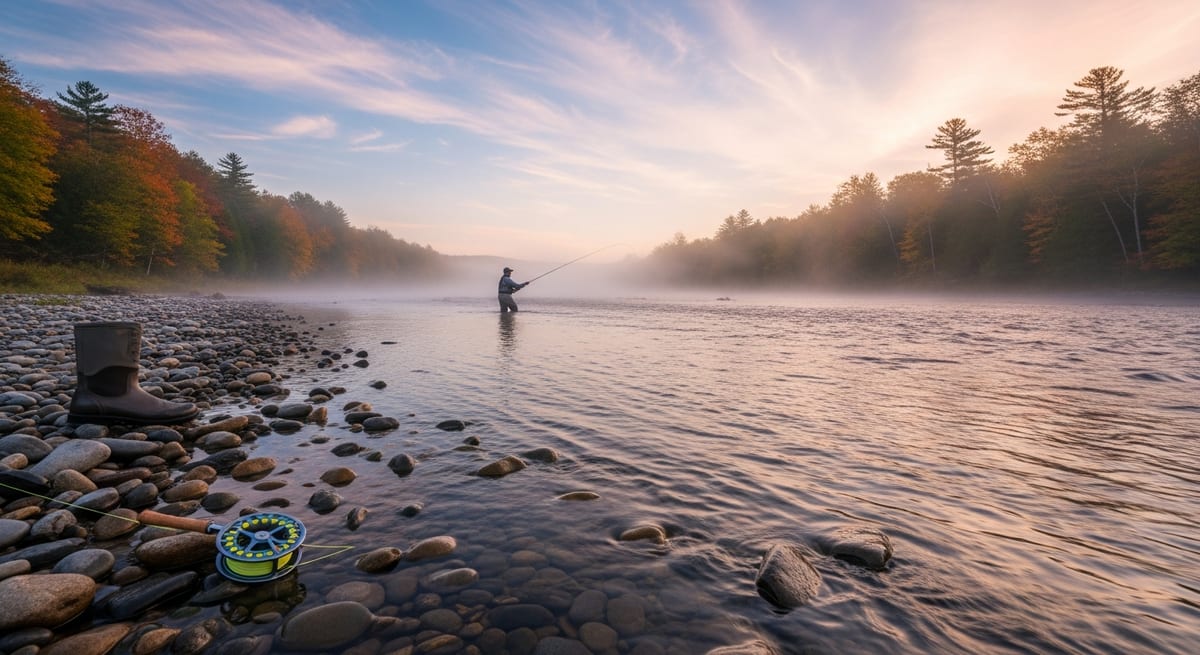
A brown trout planted in the Farmington River in April that survives to November has navigated water temps pushing 70°F, shed its hatchery conditioning, and become an entirely different fish, and most CT anglers never target it. Connecticut trout fishing revolves heavily around the spring stocking program, hatchery fish planted in rivers and lakes from early April through May, caught by crowds the weekend after stocking. That's fine fishing. But there's a different level of trout fishing available in CT for anglers willing to look past the stocked holes: holdover fish that have survived summer and winter, wild brook trout in tiny streams, and the genuinely difficult challenge of picking apart a technical CT tailwater for selective wild brown trout.
Rainbow Trout vs Brown Trout in Connecticut
Connecticut stocks both species extensively, but they behave differently and require different approaches after they've been in the water for more than a few weeks.
Rainbow trout are the more aggressive, less selective species. They acclimate more quickly to river life than browns and will take a wider variety of presentations throughout the season. Hatchery rainbows on fresh stocking water feed readily. Wild-strain and holdover rainbows in CT tailwaters become considerably more selective over time.
Brown trout are the craftier, more pressure-resistant species. They're less likely to be caught immediately after stocking, more likely to survive into holdover status, and tend to grow larger in CT waters. Brown trout are primarily nocturnal feeders once they've been in a river for more than a few days, large browns in CT rivers are rarely caught midday by spin fishermen. They feed at dawn, dusk, and after dark.
Where they're found after stocking: Both species will move upstream from stocking locations over time, seeking cooler, faster water. Fish placed in pool sections will move into the heads of pools, into riffles, and eventually up into tributary streams. Fish the water above and below the posted stocking sections, not just the hole everyone crowds into.
Best Trout Waters in Connecticut
Farmington River (Barkhamsted to New Hartford): Connecticut's premier trout fishery. The upper Farmington is managed as a Wild Trout Management Area with naturally reproducing wild brown trout, regulations in this section are typically fly fishing only, catch-and-release, open year-round (always confirm current rules with CT DEEP before fishing). Lower sections are stocked heavily and hold large holdover browns. The Farmington is a genuinely excellent river, clear, cold, varied structure, with hatches that support selective surface feeding.
Salmon River (East Hampton/Colchester): A cold, clear tributary of the Connecticut River with reliable stocked trout fishing and solid holdover populations in its deeper, shaded runs. Good fly fishing access throughout and typically less crowded than the Farmington, particularly in fall when the holdover browns turn on.
Housatonic River (Litchfield County): The catch-and-release section from Bartholomew Pond downstream is managed for wild brown trout and large holdovers. The Housatonic holds some of the largest brown trout in the state. Fish over 20 inches are present, though difficult. Complex hatches and selective wild fish make this a legitimate technical fishery.
Willimantic River: Less famous but very productive stocked and holdover trout water in eastern CT. Noticeably less pressure than the Farmington throughout the season.
Jeremy River and Eightmile River: Smaller streams in the Salmon River watershed with native brook trout and some brown trout in the lower sections. Good options when bigger rivers are blown out.
Seasonal Patterns
Spring (April-May): Peak season. Stocking typically begins in early April on most CT waters, with temperatures often running in the 45-58°F range on tailwaters and slightly warmer on freestone streams. Trout are active and feeding hard, and freshly stocked fish are catchable on almost anything for the first week. After two weeks in the river, selectivity increases dramatically.
Early season tactics: The week after stocking, PowerBait (Chartreuse or Salmon Egg color on a size 14 hook, 1/4 oz egg sinker) fished in pool tailouts catches limits. After the first week, switch to natural presentations, worms, minnows, or soft plastics that better match what the fish are beginning to key on as they settle into the river. Fly fishermen do well with Woolly Buggers, Clouser Minnows, and egg patterns early in the season.
Summer (June-August): Water temps in CT rivers often push above 68°F by mid-July in most sections, too warm for trout to survive long-term. Hatchery fish mostly don't make it past late July. Holdover fish survive in cold-water refugia: spring seeps, cold tributaries, deep shaded pools. The Farmington and Housatonic stay cold enough for year-round trout due to their dam tailwater influence.
Fall (September-November): Second peak season, water cools back into the trout comfort zone, and brown trout become active and aggressive through spawning season (October-November). Trophy fish that survived summer are feeding hard, and large browns are more catchable in fall than any other time of year. The Farmington and Housatonic have excellent fall hatches. Fall stocking also occurs on select CT waters.
Winter: The Farmington River TMA is one of the few CT rivers where winter trout fishing is practical. Wild browns hold in the deepest pools during cold weather, catchable on tiny nymphs dead-drifted through the hole on light tippet.
Presentations and Gear
Spin fishing:
- Soft plastics: A 2-inch trout worm on a 1/16 oz jig head drifted naturally through pools is one of the most effective stocked trout presentations once PowerBait stops working. Chartreuse and pink colors work well in stained water; natural browns and reds in clear conditions. Keep the drift drag-free, let it bump along the bottom through the slot.
- Small inline spinners: Panther Martin (1/16-1/8 oz), Blue Fox Vibrax, and Rooster Tail in gold, silver, or natural rainbow colors. Retrieve across-and-slightly-downstream with the current for best results.
- Worms: The classic. A night crawler under a float or weighted along the bottom is never wrong for stocked trout in CT.
- Minnows: Live or artificial. Floating Rapala F-5 or F-7 in brook trout or silver patterns fished with twitches over pools produces large holdover browns.
Fly fishing:
- Early season: Woolly Bugger (#6-8, olive or black), Clouser Minnow, stonefly nymphs. Get the fly moving, stocked fish chase.
- Hatch matching: The Farmington and Housatonic have legitimate hatches, hendricksons (late April), Sulphurs (May-June), Pale Morning Duns, and Cahills in summer. Small dry flies during hatch windows produce spectacular surface fishing on holdover and wild fish.
- Nymphs: Hare's Ear, Pheasant Tail, and Czech nymphs dead-drifted through current seams are the most consistent all-season producers.
Gear: Light spinning setup (6-7 ft medium-light rod, 2500 reel, 6-8 lb fluorocarbon) for spin fishing. For fly fishing, a 9-foot 5-weight is the standard Farmington/Housatonic setup.
Connecticut Trout Regulations
CT trout regulations vary significantly by water, always verify with the current year's CT DEEP Freshwater Fishing Guide before heading out. Rules on special regulation waters change, and fishing the wrong section under the wrong rules will cost you.
General statewide:
- Open season: April 1-February 28 (year-round fishing permitted on designated waters)
- Minimum size: 9 inches (trout and salmon)
- Daily bag limit: 5 trout/salmon in combination
Special regulations waters (examples, verify current rules with CT DEEP):
- Farmington River TMA (Barkhamsted): Typically fly fishing only, catch-and-release, open year-round, confirm current designation before fishing
- Housatonic River C&R Section: Fly fishing or single-hook artificial lures only, catch-and-release, year-round
- Many stocked streams: Standard regulations above
Check ct.gov/deep for the current year's regulation booklet, special regulation waters change and new designations are added regularly.
EVERY SATURDAY MORNING
Weekly fishing intelligence
Nationwide conditions, what's biting, and honest gear deals. One email, no noise.
No spam. Unsubscribe anytime.