
After a Cold Front Crosses Connecticut, Most Bass Presentations Go Quiet. What Anglers on Bantam, Candlewood, and Lillinonah Report About the Ned Rig's Extended Pause, Jig Weight, and Why the Stand-Up Tail Changes Everything.
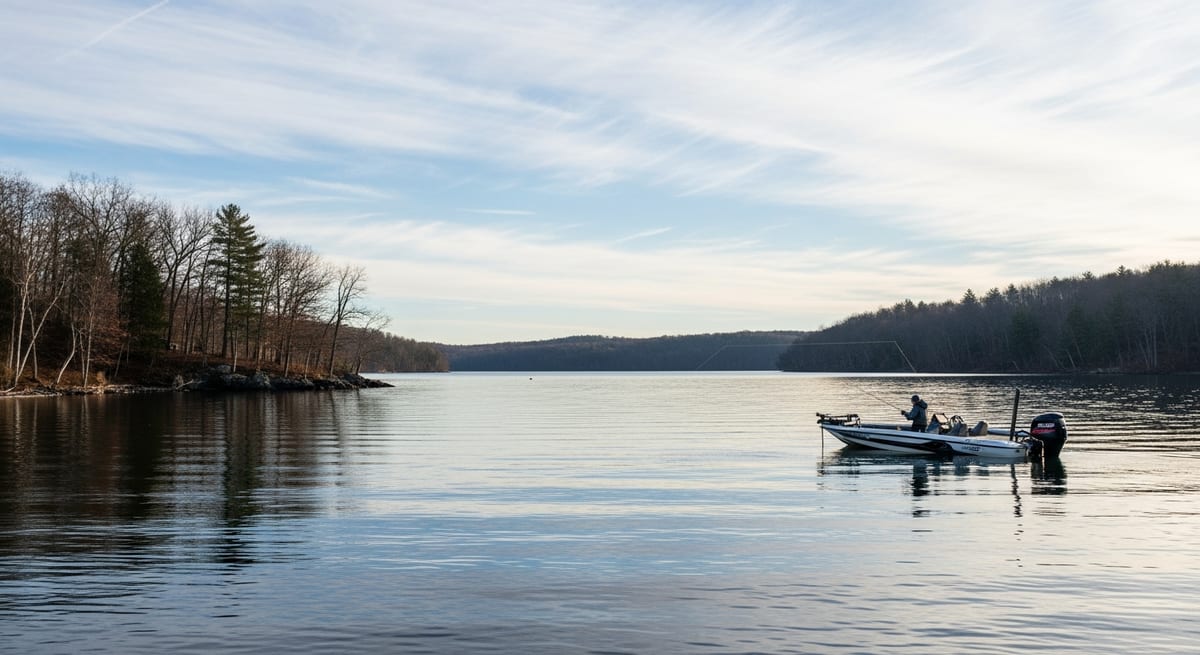
On Candlewood Lake after a northwest wind event, bass communities fishing the main-lake humps report the same pattern: conventional presentations stop generating bites, but a 3-inch stub worm on a 1/16-oz mushroom head fished nearly motionless on the bottom keeps producing. The Ned rig. A finesse setup developed by Midwest fishing writer Ned Kehde, has built a consistent following among CT bass anglers over the past several years, particularly on clear-water impoundments where bass can closely inspect anything that doesn't look natural. CT communities who fish Candlewood, Bantam, and Lillinonah regularly place it near the top of their post-frontal, high-pressure short list.
What Makes the Ned Rig Different from Everything Else in the Box
The Ned rig consists of two simple components:
- A mushroom-head jig (1/16-3/16 oz, size 1-2/0 hook). The flat bottom allows the bait to stand upright on the bottom
- A short stub worm (2.5-3.5 inches) hooked through the nose, with the remaining body floating upward off the bottom
The upright tail posture is the defining feature. Unlike other bottom presentations where the bait lies flat, the Ned rig stands the soft plastic tail up off the bottom, creating a small, subtle, vulnerable profile. The flat head allows the lure to inch and pivot naturally with current or line movement.
CT bass communities fishing rocky hard-bottom structure. The gravel points on Bantam, the main-lake humps on Candlewood, the boulder-strewn coves along the Lillinonah shoreline, report the stand-up posture regularly outproduces flat-lying presentations when fish are inactive or scrutinizing baits closely.
Components anglers typically run:
- Z-Man TRD (The Real Deal). The original Ned worm, made from ElaZtech which floats and holds up across multiple fish
- Berkley PowerBait MaxScent Flat Worm, scent-infused alternative widely used in CT tournament circles
- Z-Man Finesse ShroomZ jighead or similar flat-bottomed mushroom head
The CT Windows Where the Ned Rig Outfishes Conventional Presentations
Clear water, candlewood, Bantam, and Lillinonah: The small, subtle profile and natural stand-up posture tend not to trigger the wariness that larger lures produce in clear conditions. Anglers who fish Candlewood's pressured main-lake structure report the Ned regularly draws bites in areas where fish had stopped responding to crankbaits and swimbaits. On Bantam, where summer clarity can run several feet of visibility, CT bass communities describe it as their default presentation for fish that have locked on to a spot and won't chase.
Post-cold-front windows: After a cold front tracks across Connecticut, typically accompanied by northwest winds and a temperature drop. Bass communities report fish going inactive and pulling tight to cover. CT anglers fishing Bantam's rocky shorelines and Candlewood's main-basin humps describe a nearly motionless Ned rig as one of the few presentations that still draws bites in these windows. The bite tends to be subtle: a slight load on the line rather than an aggressive strike.
Heavily pressured public water: On lakes that see sustained fishing pressure throughout the season, bass appear to condition against conventional presentations over time. CT bass communities on regional forums and Facebook groups frequently attribute Ned rig catches to fish that were following but refusing other lures earlier in the same session.
Shallow rocky areas: The mushroom head's flat bottom tends to snag less frequently than round-head jigs on rocky substrate. A practical advantage CT anglers fishing the rocky points at Bantam and the boulder-field coves along the Housatonic impoundments consistently mention.
When bass are short-striking: If fish are following but not committing to other lures, the short worm body keeps the hook at the bait. Fish that make any contact are difficult to miss.
How CT Anglers Work the Ned on the Bottom
Standard technique: Cast, let it sink on semi-slack line, let it settle on the bottom, then do almost nothing. Inch it forward with very subtle rod shakes, 6-inch drags, and extended pauses. CT bass communities fishing Candlewood's main-lake humps describe picking up bites on pauses that last 10 seconds or longer after the bait stops moving, long enough to feel unproductive if you haven't committed to the approach.
Shaking in place: Hold the rod still and shake the tip with small, quick trembles. The tail vibrates while the bait stays mostly in position. Anglers fishing clear-water CT lakes report this variation as particularly useful when fish are visible near the bait but won't close. The movement adds triggering action without relocating the bait to a new spot.
Slow drag: Drag the bait 6-12 inches along the bottom, then stop completely for 5-10 seconds. The lure tips back upright after each drag. CT anglers fishing the rocky points at Bantam and the gravel flats along Lillinonah's main basin describe this as the most natural-looking retrieve on hard bottom.
Ned rig vs. drop shot on CT structure: The Ned sits on or very near the bottom; the drop shot suspends the bait above the bottom at a fixed height. Anglers fishing Candlewood's offshore humps in late summer typically move to the drop shot when sonar shows fish holding 3-6 feet above the structure, and return to the Ned when fish have pulled down to the bottom itself. CT bass communities generally describe these as position-dependent calls based on what the graph is showing, not competing philosophies.
Seasonal timing: CT bass anglers fishing the spring prespawn window, typically late April through mid-May when water temperatures on shallower impoundments like Bantam approach 55-60°F, report the Ned produces well on the rocky transition zones where fish stage before moving shallow. As water cools back through that same range in fall, communities describe the Ned regaining effectiveness as bass slow down and feed more deliberately before winter.
Gear and Line Choices CT Finesse Anglers Favor
Rod: A 6.5-7 foot medium-light or light spinning rod with a fast or moderate-fast tip. The sensitive tip registers the subtle bites common in finesse fishing and allows the light Ned head to load the rod on the cast. CT anglers fishing calm, clear conditions on lakes like Candlewood tend to favor the lighter end of this range.
Reel: 2000-2500 size spinning reel. Finesse presentations don't require heavy drag systems, and a lighter reel reduces fatigue over long sessions covering structure.
Line: 6-8 lb fluorocarbon, or 10 lb braid with a 6-8 lb fluorocarbon leader 18-24 inches long. The light, low-visibility leader matters most on clear-water Connecticut lakes. CT anglers fishing Candlewood and Bantam in calm, high-pressure conditions frequently drop to 6 lb fluorocarbon, either as a leader or as straight mainline, to reduce line visibility. Straight fluorocarbon mainline eliminates the leader knot for the cleanest presentation.
Jig head size: 1/16 oz in very shallow water (2-4 feet). 3/16 oz for standard depths up to 15 feet. 1/4 oz for deeper water or wind drift. Lighter heads fall more slowly and allow the worm to stand up more naturally, cT finesse communities generally advise going as light as depth and current allow.
CT regulations: Largemouth and smallmouth bass in Connecticut are subject to a 12-inch minimum size limit and a 5-fish daily creel limit on most public waters. Water-specific exceptions and any seasonal closures are detailed in the current Connecticut Fishing Guide at ct.gov/deep. Anglers fishing Bantam, Candlewood, and Lillinonah should verify before the season, as special regulations can apply to specific impoundments.
EVERY SATURDAY MORNING
Weekly fishing intelligence
Nationwide conditions, what's biting, and honest gear deals. One email, no noise.
No spam. Unsubscribe anytime.