
CT Shore Anglers at Niantic, Bluff Point, and the Race Report the Night Tide Window Moves Fish Shallow in Ways That Break Daytime Location Logic. What LIS Surf Communities, ASMFC Slot Regulations, and DEEP Coastal Access Hours Reveal About After-Dark Striper Fishing on the CT Coast
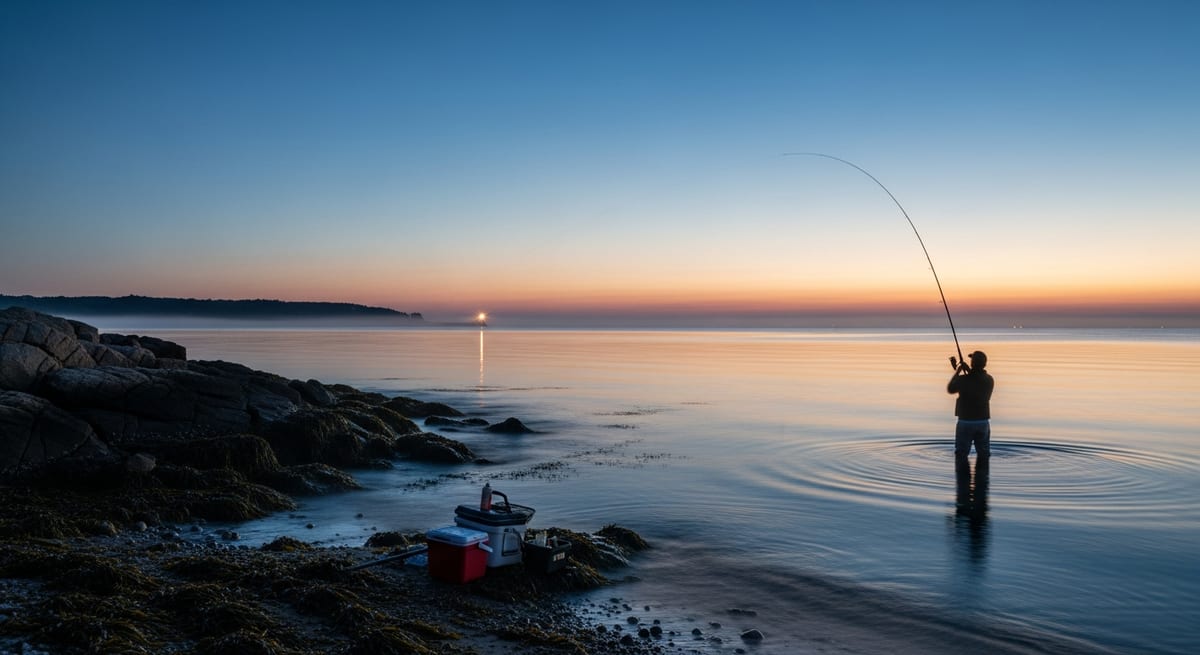
Shore casters who fish the Niantic River mouth after the last light drops report finding stripers in water running waist-deep or shallower. Fish that held well offshore all afternoon, according to accounts shared across LIS surf fishing communities. That pattern repeats at tidal inlets and sandy beach fronts along the CT coast and is among the most consistently documented behaviors in the surf community's seasonal reports. Night fishing for stripers requires different location logic, adjusted gear, and familiarity with CT DEEP access rules that don't apply during daytime hours, particularly at state parks where beach areas post closing times that vary by season.
When the Shallows Turn On
The case for night fishing isn't built on a single assertion. It's built on years of accumulated community reports from CT shore casters and kayak anglers. Anglers who regularly fish the Housatonic mouth and Niantic Bay in summer describe a consistent pattern: fish that spend daylight hours holding deep and largely inactive move into shallow water during the last hour of light and stay there through the outgoing tide. This movement appears frequently enough in community accounts that regulars plan around it rather than treating it as occasional.
The behavior tracks with what ASMFC tagging data shows about mature stripers increasing coastal foraging after dark. Larger fish. The 30-inch-plus class that rarely shows up in CT daytime surf reports, appear disproportionately in night-session accounts from the same anglers who fish those beaches during the day. That size skew is a common observation in LIS surf community posts, not a universal guarantee, and individual nights vary considerably depending on bait presence, tide phase, and water temperature.
CT Night Access, state Parks and Shore Points
Before planning a night trip in CT, know which access points are legal after dark. CT DEEP state park beaches, including Hammonasset Beach State Park in Madison and Harkness Memorial State Park in Waterford, post closing hours that typically align with sunset or specific posted evening times. Shore casters who fish these areas regularly note that parking areas close on the posted schedule, and remaining on the beach after lots close puts anglers in violation of park rules. Verify current access hours directly with DEEP before planning a night trip around these locations; hours change seasonally.
Points with better late-night access tend to be municipal boat ramps, town shoreline areas, and undeveloped coastal reserve stretches. Bluff Point State Park in Groton operates on coastal reserve rules rather than day-use beach rules. Anglers in the area report that foot-access trails carry different hours than the parking area, but advise verifying current seasonal terms with DEEP's coastal division directly. The Race is fished primarily from boats or kayaks and doesn't carry land-access restrictions in the same way. The Housatonic mouth at the Milford and Stratford shoreline has publicly accessible points with later windows, though specific parking and access vary by season and exact location.
Lure Selection, vibration Over Visibility
The consensus among CT surf casters who fish regularly after dark is that lure selection shifts from visual appeal to vibration and surface disturbance. Bass use their lateral line to locate prey in low-light and dark conditions, and lures that create consistent pressure signals tend to outperform those that depend primarily on flash or color.
Surface lures are the most frequently cited presentation in night fishing reports from CT shore communities. A large pencil popper, gibbs or Atom Popper in the 2 to 3 oz range, worked with a walk-the-dog or popping cadence creates surface disturbance that bass can locate without visual confirmation. Black is the most widely recommended color in CT night-fishing accounts, as it creates a defined silhouette against ambient sky light. Subsurface options include the Gibbs Danny Swimmer and Yo-Zuri Mag Darter for fish not actively looking up. A white bucktail jig worked slowly through tidal current around Niantic Bay structure and the Housatonic outflow is among the most consistently cited night presentations in LIS surf fishing community trip reports.
Tide Windows and Moon Phase at CT Inlets
Anglers who fish the same CT spots across a full season describe the night bite as noticeably more productive during specific tide phases. At tidal inlets like the Niantic River mouth and the Housatonic outflow, the two-hour window surrounding a tide change, particularly the outgoing, generates the most consistent community reports of active surface feeding. Moving water concentrates bait at the inlet throat, and bass station at the point where current delivers food to them.
Moon phase factors in differently than many casual accounts suggest. Shore casters in the CT surf community report that a full moon can slow the shallows bite in calm water, because ambient light reduces the concealment advantage bass rely on in shallow ambush positions. New moon and quarter moon nights with moving tides are more frequently cited as productive in community night-fishing reports from LIS regulars. Wind chop and cloud cover change the calculation on bright nights, and anglers who track sessions note the moon-phase pattern is real enough to factor into trip planning without being deterministic.
Approach, Stealth, and Light Discipline
CT shore casters who fish consistently after dark describe a set of practices the surf community has settled on through accumulated experience. Enter the water slowly, wading creates pressure waves that travel farther at night when fish are in shallow, alert-feeding mode. Once in position, stand still for several minutes before casting; fish that weren't there when you arrived may move in as any disturbance settles.
Light discipline is consistently flagged as the most common error made by anglers new to night fishing. White light destroys night vision for 10 to 15 minutes, and red-filtered headlamps are the standard recommendation among CT surf regulars. Shining any light on the water before or during a drift pushes fish. This point appears in nearly every CT night-fishing community account. Keep voices low, wear dark clothing, and minimize metal-on-metal contact; sound carries farther over calm water than most anglers expect.
Two rigged rods set up before leaving the parking lot eliminate fumbling in the dark. Experienced night anglers in the CT community consistently recommend three or four proven presentations rather than a full bag. The goal at night is executing on known producers, not exploring.
Safety After Dark, footing, Boat Traffic, and the Check-In Rule
Night wading on CT rocky surf and jetty access points carries a different risk profile than daytime. Shore regulars who fish the Race area and the Niantic jetties consistently recommend learning any new spot's footing in daylight before wading it at night. Wading boots with cleated rubber soles are preferred over felt by the CT surf community, particularly on cold, wet autumn rock where felt becomes unreliable. Mark your entry and exit point against a fixed landmark before wading in.
Boat traffic on LIS at night requires a visible white strobe. A basic PFD-mounted strobe is the standard among shore waders who fish areas with vessel traffic. Kayak anglers should treat this as non-optional; powerboat operators' visibility is significantly reduced after dark and CT waters carry meaningful vessel traffic on summer and fall nights.
The check-in practice CT shore regulars describe consistently: text your access point and an expected return time to someone before a solo night trip. Cold, wet autumn conditions on the CT coast can deteriorate faster than summer forecasts suggest, and carry an extra layer in a sealed dry bag regardless of the weather at launch.
CT Striper Regulations. The Slot Applies at Night
The ASMFC slot limit for striped bass applies regardless of fishing hour. Under current Connecticut DEEP coastal regulations, which anglers should verify at ct.gov/deep before each season, as the slot structure has shifted multiple times with stock assessments. The recreational limit is one fish per day measuring 28 inches to less than 35 inches, or one trophy fish of 35 inches or greater, not both in the same day. Night fishing does not change the limit, and shore communities note that low-light measurement errors are more common than most anglers anticipate.
CT shore regulars who fish busy access points at Niantic and the Housatonic launches describe consistent EnCon presence during peak run periods, with attention focused on the 28-inch minimum and the 35-inch breakpoint. A bump board with clear inch markings and a reliable headlamp is the practical standard among anglers making accurate decisions on borderline fish in the dark. The one-fish-per-day limit makes a quick, accurate measurement worth the extra time.
For current ASMFC harvest reporting requirements and any in-season adjustments to the slot structure, DEEP's coastal fisheries page is the authoritative source. Regulations in recent seasons have changed on shorter notice than the annual regulation cycle, and community reports from prior years may not reflect the current rule.
EVERY SATURDAY MORNING
Weekly fishing intelligence
Nationwide conditions, what's biting, and honest gear deals. One email, no noise.
No spam. Unsubscribe anytime.