
CT Pond Anglers at Bantam Lake, Mashapaug Pond, and Quaddick Reservoir Report the Shore Bite for Bluegill and Pumpkinseed Peaks in Late May and Holds Through August, what DEEP 2025-2026 Freshwater Regulations, Lake Survey Data, and the CT Panfish Community Reveal About Catching Sunfish Consistently
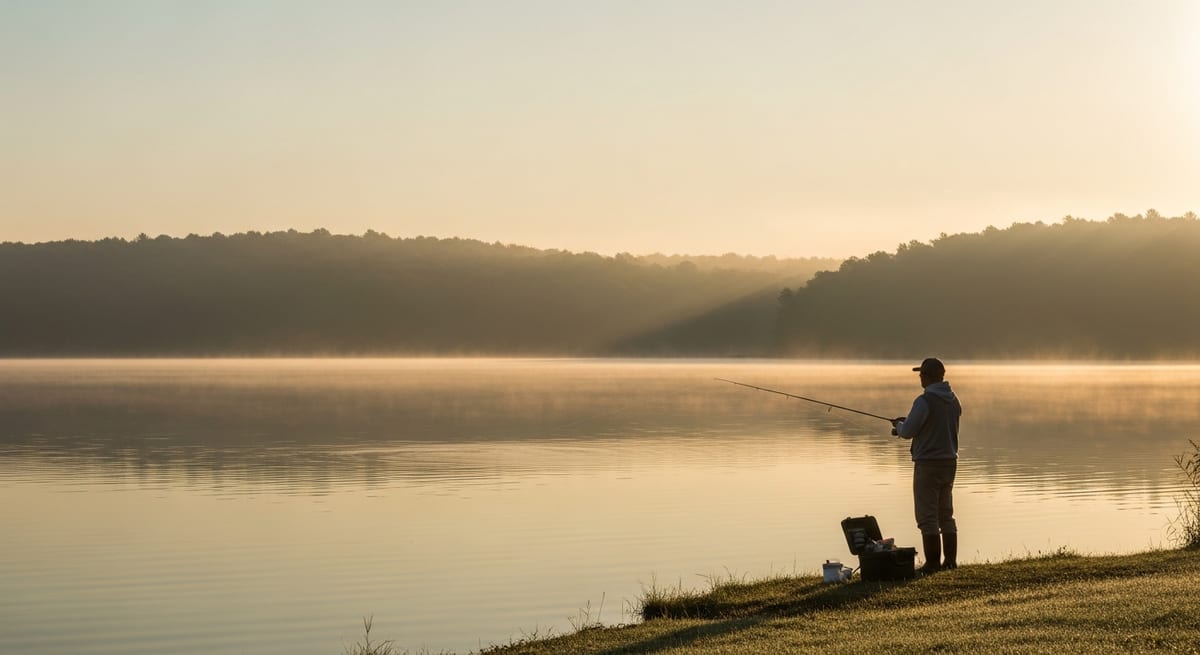
Shore anglers fishing the coves at Bantam Lake in late May and early June consistently report the pumpkinseed and bluegill bite warming up before the bass spawn is fully underway. A window many CT pond regulars describe as some of the most productive sunfish fishing of the year. Bluegill, pumpkinseed sunfish, and yellow perch are established in most warm-water lakes and ponds across Connecticut, according to DEEP lake survey records, and draw consistent pressure from ultralight and bobber-and-bait anglers through late summer. Crappie are present in select documented populations, bantam Lake among them, but DEEP stocking and survey data do not support treating them as a statewide species. For shore anglers, panfish represent a category where public access is abundant, gear requirements are minimal, and the bite remains reliable across a long warm-weather window without requiring a boat.
Connecticut's Panfish Roster, what DEEP Lake Surveys Show
CT's warm-water lakes and ponds support several panfish species, with distribution varying by water type and productivity. DEEP fisheries surveys and public creel data provide the most reliable picture of what is actually established versus what anglers commonly assume.
Bluegill (Lepomis macrochirus): The most broadly distributed panfish in Connecticut, with DEEP survey records documenting them across nearly every productive warm-water impoundment, from suburban town ponds to large lakes like Candlewood and Bantam. They concentrate around structure: dock pilings, submerged brush, and lily pad edges. Shore anglers consistently report bluegill in 2-8 feet of water near any hard structure through the warm season.
Pumpkinseed sunfish (Lepomis gibbosus): CT's native sunfish species, with distinctive orange-red belly coloration and blue-green cheek markings. Shore anglers who fish the state's smaller and shallower ponds regularly report pumpkinseed as the dominant sunfish in weedy, shallow coves, often more abundant than bluegill in water under 5 feet. Slightly smaller on average than bluegill but equally willing to take a bait.
Yellow perch (Perca flavescens): A schooling species that holds at moderate depth around weed edges and submerged structure. CT anglers who target perch consistently work the 6-12 foot range near dock pilings and submerged timber. Perch are a reliable ice fishing target at Quaddick Reservoir and Lake Wononscopomuc, with year-round populations documented at both waters.
Crappie: Black and white crappie are present in select Connecticut impoundments, bantam Lake has a documented population, but should not be assumed statewide. DEEP survey records show crappie as locally established rather than broadly distributed in CT. Where they are present, anglers fishing brush piles and dock structure in 5-10 feet of water report catching them alongside bluegill.
Rock bass: A frequent bonus catch in CT rivers, particularly the Farmington and lower Housatonic, where they hold in rocky pockets alongside smallmouth bass.
Named Waters and Public Shore Access
The most consistently cited panfish locations in Connecticut appear regularly in CT lake community threads and DEEP access records, waters where documented fish populations and public access reliably overlap.
Bantam Lake (Morris/Litchfield): CT's largest natural lake with documented populations of bluegill, pumpkinseed, yellow perch, and crappie. DEEP maintains a public boat launch and there is shore access at the adjacent state park. Anglers who fish the dock-heavy northern shore through summer report bluegill and crappie concentrated around older dock structure in 4-8 feet of water.
Mashapaug Pond (Union): Shore anglers report strong pumpkinseed and bluegill populations in the shallow coves, with the weedy southwestern shoreline consistently cited as the most productive public shore access point. DEEP's public boat ramp provides the primary lake entry.
Quaddick Reservoir (Thompson): A documented yellow perch destination among northeast-corner CT anglers. The main basin holds perch in the 7-12 foot range, with the DEEP access area serving as the primary shore entry point. Spring and fall are the most consistently reported productive perch seasons at this water.
Coventry Lake / Lake Wangumbaug (Coventry): Multiple public access points and a reliable bluegill and pumpkinseed population make this a well-used central CT shore panfish destination. Anglers with local knowledge of the lake point to the weedy northwest cove as a consistent sunfish location through August.
Lake Wononscopomuc (Lakeville): A deeper, clearer lake than most CT panfish destinations, yellow perch are the primary target here rather than sunfish, according to Litchfield County anglers who fish the western basin. DEEP maintains a public boat launch. Best fishing is reported in early fall and through the ice season.
CTDEEP's online access viewer lists all public boat launches and fishing access areas by town, and is the most reliable resource for identifying shore entry points on unfamiliar waters.
Ultralight Setups CT Shore Anglers Run
The consensus among CT pond anglers is that panfish gear should be kept as simple as possible. The setups that produce the most fish are basic, overpowered tackle diminishes sensitivity to smaller strikes and reduces the appeal of what is fundamentally a light-tackle bite.
Rod and reel: A 5-6 foot ultralight or light-power spinning rod paired with a 1000-2000 size reel is the standard configuration among CT panfish shore anglers. Light action gives better feel for the subtle taps common on a bobber rig.
Line: 4-6 lb monofilament is the near-universal choice among CT panfish regulars. Monofilament presents small baits naturally and handles sunfish up to 12 inches without issue. Braid and fluorocarbon are rarely a practical improvement for this application.
Hooks: Size 6-10 long-shank or baitholder hooks. Small hooks match small mouths. Anglers new to panfish frequently cite oversized hooks as the single most common reason for missed strikes on bluegill and pumpkinseed.
Bobber and split shot: A small spring-snap bobber allows precise depth setting and immediate strike indication. For panfish in 3-8 feet of water, a 1-inch float is appropriate. A single bb-size split shot pinched 6-8 inches above the hook brings the bait to the right depth below the float.
Total cost: CT panfish anglers commonly report assembling a complete bobber rig, rod, reel, line, hooks, and floats, for under $25. The low barrier to entry is part of why shore-based panfishing remains one of the most active freshwater categories at public access areas across the state.
Bait Selection, what CT Anglers Consistently Reach For
Panfish are not selective feeders, and CT shore anglers report reliable results across several bait types through the warm season.
Live worms: Fresh nightcrawlers or red wigglers on a small hook remain the standard panfish bait in Connecticut. The consistent community guidance: thread a small piece of worm, just enough to cover the hook point, rather than an entire crawler. Too much worm allows small-mouthed sunfish to strip it without committing to the hook. A thumbnail-sized piece is sufficient for bluegill and pumpkinseed.
Crickets: Live crickets are reported as reliable bluegill bait from late June through August, mimicking the insects that fall from overhanging vegetation into the water. CT anglers fishing lily pad edges and dock sections in summer thread a cricket through the thorax on a size 8 hook and fish it just under the float.
PowerBait Crappie Nibbles: Berkley's small scented soft dough pieces are a frequently mentioned non-live-bait option in CT panfish circles, effective for bluegill, perch, and crappie. Thread one or two on a small hook. No cooler required and easy to manage in summer heat.
Small jigs (1/32-1/16 oz): Tiny tube jigs, curly-tail grubs, and Gulp! fry-sized baits on micro jig heads produce panfish on a straight cast-and-retrieve. CT anglers who prefer an active approach over bobber fishing report small jigs as a more engaging alternative, more casts per hour and more direct contact with the strike.
Table Quality by Species and the DEEP 2025-2026 Bag Limits
Opinion in the CT freshwater community is consistent on yellow perch and crappie as table fish. Both are widely described as mild, firm white flesh that holds up well pan fried with a light cornmeal or flour coat. CT anglers with experience on both species commonly rate them among the better-tasting freshwater fish available in the region.
Opinion on bluegill and pumpkinseed is more varied. Most CT anglers who do keep them report the flavor as good, particularly fish in the 7-8 inch range. Smaller specimens are less commonly kept, not because the flavor is poor, but because the cleaning time relative to fillet yield becomes impractical below 6 inches.
Cleaning: A sharp fillet knife or electric fillet knife speeds the process considerably. For fish under 8 inches, many CT anglers opt to scale and gut them for whole pan frying rather than filleting. Larger specimens fillet cleanly, yielding thin but well-flavored pieces.
DEEP 2025-2026 Freshwater Regulations: The CT DEEP 2025-2026 Freshwater Fishing Guide lists no statewide minimum size limit for bluegill and pumpkinseed sunfish in most Connecticut waters, with a daily bag limit of 30 fish per angler for sunfish as the general statewide rule. Yellow perch carry separate size and bag regulations. Rules for specific water bodies may differ from statewide defaults, verify current regulations for the specific water you are fishing at ct.gov/deep before keeping any fish.
For anglers keeping fish, a cooler with ice and water maintains panfish in good condition for several hours. Cleaning on the day of the trip is the standard practice among CT shore anglers who retain a portion of their catch.
EVERY SATURDAY MORNING
Weekly fishing intelligence
Nationwide conditions, what's biting, and honest gear deals. One email, no noise.
No spam. Unsubscribe anytime.