
Saltwater Surf Fishing in Connecticut: Shore Access and Target Species
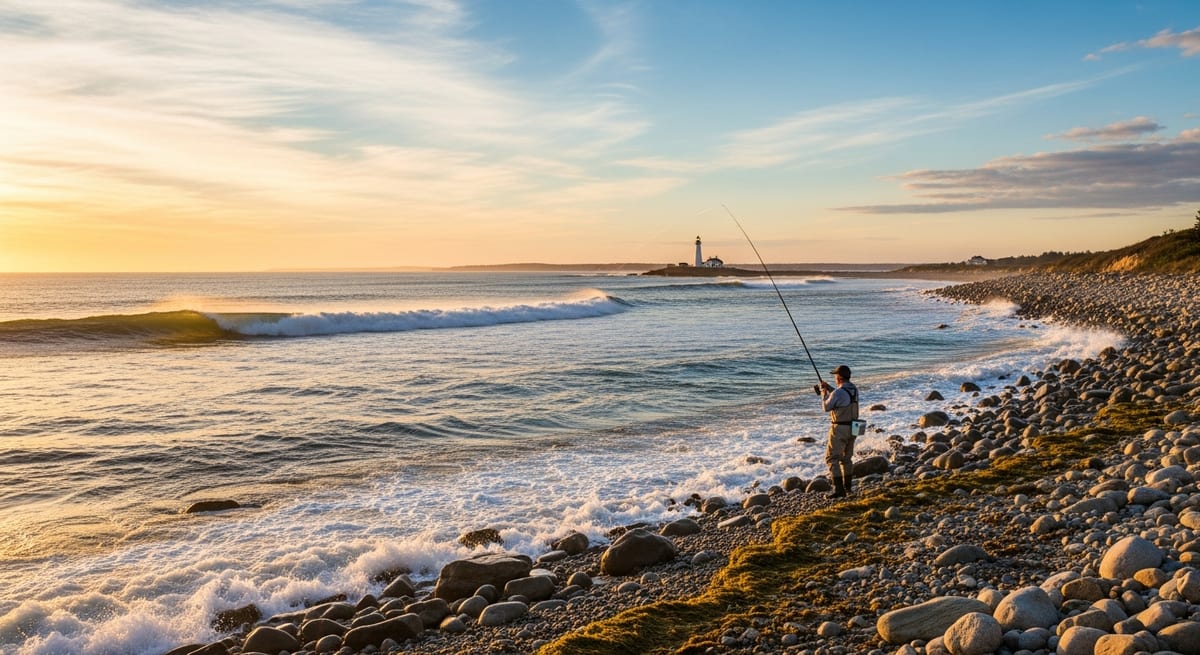
Connecticut's 96 miles of coastline give freshwater-focused anglers an opportunity to diversify their fishing without a boat. Surf fishing, casting from the beach or rocky shoreline, produces striped bass, bluefish, summer flounder (fluke), weakfish, and scup throughout the warmer months. Here's how to get started from the shore.
Connecticut Shore Access for Surf Fishing
Shore access in Connecticut varies by town and property ownership. Key access categories:
State beach parks with fishing access: Hammonasset Beach State Park (Madison) is the most accessible and productive; Rocky Neck State Park (East Lyme) offers rocky shoreline with good structure. Both allow fishing outside swim areas.
Town beaches: Many coastal towns have town beaches with fishing access for non-residents at certain times or locations. Rules vary, check with town parks departments.
DEEP boat launches: Several DEEP-managed coastal boat launches have adjacent shore fishing areas. Dates Park in Milford, Hoadley Creek in Madison, and Selden Neck have shore access adjacent to launch facilities.
Rocky points and jetties: The mouths of rivers and tidal inlets. The Connecticut, Housatonic, Thames, and smaller rivers, concentrate fish and often have accessible shoreline. Jetties and breakwaters at river mouths are productive striper spots.
Private beach restrictions: Much of CT's shoreline is private or restricted to residents. Respect posted areas, access disputes are ongoing in CT coastal communities.
Seasonal Timing and Target Species
Spring (April-June): Striped bass arrive in CT waters from their Chesapeake wintering grounds. May and June are peak striper months on the shore as fish push inshore following bunker (menhaden) and herring. Bluefish also appear in May and are aggressive and abundant through summer.
Summer (July-August): Surf action slows for stripers in the warmest period as fish move offshore to cooler water or into deeper tidal rivers. Fluke (summer flounder) are the primary summer target from shore. Fish in bays, inlets, and along sandy shorelines. Scup (porgy) are also abundant and aggressive from jetties and rocky structure.
Fall (September-November): The best season for surf fishing in New England. Fall striper migration produces some of the largest fish of the year as bass gorge on baitfish before heading south. Bluefish can be explosive in October. The fall run concentrates around points, jetties, and river mouths.
Winter: Minimal shore opportunities. A few die-hards fish tautog (blackfish) off jetties and rocky structure through December; tog are inactive and take very still presentations.
Gear for CT Surf Fishing
Surf fishing from CT beaches doesn't require specialized surf-casting gear unless you're fishing wide open beaches where distance casts matter. For most CT shore fishing from rocky points, jetties, and protected beaches, a medium-heavy 9-10 ft rod with a 3000-4000 series spinning reel handles the range of applications.
Line: 20-30 lb braid as mainline with a fluorocarbon leader (20-30 lb for stripers; 30-40 lb for bluefish due to their tooth wear on line). Braid's thin diameter and sensitivity are advantages in surf fishing.
Terminal rigs for stripers: A bucktail jig (1-2 oz) with a soft plastic trailer is the versatile workhorse. Swimming plugs (SP Minnow, Bomber Long A style) retrieved with a slow swimming cadence are effective when fish are following bait near the surface. Circle hooks with bait (clams, bunker chunk) on a simple fish finder rig produce when sight-casting isn't working.
For bluefish: Wire leader or heavy fluorocarbon (50 lb) is recommended, bluefish have sharp teeth and will cut through lighter fluorocarbon. Metal jigs and poppers in 1-3 oz sizes retrieved fast cover water effectively.
For fluke: Bucktail jigs (1-1.5 oz) with gulp soft baits tipped with a strip of squid. Fish slow, bouncing bottom in sandy-bottomed bays and inlets. Fluke are ambush predators that sit on the bottom, your presentation needs to get near them.
Regulations and Licensing
Saltwater fishing license: Connecticut requires a free saltwater angler registration (Connecticut Saltwater Angler Registration, CSAR) for all saltwater fishing, including shore fishing. Register online at ct.gov/deep. It's free and takes 5 minutes.
Striped bass regulations: Size and bag limits change annually and are set cooperatively by the Atlantic States Marine Fisheries Commission. As of recent seasons, a single-fish bag limit with a 28-31 inch slot was in effect for recreational anglers; check DEEP's current regulations before fishing. Rules are strict and enforcement is present at productive spots.
Bluefish: Subject to bag limits (recent years: 3 fish per person). Check DEEP for current season limits.
Fluke (summer flounder): Bag limits and minimum size apply; CT's fluke regulations are set by ASMFC in coordination with neighboring states.
Regulations can change year to year. Before your first salt trip, download the current CT marine fisheries guide from the DEEP website.
EVERY SATURDAY MORNING
Weekly fishing intelligence
Nationwide conditions, what's biting, and honest gear deals. One email, no noise.
No spam. Unsubscribe anytime.