
Shore Fishing Tips: How to Catch More Fish from the Bank
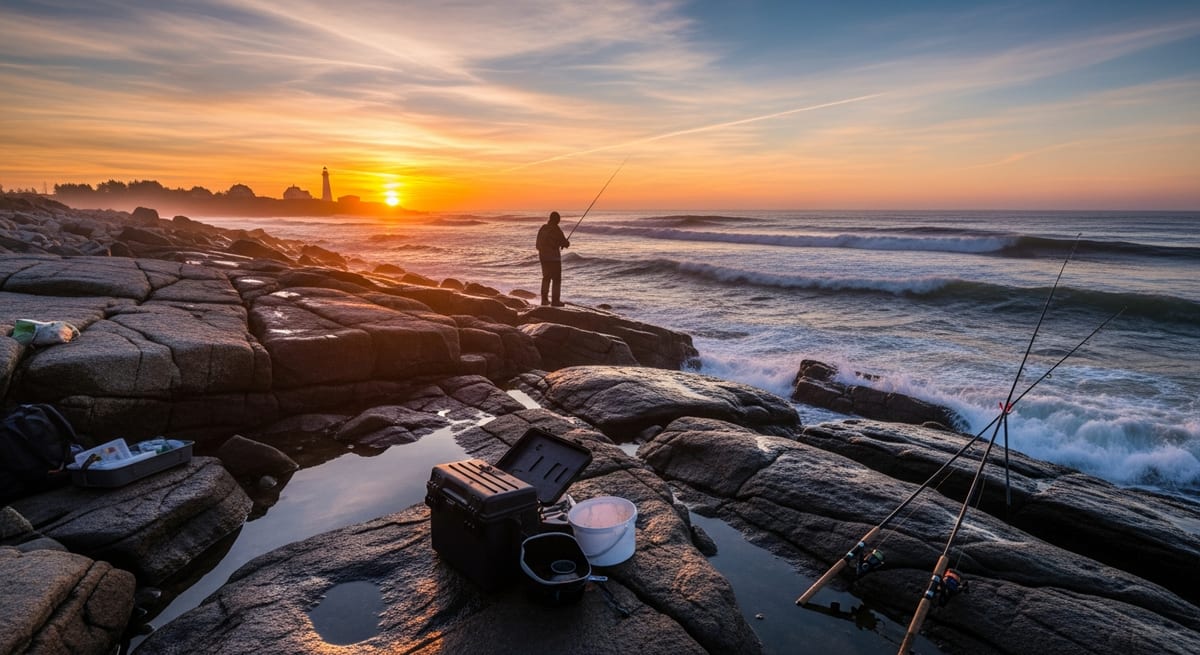
Most fishing advice assumes you're in a boat. Sonar to find structure, electric motor to position, trolling along a weed edge, all boat-centric. The 60% of anglers who fish exclusively from shore or by wading receive significantly less tactical guidance. But shore fishing isn't a compromised version of boat fishing; it's a different approach with its own advantages and techniques that, done correctly, produces excellent results on the fish that live close to shore.
The Shore Angler's Advantage
Bank anglers overlook the fact that they have significant advantages a boat can't duplicate. They're quieter, walking a bank in soft-soled shoes generates less noise than any boat motor. They can access spots boats can't reach, shallow overgrown coves, brushy streams, and tight pockets under overhanging trees that no boat can navigate. And they can move quickly between spots by foot in ways that repositioning a boat never allows. The key is learning to use these advantages deliberately rather than defaulting to 'I'd be doing better with a boat.'
Reading Water from Shore
Without sonar, you read water visually. Depth: Darker water indicates depth; lighter water indicates shallower bottom. In clear water, you can often see the bottom directly. Structure: Look for any physical feature that breaks the visual pattern of the lake's surface, submerged rocks (often visible as shadows or color change), weed edges, dock pilings, fallen trees reaching from bank into water. Current seams in rivers: Where fast and slow water meet (visible as a color or texture change on the surface) is where fish hold. Wind: Wind pushes surface water and concentrates baitfish on the windward bank. Bank anglers on the windward shore on a moderate-wind day often outperform boats fishing in calmer water.
Casting Angles: The Key Adjustment for Bank Anglers
The single biggest technique change that improves bank fishing results is casting parallel to the bank rather than perpendicular into open water. A cast straight out from the bank retrieves through mostly unproductive open water. A cast parallel to the bank, either left or right along the shoreline, keeps the lure in the productive zone (the 10-15 feet of water adjacent to shore) for the entire retrieve. Practice casting parallel to structure edges from a fixed position. The bass are almost always in the first 15 feet from the bank, not 50 feet out.
Best Shore Fishing Lures
Weedless options: Texas-rigged soft plastics and weedless spoons allow bank anglers to fish tight to the bank without constant snags. Inline spinners: Versatile, castable at any angle, and effective across species. Cast parallel to the bank and retrieve near shore. Topwater lures early morning: Bank anglers positioned before sunrise have access to feeding bass in the shallows. A small walking bait or popper along the near bank at first light is consistently productive. Ultralight for trout and panfish: An ultralight setup with small inline spinners and live bait covers the maximum number of accessible species from shore. Versatile for anglers fishing diverse small CT water.
Connecticut Shore Fishing Access
Connecticut has more shore fishing access than most anglers realize. State boat launches: Nearly all CT DEEP boat launches include shore fishing access on the adjacent bank. You don't need a boat to use the access area. State parks: Hammonasset Beach, Rocky Neck, and Bigelow Hollow all include accessible freshwater or saltwater shore fishing. Town parks: Many CT towns maintain lake access areas with fishing rights for residents and nonresidents. CT DEEP fishing access list: The DEEP publishes a complete list of public fishing sites by town, available for download from their website. It includes parking coordinates, access types, and target species for each site.
EVERY SATURDAY MORNING
Weekly fishing intelligence
Nationwide conditions, what's biting, and honest gear deals. One email, no noise.
No spam. Unsubscribe anytime.