
The Strongest Predictor of Whether a Child Asks to Fish Again Is Catching Something in the First Hour. What CT DEEP Family Waters, Tackle Shop Reports, and Community Experience Reveal About Species Choice, Simple Rigs, and First-Trip Planning
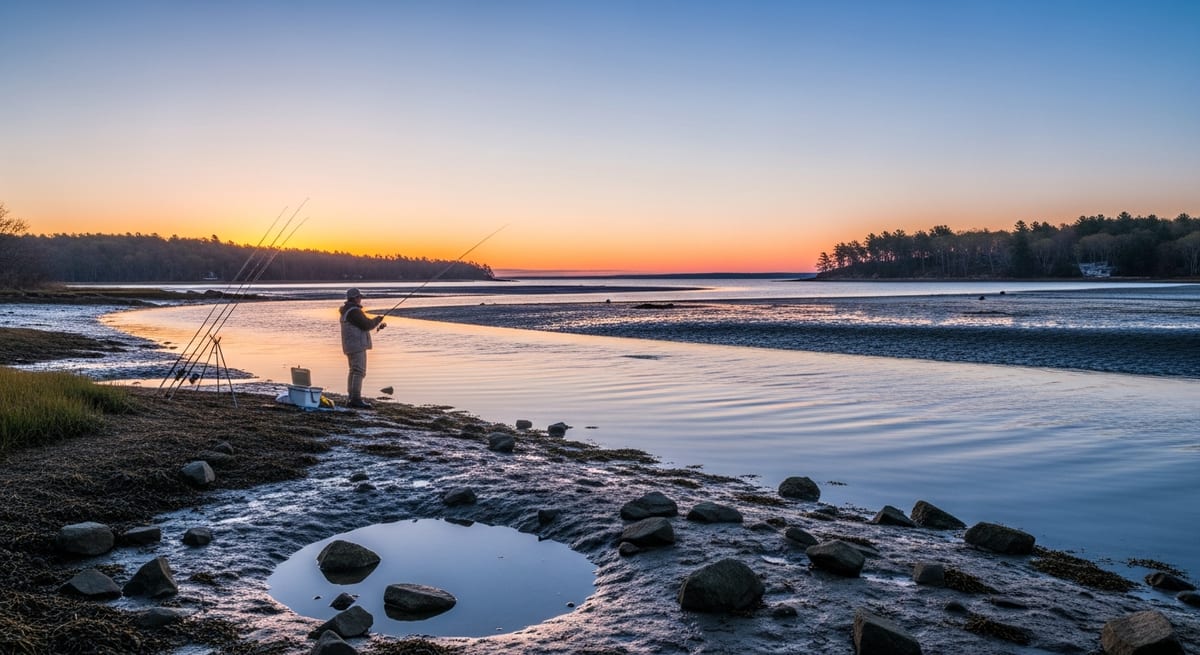
A bluegill school under a dock in 3 feet of water can produce more action in 90 minutes than a full day on trophy bass structure. CT families who regularly fish with young children describe the same pattern across community conversations and bait shop reports: high-action panfish species at accessible DEEP-designated locations, sessions short enough to end on a high note, and simple rigs that put fish in hand without rigging complications. CT DEEP lists family-designated freshwater waters statewide that receive priority stocking and accessible shore infrastructure. Per current CT DEEP licensing rules, anglers under 16 fish freshwater license-free, while adults 16 and older need a valid CT Fishing License; a trout and salmon stamp is required separately if the outing targets trout.
The Species CT Families Report Work Best for Young Anglers
Families who fish CT ponds with young children consistently cite the same species in community accounts and bait shop conversations.
Bluegill (pumpkinseed/sunfish): The most commonly recommended starter species in CT community reports. Pumpkinseeds are found in nearly every CT pond and lake, bite readily on small pieces of nightcrawler, and are easy to handle safely without specialized tools. Dock edges and weed margins in 2 to 6 feet of water tend to hold concentrated populations during summer. Per the CT DEEP Angler's Guide (2025), bluegill and other sunfish species carry no size or bag limit in most CT freshwaters, which removes the regulatory burden from family outings focused on experience rather than harvest.
Yellow perch: Frequently mentioned by CT kayak and shore anglers as a strong option for young anglers because perch school predictably and tend to bite in bursts rather than one-at-a-time. Dock pilings, submerged timber, and rocky points are the structure types community reports most often associate with consistent perch action. Like panfish, yellow perch carry no minimum size or bag limit in most CT freshwaters under current DEEP regulations.
Stocked trout: CT DEEP stocks trout in over 90 waters statewide, and tackle shops near stocking sites consistently note that recently stocked fish are far more catchable than holdover fish. Checking the DEEP trout stocking database before a trip shows recent activity by water. Adult anglers targeting trout need a trout and salmon stamp in addition to a base fishing license to fish these waters legally.
What CT Tackle Shops Report About Kids' First Setups
The rod and reel combination CT tackle shop staff most often recommend for young anglers runs around 5 to 5'6" in ultralight or light power, paired with a small spinning reel in the 1000 to 2000 series. For children roughly under 8, staff at CT shops frequently mention closed-face spincast reels, such as the Zebco 33, because they largely prevent the line tangles that can shut down a session before it gains momentum.
Families who describe smooth first trips tend to use 6 to 8 pound monofilament rather than fluorocarbon or braided main line, which adds cost and complexity without practical benefit for panfish applications. Monofilament is forgiving, easy to re-tie in the field, and handles most species a young angler will encounter.
Families who report the smoothest outings consistently describe completing all terminal tackle prep at home rather than at the water. Arriving with hooks already tied, bobbers already clipped, and pre-tied backup leaders in a small bag means the first cast happens within minutes of arriving, not after a prolonged rigging session that exhausts patience before a single line is wet.
Building the Rig That Holds Up at the Water's Edge
The bobber rig CT families describe using most reliably for first outings is straightforward: a small hook in the #6 to #8 range, a split shot sinker pinched about 8 inches above the hook, and a slip or fixed bobber set at roughly 2 to 3 feet depending on water depth. A small piece of nightcrawler or red worm, rather than the full worm, tends to produce more hook-ups on small panfish that often short-bite larger baits.
Casting near visible structure gives young anglers a target and positions the rig close to where fish hold. Dock edges, overhanging branches, and the outer margins of emergent weeds are the locations families and community reports most often associate with consistent panfish action on CT ponds.
Watching the bobber is a task children can manage without additional coaching. When it dips or moves sideways, a sweeping rod lift and steady retrieve handles most panfish. For CT ponds with healthy pumpkinseed populations, families who've fished DEEP-designated waters describe this setup in the right location on a summer morning as often producing bites within the first few casts.
What CT Families Who Keep Kids Coming Back Do Differently
Community accounts from CT families who've built multi-year fishing habits with their children point to a consistent set of differences from trips that don't produce a second outing.
Choosing productive spots over exploration. A dock over a known sunfish hole at a DEEP Family Fishing Water, like Wangumbaug Lake in Coventry or Hatch Pond in Sharon, is more likely to deliver consistent action than a scenic but unfamiliar shoreline. Families who report strong first-trip outcomes describe removing the uncertainty of whether fish will be present before ever leaving the car.
Keeping sessions to 90 minutes to 2 hours. CT families who describe the approach that worked mention ending sessions before the child is ready to leave, rather than fishing until disinterest sets in. Leaving while a child is still asking to stay tends to produce requests for another trip; pushing through the fatigue window tends not to.
Stepping back when a fish is on. Community conversations consistently identify this as the variable that matters most. A child who reels in their own fish without an adult taking over at the critical moment describes the catch as theirs. Adults who step in at the moment of truth, even with good intentions, frequently produce the opposite result in how the child retells the trip afterward.
CT DEEP Family Fishing Waters: Locations and What Access Reports Show
CT DEEP designates Family Fishing Event waters that receive priority stocking schedules and are selected specifically for accessible shoreline and dock infrastructure. Several come up repeatedly in community reports from CT families fishing with young anglers.
Wangumbaug Lake (Coventry): Public shore access with multiple entry points and a boat launch. Pumpkinseed and yellow perch are the typical community report from shoreline and dock areas. A commonly cited destination in northeastern CT family fishing conversations.
Hatch Pond (Sharon): A smaller DEEP-managed pond that receives trout stocking and has manageable shoreline access. Reported by families as low-pressure and straightforward to navigate with young children. Adults targeting trout here need the trout and salmon stamp in addition to a base fishing license.
Bolton Lakes (Vernon): Multiple public access points with dock fishing opportunities. Yellow perch and panfish are the typical community report from this water, with piling and rock structure holding fish predictably.
Rocky Neck State Park (Niantic): The sheltered cove inside the park is described by families who've fished it as one of the most accessible coastal options for young anglers in the state. Community reports from the late summer window describe snapper bluefish and schoolie stripers as catchable from shore on simple rigs during the July through September period. Saltwater fishing in CT requires a CT Recreational Marine Fishing License for anglers 16 and older; as of 2025, this license is available at no cost through DEEP eLicense.
The full list of DEEP Family Fishing Event waters is updated each season on the DEEP website. Checking before a trip confirms current access status and recent stocking activity for the specific water.
EVERY SATURDAY MORNING
Weekly fishing intelligence
Nationwide conditions, what's biting, and honest gear deals. One email, no noise.
No spam. Unsubscribe anytime.