
The Snapper Blue Run Hits CT Harbors Hard Every August. Dock Anglers From Niantic to Norwalk Call It the Best Kid Fishing of the Year.
The Fish That Built More CT Saltwater Anglers Than Any Other Species
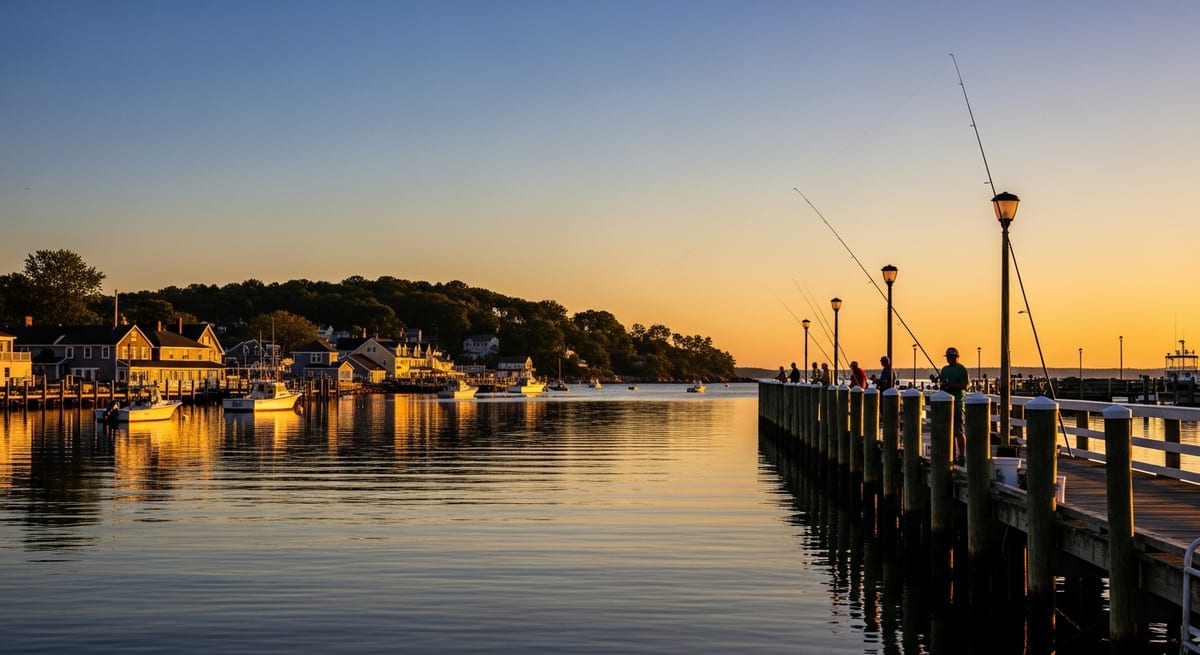
Niantic Bay typically holds its first snapper blue schools by the last week of July, and by mid-August, dock anglers along the Route 156 bridge over the Niantic River are routinely watching surface schools work baitfish within easy casting distance, no boat required.
Snapper blues are juvenile bluefish, typically 6 to 10 inches long. That move into Connecticut's harbors, coves, and estuaries in schools from late July through September. They're the offspring of larger chopper bluefish spawned offshore that spring, following baitfish into protected inshore waters as summer heats up.
Despite being juveniles, they fish like their parents: fast, aggressive, and willing to hit almost anything that moves. The window is predictable, the fish show up across virtually every harbor on the Sound, and when a school is active, the pace of action is unlike most freshwater trips.
CT anglers who fish the run with young children describe afternoons where a kid caught double-digit fish without much coaching beyond the first cast. That kind of consistency is what makes the snapper blue run one of the most-referenced entry points in the CT saltwater fishing community.
When the Schools Arrive, and What the Run Actually Looks Like
Timing: The snapper run in CT typically kicks off in late July, with the most reliable action falling between mid-August and mid-September in most years. In warmer seasons, some runs extend into early October, though most fish have pushed south before then. Bait presence drives snapper location more reliably than the calendar, when the silversides are there, the snappers tend to follow.
Where to look:
Marinas and harbors: Snappers congregate around docks, pilings, and boat traffic in virtually every CT harbor. Niantic, Mystic, Noank, Stonington, Old Lyme, Clinton, Guilford, Branford, New Haven, Milford, Stratford, Bridgeport, and Norwalk all hold fish when the run is on. Scattered baitfish from boat traffic tends to concentrate snappers underneath.
River mouths: Tidal river mouths are consistent snapper habitat throughout the season. The Niantic River, Mystic River, Thames, and Connecticut River mouths all produce reliably, along with smaller tidal creeks up and down the coast.
Bridges: Bridge abutments create current breaks that concentrate baitfish and the snappers hunting them. The Route 156 bridge over the Niantic River draws dock anglers every August and is among the most consistently referenced spots in CT harbor fishing discussions.
Surface commotion: Snapper blues blitzing bait near the surface is distinctive, tight splashing close to shore, often with terns diving overhead. Finding that visual cue puts anglers on fish immediately.
The Light-Tackle Setup CT Dock Anglers Rely On
Snapper fishing is deliberately light tackle. Heavy gear diminishes the experience. Both the feel of the fight and the fish's behavior on the surface.
Basic setup:
- Ultralight to light spinning outfit with 4-6 lb monofilament
- Short trace of 15-20 lb fluorocarbon or a light wire leader (snapper blues have functional bluefish teeth even at 8 inches)
- Size 6-8 single hook or a small treble
- Small foam or clip-on float for dock fishing
Fresh spearing is the standard move. The traditional CT snapper rig. A fresh silverside minnow on a small hook under a float, is what dock regulars consistently recommend. Spearing needs to be purchased fresh from a local bait shop the morning of the trip; day-old refrigerator bait produces noticeably fewer strikes, and anglers who've made that mistake once rarely repeat it.
Small lures that work: Tiny silver spoons in the 1/8 oz range, small surface poppers, and 1-2 inch soft plastic grubs on light jig heads all produce. CT shore anglers commonly favor small spoons for casting distance when fishing from docks or bridges. Fly fishing with small Clouser minnows or tiny poppers draws aggressive strikes, regulars who do it describe the takes as surprisingly violent for a 7-inch fish.
A note on teeth: Even at 8 inches, snapper blues have real bluefish teeth. CT dock anglers routinely keep a pair of needlenose pliers on hand before the first fish is landed. A standard precaution worth making a habit of, especially on trips with kids.
How Experienced CT Dock Anglers Find Schools on Foot
A boat is not required. That accessibility is a core part of why the snapper run works so well for families. Some of the most productive spots in the state are reachable on foot from public access points.
Dock fishing: A fresh spearing under a float near a piling or along the shadow edge of a dock is the standard starting point. When a school moves in, the action makes itself clear. Anglers who fish the docks regularly report that varying the float depth matters. Fish are sometimes stacked at mid-water when nothing is showing on the surface, and adjusting the rig down a foot at a time has turned slow sessions productive.
Bridge fishing: The approach CT regulars describe is casting across tidal current and working lures through the shadow line along current breaks on the shaded side. Switching sides when one isn't producing is a common tactic, as snapper location shifts with current direction.
Chumming: A few pieces of cut baitfish dropped into the current draws schools and keeps them in range. Dock regulars note that crushed crackers or bread crumbs work as a backup when cut bait isn't available.
Depth awareness: CT dock anglers consistently note that newer snapper fishermen tend to fish too deep. Snapper blues are typically in the upper third of the water column when actively feeding. Starting shallow and adjusting down gradually is the approach experienced harbor anglers recommend.
For a first saltwater trip with kids: A float rig with fresh spearing near a dock piling at any active CT harbor during August is the setup CT fishing families return to year after year. When a school is working the area, the action tends to come quickly enough to hold a child's attention from the first cast.
At the Table: What CT Anglers Who Keep Snapper Blues Actually Do
Snapper blues have a better table reputation among CT anglers who actually keep and cook them than their adult-size counterparts typically receive. At 6 to 10 inches, the flesh is firmer and the flavor is rich without the oiliness that discourages some people from eating large bluefish.
CT anglers who've served snapper blues to skeptical guests frequently report the reaction is surprise. The fish holds up better at the table than most people expect from bluefish of any size.
The consistent handling advice from anglers who target the run: ice the fish immediately after landing, fillet and skin them the same day, and plan to cook them fresh that evening. Snapper blues frozen for more than a day or two deteriorate noticeably. This is not a fish to freeze and revisit on the weekend.
The most commonly described preparation among CT dock anglers: skin-on fillets, salt, pepper, a little olive oil in a hot cast iron pan, roughly three minutes per side. The fish handles well with minimal technique when it's that fresh.
Regulations: CT DEEP requires a marine recreational fishing license for saltwater recreational fishing, check the current age thresholds, exemptions, and any applicable bag limit rules at the CT DEEP Marine Fisheries site before your trip. Snapper blues are generally regulated under the statewide bluefish framework, but regulations can and do change year to year. Verify before keeping fish.
EVERY SATURDAY MORNING
Weekly fishing intelligence
Nationwide conditions, what's biting, and honest gear deals. One email, no noise.
No spam. Unsubscribe anytime.