
CT Harbor Anglers at Old Saybrook, Niantic, and Clinton Report Snapper Bluefish Pack into Publicly Accessible Docks Through August, and the Teeth and the Tidal Window Are What First-Timers Consistently Underestimate. What CT DEEP Possession Limits, Incoming Tide Patterns, and the Summer Harbor Community Reveal About the CT Snapper Run
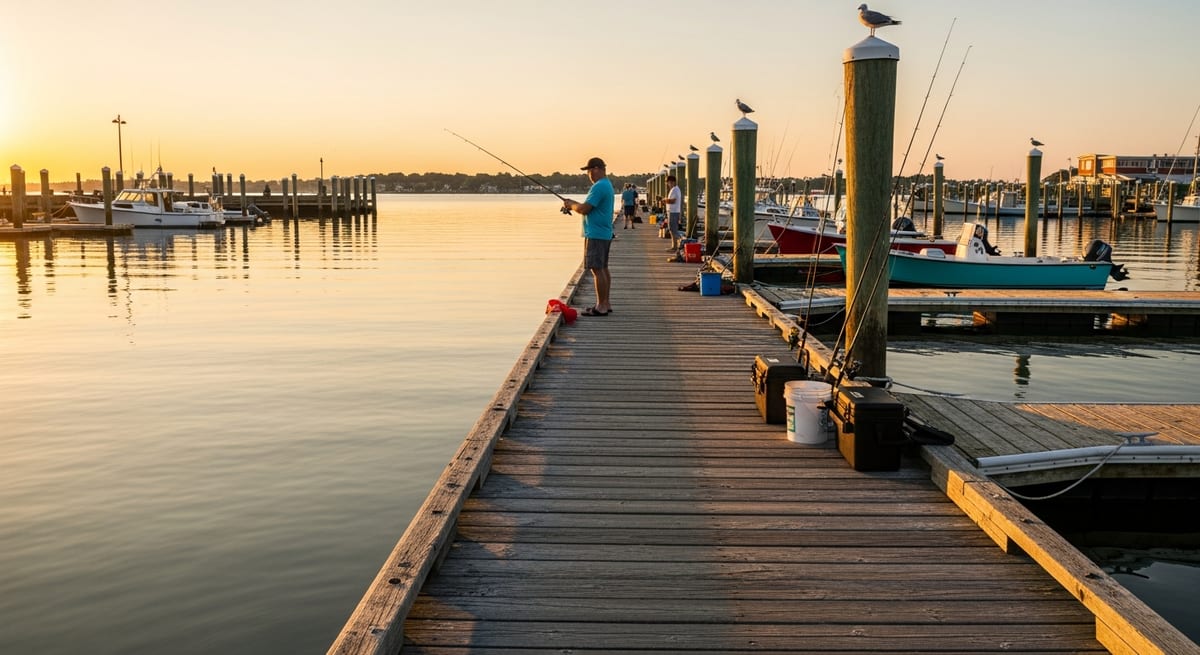
Anglers fishing the mid-August snapper run at Niantic Bay's public access points and Old Saybrook's town dock report a 6-inch juvenile bluefish bending an ultralight rod hard enough that first-timers routinely assume something much larger is on the line. CT harbor communities consistently place snapper bluefish near the top of first-saltwater-species recommendations, not because they're effortless to find on a chart, but because they concentrate in publicly accessible embayments from Old Saybrook to Clinton to Mystic during a predictable summer window, feeding aggressively on small presentations across a range of tidal stages. The teeth are real, the timing is tidal, and a first trip typically produces more fish than anyone expects, along with at least one bite on a small hand that forgot the pliers.
What CT Anglers Mean When They Say Snappers
Snapper bluefish are juvenile Atlantic bluefish (Pomatomus saltatrix) in their first summer of life. The same species as the large adults surf casters target on open beaches, measured in inches rather than pounds. CT harbor reports describe a consistent size progression through the season: early July fish typically run 4-5 inches; August fish reach 6-8 inches; by September, many are 8-10 inches and growing fast. Fish approaching 12 inches in October are typically called cocktail blues.
Connecticut follows ASMFC bluefish possession rules. As of recent ASMFC management updates, the recreational bag limit has been 3 fish per person per day, significantly reduced from limits in prior seasons following stock assessment findings. There is no minimum size limit for bluefish in CT. Verify the current limit at ct.gov/deep/marinefishing before fishing, as ASMFC has revised bluefish regulations annually in recent seasons.
Even at 4-6 inches, snapper bluefish have fully formed, needle-sharp teeth. CT anglers who introduce children to snapper fishing consistently report that the teeth are the primary surprise of the first outing, and the most common source of accidental cuts at the dock. Every angler in the group needs pliers or a hookout tool in hand before the first fish comes over the rail.
Public Docks and Access Points Where CT Snapper Reports Concentrate
Snapper bluefish gather in sheltered coastal embayments where baitfish, primarily spearing, silversides, and young-of-year bunker, concentrate during summer. CT DEEP's public access inventory and recurring community reports from CT fishing forums identify several publicly accessible locations that come up consistently:
Old Saybrook Town Dock (Connecticut River mouth area): Regularly cited in CT shore-fishing communities as one of the most reliably active snapper access points in the state from August through September. Low-railing dock structure and nearby parking make it one of the more practical family setups on the shoreline.
Niantic Bay and Niantic River Estuary (East Lyme/Waterford): Anglers who fish the Niantic River channel and the public access at McCook Point Park describe consistent snapper activity from mid-July through September. The river mouth is particularly active on incoming tides when baitfish push into the estuary.
Clinton Harbor (Clinton): Public dock access via the town marina area. Community reports place reliable snapper numbers here through July and August, with the sheltered harbor holding fish even when wind makes open-water access difficult for first-timers.
Mystic Harbor and Mystic River Estuary: Multiple public access points in the harbor. CT fishing community reports describe mid-summer snapper activity in the sheltered water between downtown Mystic and the river mouth.
Housatonic River Estuary (Stratford/Milford): Public access points along the lower river produce snapper reports from late July through August. The brackish transition zone concentrates baitfish that draw juveniles into casting range.
When fish are feeding actively, the visual signal is recognizable: surface splashing near dock pilings or cove edges, baitfish skipping at the surface, and gulls working low over the water in a sheltered area.
Rigging Simple Enough for a New Angler
Snapper bluefish are well-matched to ultralight or light spinning gear. A setup that lets a 6-inch fish feel like a real fight without overpowering the rod. The standard CT harbor rig:
Rod: 5.5-7 foot light spinning rod. A dedicated rod is not required, any light freshwater spinning rod handles snappers without modification. Reel: Any spinning reel in the 1000-2500 class. Line: 6-8 lb monofilament, or 10 lb braid with a short mono leader for shock absorption. Leader: 12 lb fluorocarbon, 12-18 inches. Optional but recommended for lure fishing, snapper teeth will eventually cut bare mono after several fish. Hook size: #6 or #8 short-shank hook for bait rigs. CT anglers introducing young children to snapper fishing consistently recommend size #8 hooks, easier to bait, easier to remove with pliers, and well-proportioned for fish in the 4-6 inch range.
Bait rig (most frequently recommended by the CT harbor dock community for first-timers): a #8 hook baited with a small piece of fresh clam belly or a fresh-dead silverside, suspended under a 3/4 inch clip-on bobber at 2-3 feet depth. Replace bait every 10-15 minutes, snappers show clear preference for fresh bait and will often ignore stale offerings.
Lure options: 1/8 oz silver spoon such as an Acme Kastmaster (frequently cited by CT harbor anglers), small inline spinner (Mepps #0 or #1), or a small rubber tube lure in white or chartreuse. Retrieve medium-fast, snappers tend to lose interest when a lure pauses or slows significantly.
Handling Fish When the Angler Is Eight Years Old
Snapper teeth are small but functional, and the fish bites by reflex when held. CT anglers who regularly fish with children at harbor docks describe a consistent pattern: the first fish of the trip produces a finger-grab attempt, and that fish teaches the lesson for the rest of the outing.
What experienced family anglers at CT docks do differently:
- Keep needle-nose pliers or a hookout tool on a lanyard, not buried in a tackle bag. The fish is on the hook and the pliers need to be accessible immediately, not searched for.
- Grip the fish with a wet cotton towel or thin rubber glove wrapped around the body. The fish cannot bite through cloth.
- Barbless hooks or crimped barbs significantly reduce time fighting a hook out of a small fish. Snappers are soft-mouthed and a pinched barb releases quickly.
- For children under 7, the consensus among CT family-fishing regulars is that the adult handles fish removal while the child focuses on the rod, cast, and retrieve, full participation without the teeth risk.
Keeping snappers for the table: CT anglers who keep snapper bluefish describe them as mild, firm, white-fleshed, and better eating than large bluefish. The consistent opinion of CT harbor fishing communities. They deteriorate faster than most species; dispatch immediately and put on ice. Do not leave them in a dry bucket in summer heat, quality drops noticeably within an hour.
Catch-and-release: Snappers are resilient. A quick pliers-assisted hook removal and a return over the dock rail is all that's required. Avoid extended air exposure: 5 to 10 seconds is the practical limit for a fish this size.
Tide Windows and the Seasonal Arc: What CT Harbor Reports Suggest
CT harbor-fishing communities consistently describe snapper activity as tide-dependent rather than purely time-of-day dependent. The incoming tide window, when baitfish push into harbors and coves on the current, produces the most reported activity at most public access points. Outgoing tide can produce fish near tidal river mouths as baitfish are flushed out, but the incoming window is the more consistent setting reported across CT snapper docks.
Seasonal window: Recurring community reports place snapper arrival in most Long Island Sound embayments at mid-July in average years, with the run extending through September and often into October. The peak of harbor-accessible fish, based on community accounts across multiple seasons, tends to fall in August. Fish are present in good numbers, large enough to fight well on light gear, and still concentrated in sheltered accessible water rather than dispersed across open Long Island Sound.
October fish in the 10-12 inch range remain catchable from CT harbor docks, but the window narrows as water cools and fish become more mobile. In warm fall seasons, CT shore community reports describe fish remaining in harbors through mid-October.
Time of day: Early morning and late afternoon produce the most reported activity at most CT public access points. Overcast days with light wind can extend active feeding into midday on an incoming tide. Hot, calm, bright conditions in August tend to push fish deeper or concentrate them under dock structure rather than in open casting range.
CT DEEP Regulations and License Requirements for Families
Saltwater registration: Connecticut requires a free Saltwater Angler Registration for anglers 16 and older fishing in marine district waters. Anglers under 16 are exempt from the registration requirement. Residents 16-65 can register at ct.gov/deep at no cost. Out-of-state anglers have a separate registration path on the same site.
Bluefish possession limits: Connecticut follows ASMFC bluefish possession rules, which in recent seasons have been set at 3 fish per person per day following stock assessment updates. A significant reduction from the higher limits in effect in prior years. Verify the current limit at ct.gov/deep/marinefishing before your trip: bluefish regulations have been revised on an annual basis, and the limit in effect on your fishing date is what governs.
There is no minimum size limit for bluefish in Connecticut under current regulations, but the possession limit applies regardless of fish size.
Dock access rules vary by municipality. Several CT public docks carry seasonal parking fees or posted access hours. Locations like Old Saybrook and Clinton fill quickly on summer weekends, checking with the local harbormaster before planning a trip with young children avoids the most common logistical surprise first-time visitors report.
EVERY SATURDAY MORNING
Weekly fishing intelligence
Nationwide conditions, what's biting, and honest gear deals. One email, no noise.
No spam. Unsubscribe anytime.