
CT Boat Anglers at The Race, Plum Gut, and the Connecticut River Mouth Anchor Up for Trophy Stripers Through November, what Fall Migration Timing, Fresh Bunker, and CT DEEP Regulations Reveal About Chunking for the Season's Largest Fish
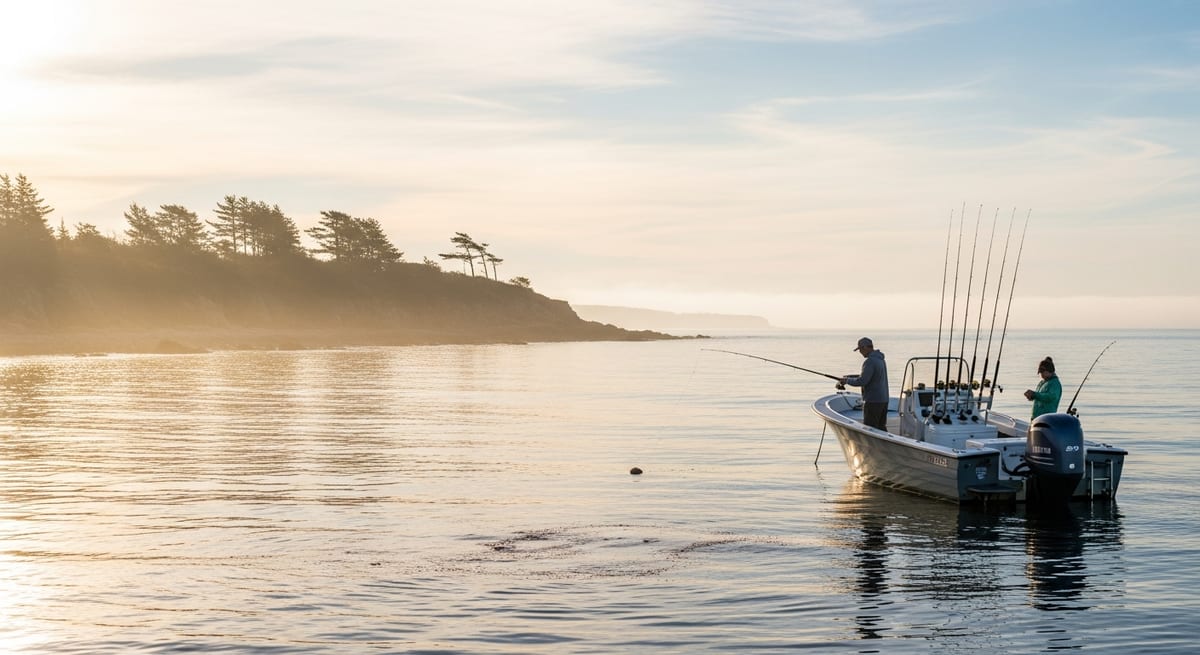
Anglers fishing the rip seams at The Race in late October account for a documented concentration of 30-to-50-pound stripers in CT regional tournament weigh-ins and charter reports, and the most common technique among that group is anchoring on fresh bunker chunks, not casting artificials. Chunking works because large fall stripers track scent corridors through moving current, and anchoring on the right structure puts that trail directly through their feeding lane. CT boat anglers who focus on trophy-class fish rather than slot fish have coalesced around chunking as their primary fall method, not as a passive fallback, but as the targeted approach that reaches fish other techniques miss during the September-through-November migration window.
Why Cut Bunker on Rip Seams Reaches Fish That Lures Often Don't
Large fall stripers in CT waters, particularly fish in the 30-to-50-pound range documented in regional tournament records and CT DEEP creel surveys, tend to be selective feeders during the migration phase. Anglers who fish The Race and Fishers Island Sound through November consistently report that trophy-class fish in fall staging mode will track a scent corridor when they have stopped committing to fast-moving artificials. That selectivity is not universal, but it is common enough that chunking regulars describe the technique as calibrated specifically for those fish.
The mechanism is scent-corridor fishing. Fresh bunker (Atlantic menhaden) and mackerel release oils and fluids when cut that form a detectable trail in moving current. Stripers follow that trail to the source. The critical variable is bait freshness, day-of bait outperforms frozen, and CT chunkers who access live-well bunker or snag fresh schools locally describe a measurable difference in how quickly fish find the hook versus using thawed bait from the previous night.
Chunk size and cut placement both matter. Pieces in the 2-to-4-inch range hold on the hook while remaining manageable for a striper to eat. Body chunks, from behind the head through the mid-section, release the most oil. Head sections are often used as a secondary chunk on a second rod; they hold well on the hook but release less scent than a body cut.
Bunker is the regional standard for CT and Southern New England chunking, though mackerel, herring, and pogies are also productive depending on what is running locally on the day of the trip.
The CT Spots Where Anchor Position Determines the Outcome
The Race (Fishers Island Sound): The tidal channel between Fishers Island, NY, and the CT shoreline runs strong, predictable current in both directions. Boat anglers anchor just off the main rip seam on the outgoing tide, typically along the edges of the channel drop in 20-to-40 feet, so chunks swing through the strike zone where bass stack ahead of the offshore migration. The Race is heavily fished from September through November; anglers who fish it regularly note that position relative to the rip edge, not just general proximity, is what separates productive sessions from blank ones. The outgoing tide runs strongest here and is the most cited window in CT community reports.
Plum Gut (off Orient Point): The passage between Plum Island and Orient Point creates one of the region's strongest tidal exchanges. CT and LI boat anglers fish the CT side on outgoing tides, anchoring in 20-to-35 feet on the upside of the channel lip. Community reports from anglers who fish Plum Gut consistently place the best chunking activity from mid-September through late October.
Connecticut River Mouth (Old Lyme and Old Saybrook area): The outgoing tide from the Connecticut River pushes a bait-rich plume into Long Island Sound. Chunkers anchor along the river-mouth bar and channel edges where stripers stage to intercept bunker moving with the outflow. The Old Saybrook Bar. The shoal east of the river mouth, is a consistent fall location referenced in CT angler reports season over season. Productive depths in this zone typically run 12-to-25 feet.
Current is non-negotiable: Across all these locations, moving water drives the method. Slack tide suspends the scent trail and moves almost no fish. CT forum reports and charter summaries consistently place the productive chunking windows at the last two to three hours of outgoing and first two to three hours of incoming tide.
Circle Hooks, Fluorocarbon Leaders, and the Rigs CT Chunkers Run
The standard chunking rig used by CT boat anglers is a fish-finder (sliding sinker) setup optimized for bottom-to-mid-column bait presentation in moving current:
Hook: 8/0 to 10/0 wide-gap circle hook. Circle hooks are strongly preferred. They seat in the corner of the mouth when the fish moves off with the bait rather than requiring an active hookset, which reduces gut hooking significantly. CT anglers who practice catch-and-release on slot stripers describe circles as near-mandatory for fish survival on those releases. The correct response to a pickup is to reel up slack and let the circle seat, not to strike.
Leader: 18-to-24-inch heavy fluorocarbon in the 40-to-60 lb range. Fluorocarbon is less visible underwater than mono, which matters in the clear water of Long Island Sound and The Race. A barrel swivel above the leader prevents line twist from current rotation.
Sinker: 3-to-6 oz bank or pyramid sinker on a fish-finder slider above the swivel. Weight is matched to current strength, heavier current at The Race and Plum Gut often requires 5-to-6 oz to keep the chunk near bottom structure.
Multiple rods: Running two to three rods at different depths, bottom, mid-column, and near-surface, identifies the active feeding zone without guesswork. Once fish are located at a particular depth, the remaining rods are adjusted to match.
Rod deployment: Rods are fished in holders while waiting. A circle hook pickup typically loads the rod gradually rather than producing a sharp slam. CT anglers who fish this method describe the correct response as picking up the rod, reeling tight until the line is taut, and letting the hook seat, never yanking.
Running Fresh Bunker Chum: What CT Boat Anglers Use to Hold Fish in the Zone
Chumming extends a chunking operation by maintaining a continuous scent corridor beyond what the cut bait releases on its own. CT boat anglers who run active chum operations describe the difference as tangible. Fish that arrive in the zone hold longer when the scent trail is sustained rather than intermittent.
Fresh bunker chum: Ground or squeezed menhaden in a mesh chum bag dragged in the current is the regional standard. The best-reported setups combine chunk bait with fresh bunker chum from the same batch. Anglers who chunk some fish and grind others describe this as the most effective single-source operation because the bait and chum smell identical to the fish tracking the trail.
Chum placement: The bag goes over the side on the upside of the current so the scent trail runs through the chunking zone and beyond. Positioning chum slightly upcurrent of the rigs, not directly alongside, is what anglers who run this method regularly describe as keeping fish moving toward the chunk rather than hovering at the bag.
Oil drip: Ladling small amounts of fresh bunker oil or bottled menhaden oil overboard at intervals adds a surface slick component that pulls fish up from mid-depth into the chunk zone.
Chum blocks: Frozen commercial chum blocks are a fallback when fresh bunker is not available. CT chunkers consistently report fresh outperforms frozen, but a block adds meaningfully to the overall scent load when supply is limited.
Bait freshness rotation: CT chunkers who report the best results describe replacing chunks every 20-to-30 minutes regardless of how the bait looks. Once the oil has bled from a cut piece, it functions as dead weight on the hook rather than a scent source.
CT DEEP Regulations, the Fall Migration Window, and Tide Timing for the Productive Spots
CT DEEP striped bass regulations: Per CT DEEP Marine Fisheries, striped bass in Connecticut waters are subject to a minimum size limit and daily bag limit that have been revised in recent seasons under ASMFC coastwide management measures. As of the 2024 season, Connecticut's recreational limit was 1 fish per day at a minimum of 28 inches. Regulations are subject to annual revision. Anglers should verify the current season's rules at the CT DEEP Marine Fisheries website before any trip, as size and bag limits have changed in consecutive recent seasons. Circle hooks reduce the mortality of released fish significantly, which matters under any catch-and-release obligation on undersized or over-limit stripers.
Bunker and bait regulations: Atlantic menhaden used for bait or chum is a federally managed forage species under ASMFC oversight. CT anglers snagging bunker for personal bait use should confirm current state possession limits with CT DEEP, as recreational menhaden take rules have been updated alongside commercial quota revisions in recent years. This applies to both bunker held for chunks and bunker used in a chum bag.
The fall migration window: Chunking in CT waters is most productive from late September through mid-November, tracking the fall striper migration through The Race, Plum Gut, and the Connecticut River mouth. Water temperatures in the 55-to-65°F range in Long Island Sound correlate with the most active fall feeding; once temperatures drop below 50°F, fish have largely pushed offshore. CT boat anglers who track regional fall reports note that the first major cold fronts in October often coincide with peak chunking activity, as fish feed aggressively before the offshore migration.
Productive tide windows by location: At The Race, the outgoing tide runs strongest and produces the most consistent results for anchored chunkers. The window from three hours before low through the tide change is widely cited in CT angler reports. At the Connecticut River mouth, the outgoing tide pushes the bait plume into the Sound and concentrates stripers along the mouth bar and the Old Saybrook Bar shoal. Dawn sessions that overlap a moving outgoing tide in October and early November are the combination CT chunkers who fish these locations consistently try to time.
EVERY SATURDAY MORNING
Weekly fishing intelligence
Nationwide conditions, what's biting, and honest gear deals. One email, no noise.
No spam. Unsubscribe anytime.