
CT Shore Casters at Old Saybrook, Race Rock, and Hammonasset Have Sorted Their Striper Lure Boxes Around Forage and Tide, what the Long Island Sound Plugging Community Reports About Surface Plugs, Metal Lips, and Jigs
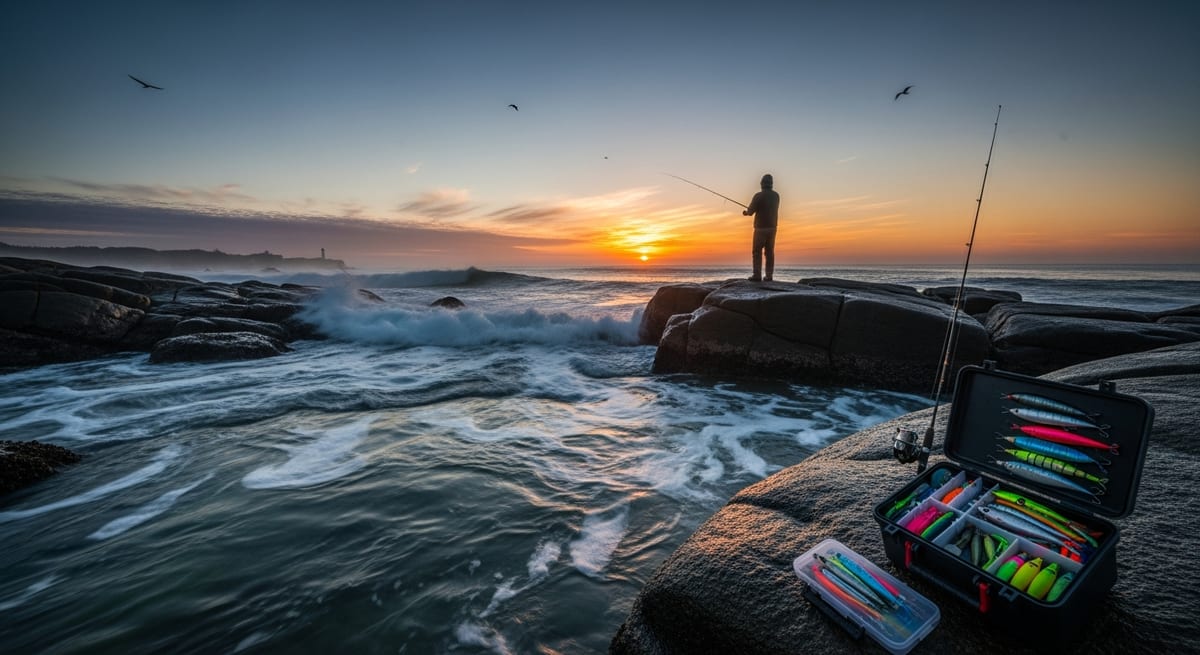
Shore casters who work the rock-sand transitions at Old Saybrook Point and the tidal rips off Race Rock report a consistent pattern: anglers who switch lure types deliberately, matching surface presentations to low light and moving current, dropping to metal lips when the surface bite fades, reaching for the bucktail when everything else slows, tend to out-fish those who stay committed to a single technique. The range of lures that consistently produce along Connecticut's Long Island Sound shore is narrower than most national guides suggest, and the community of CT pluggers who fish these stretches regularly has already done considerable sorting. Note: Connecticut striped bass are subject to size limits, slot limits, and bag limits that change with ASMFC management decisions, always verify current CT DEEP Marine Fisheries regulations before keeping any fish.
Surface Presentations: What CT Shore Casters Report About the Bite Window and When It Actually Closes
Shore casters who fish Hammonasset's open beach and the rocky points at Stonington report that surface plug fishing has a narrower productive window than most lure guides suggest. The most reliable action concentrates when low light and moving current converge, and anglers who fish outside that window typically find the surface bite unresponsive regardless of plug selection.
Poppers: Cup-faced plugs that spit water on a sharp rod twitch. The Gibbs Polaris, Atom Popper, and Cotton Cordell Pencil Popper are the standard choices among Sound shore casters. Regulars at Old Saybrook report working these over the rock-sand transition at the point on outgoing tides at last light, targeting the current seam where baitfish stack.
Walkers (stick baits): Side-to-side walking action on a slow twitch-twitch retrieve. The Deps Slide and Yo-Zuri Mag Popper in walking mode are the go-to options when stripers are rising selectively rather than actively blitzing. CT pluggers note these often outperform aggressive poppers in the 45 minutes before dawn, when fish are feeding cautiously on the surface.
Pencil poppers: Elongated, tapered surface plugs with a weighted tail built for distance. The Gibbs Pencil and Creek Chub are Northeast surf classics. Anglers who fish Hammonasset's open sand beach report these reach breaking fish well beyond what shorter-casting inshore plugs can cover.
Conditions: CT shore casters consistently report the most reliable surface action during low-light periods, dawn, dusk, and full dark, with moderate surface chop and moving current. Dead calm conditions, full midday sun, and slack tide are the combination most experienced pluggers use as the trigger to switch to subsurface presentations.
Metal Lips and Swimmers: The Night-Tide Standard at Old Saybrook's Point and the Sound's Tidal Inlets
Among CT surf casters who target larger stripers at night, metal lip swimmers occupy a distinct category from other hard plugs. The consensus among night-tide regulars on the Sound is that the slower, heavier, wide-wobbling action of a metal lip, fished at a near-crawl, triggers following fish that reject faster presentations.
Rattling swimmers: The Daiwa SP Minnow, Rapala X-Rap, and Yo-Zuri Crystal Minnow work on a twitch-pause or steady retrieve. Shore casters report the rattle carries effectively in dark or turbid water when stripers aren't keying visually on the plug.
Slider plugs: Flat-sided, wide-wobbling plugs like the Gag's Grabbers Swimmer and the Smack-It. CT anglers who fish the inlets at Old Saybrook and along the Connecticut River mouth report these produce on slow retrieves at night, when the wide wobble at minimal speed generates strikes that faster swimmers don't.
Metal lip swimmers: The Gibbs Danny, Roberts Ranger, and Atom Swimmer are the canonical choices among the Long Island Sound's old-guard surf community. Heavy enough to cast into wind, slow enough to work at a near-crawl, shore regulars describe the loose, lazy wiggle of a metal lip at minimum retrieve speed as the action that most reliably converts following fish.
Depth and placement: Standard swimmers run 2-4 feet subsurface. CT pluggers work them over reef tops, along current seams at tidal inlets, and parallel to drop-off structure where stripers hold on the incoming tide. Fishing the lure broadside to the current, rather than straight retrieves, is the technique most frequently cited by Eastern Sound regulars as the adjustment that produces the most committed strikes.
Bucktail Jigs in Tidal Current: What Race Rock and the Eastern Sound's Rips Demand From Weight and Presentation
The bucktail jig appears in nearly every experienced CT striper angler's kit regardless of season or forage type, and the reasoning among pluggers who fish the Race and the Eastern Sound rips is consistent: it imitates sand eels, squid, and small baitfish interchangeably, and it can be fished as slowly or as aggressively as conditions require.
What it is: A lead head jig with white bucktail hair, typically tipped with a 4-6 inch soft plastic trailer. A Hogy paddle tail, Lunker City Shad, or pork rind strip, for added bulk and tail movement. The trailer adds profile and action without changing the jig's sink rate significantly.
Weights: The right bucktail weight is set by current, not preference. Anglers fishing the Race and the tidal rips off Fishers Island Sound routinely use 2-3 oz heads to maintain bottom contact in fast water. In shallower estuary and tidal flat work. The Housatonic flats or tidal coves along the Sound: 3/4 to 1 oz is typical. CT rip fishermen report that fishing too light in moving water is the most common mistake. A jig swept above the strike zone produces far less than one ticking the bottom.
Technique: Cast up-current or across, let the jig sink to depth, then either jig vertically or swing through the current. The bottom-bump, touch bottom, lift, let swing downcurrent, is the method most frequently cited among CT rip fishermen as the one that produces stripers when other approaches stall on low-activity tides.
Colors: White is the standard across most Sound conditions. Yellow/white is the common switch in turbid or off-color water. Pink/white appears frequently in community reports from anglers fishing squid-forage windows in spring and early fall off the Eastern Sound.
Soft Plastics: How CT Shore Casters Have Worked Hogys, Gulp, and ZMan Into the Standard Long Island Sound Rotation
Soft plastics moved from novelty to standard equipment for many CT striper surf casters over roughly the past decade, and community reports from the Sound are consistent about which profiles produce and in which applications.
Hogy Paddle Tail: The most frequently cited soft plastic in CT striper reports from shore fishing forums and angler accounts. The 9-13 inch paddle tail on a 2-4 oz jig head produces a natural baitfish profile that large stripers eat readily. White, olive, and chartreuse are the top colors across Sound conditions, olive is most commonly reported on clear-water nights over sandy bottom.
Berkley Gulp: The Gulp 7-inch paddle tail on a 1-2 oz head is cited by CT surf fishermen as a reliable option in lower-activity windows, when the scent formula appears to trigger strikes from fish that aren't actively chasing. The scent advantage is most frequently noted in slow current or low-visibility conditions.
ZMan ElaZtech: Durability is the reason most CT surf casters keep ZMan plastics in the bag. The ElaZtech material survives multiple striper strikes without tearing, which matters on a productive night when a shredding soft bait becomes expensive to replace. The StripperZ tail action holds up well across varied retrieve speeds.
Rigging options: Unweighted for near-surface presentations on calm nights, weighted jig head for mid-water coverage, or rigged with an egg sinker for bottom presentations near rocky structure. Anglers who fish the boulder fields at Stonington and Watch Hill report that weedless rigging reduces hang-ups significantly on rough bottom.
Practical note: Soft plastics cast farther than most hard plugs of comparable profile and sink quickly for depth control in moving water, advantages that CT anglers fishing long open beaches, where reaching distant feeding activity matters, report make them the default choice when hard plugs fall short.
Matching Lure to Forage and Conditions: What CT Pluggers Report About Adjusting Before the Bite Shuts Down
The adjustment pattern most frequently reported by Long Island Sound pluggers isn't primarily about color. It's about reading forage type and current stage before the fishing slows rather than after.
Current stage: Active lure fishing along the Sound is most productive on moving water, roughly two hours on either side of tide change. Bucktails and swimming plugs work through most of the current window; surface plugs tend to produce best in the calmer edges of the tidal cycle when the water surface settles slightly.
Bait type: When stripers are keyed on bunker (menhaden), creating the large, deep-bodied profile bunker generate, cT anglers report switching to wide-body swimmers and 9-inch Hogys. When fish are on sand eels, the reported switch is to slim profiles: needlefish plugs, slender paddle tails, or thin-body swimmers on a slow steady retrieve.
Water clarity: In the clear water typical of the Eastern Sound in late summer, natural colors (white, olive, chartreuse) are the standard. In the stained, turbid water common in the lower Connecticut River and the Housatonic after rain events, darker contrasting colors, black, purple, are reported as more visible to feeding fish.
Time of day: Surface presentations at dawn, dusk, and full dark. Subsurface swimmers and jigs during daylight hours, when stripers hold deeper and the surface bite is largely absent. CT surf casters note that the 20-30 minute window at sunset can produce both surface and subsurface strikes simultaneously.
When bites stall: The adjustment sequence most frequently cited among CT regulars: change size first, downsize or upsize the lure profile. Then change action (from fast retrieve to slow, or from steady to erratic). Then change color. Methodical adjustments isolate the variable; random lure rotations rarely reveal what the fish actually want on that tide.
EVERY SATURDAY MORNING
Weekly fishing intelligence
Nationwide conditions, what's biting, and honest gear deals. One email, no noise.
No spam. Unsubscribe anytime.