
Bass Fishing in Hot Weather: Summer Strategies When the Bite Goes Tough
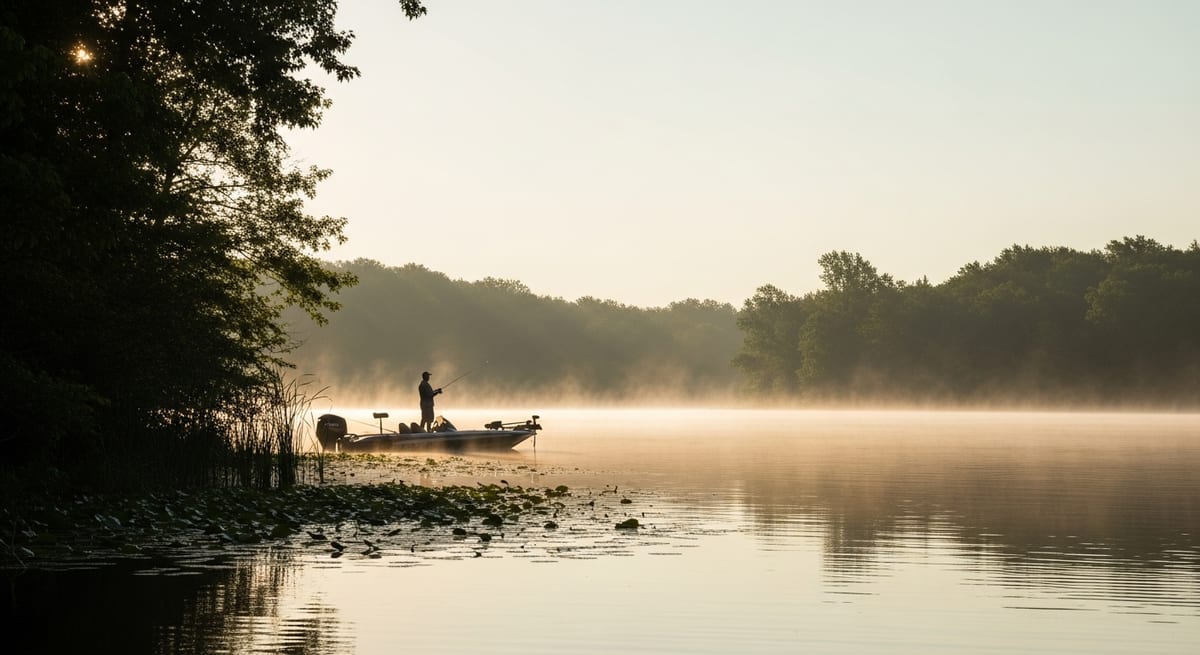
July and August are simultaneously when the most people are fishing and when bass are the hardest to catch. High water temperatures push bass into thermal refuge zones, change their feeding schedule, and make them more selective about what they eat. Understanding the midsummer pattern turns what seems like a slow bite into one of the most productive seasons of the year, if you know where to look.
Why Summer Bass Are Harder to Catch
Largemouth bass prefer water temperatures of 65-75°F. When surface water exceeds 80°F in midsummer, bass face thermal stress in shallow areas and respond with two behaviors: depth migration and time-shifted feeding.
Depth migration: Bass move to deeper, cooler water to escape heat stress. In lakes with thermal stratification (a thermocline), bass hold just above the thermocline where oxygen levels remain sufficient. This can put them at 15-30 feet on hot days in deep lakes.
Time-shifted feeding: Even when bass are in deeper water, they don't feed there the same way they do at preferred temperatures. They push shallow to feed during the coolest parts of the day. The pre-dawn through mid-morning window and the late-afternoon through night window. Between those windows, they're essentially inactive.
Understanding this pattern is the key: If you're fishing shallow water on a bluebird July afternoon, you're fishing for bass that aren't there. Fish deep midday; fish shallow at the margins of the day.
Midday: Go Deep
Deep structure: Points extending into 15-25 feet of water, submerged humps, ledges, channel swings, and offshore brush piles hold the largest concentrations of midday summer bass. Use your fish finder to mark these locations and target them with:
- Football jig: Drag slowly along rocky ledges and hard-bottom offshore structure. The rocking action on rock bottom is inherently attractive to bass. Take your time, one cast might cover 30 seconds of productive bottom time.
- Drop shot: For suspended bass above structure, the drop shot at the right depth produces when nothing else gets a bite. Lower vertically and shake.
- Deep-diving crankbait: Cover ledges at speed to find fish first, then slow down with a jig or drop shot. Rapala DT16 or Strike King 6XD at 20-25 feet is legitimate summer bass fishing.
- Carolina rig: Slow-drag down the face of a ledge at 15-20 feet. Effective for covering extended structure systematically.
The thermocline: In stratified lakes, the thermocline is a temperature break where warm surface water sits above cold, low-oxygen deep water. Bass congregate just above the thermocline, not below it. Use your fish finder to identify the depth where the temperature display changes. That's where you want your bait.
Dawn and Dusk: Work Shallow and Fast
Pre-dawn through 9 AM: The best shallow-water summer fishing of the day. Bass push from deep structure to feed in the shallows before the sun rises and water warms. This is the prime topwater window:
- Buzzbaits over grass and along weed edges
- Walking plugs (Zara Spook, Whopper Plopper) around dock edges and rocky points
- Spinnerbaits through sparse vegetation and near surface
- Hollow-body frogs over lily pads and thick mats
Late afternoon through dark: A secondary feeding window as temperatures begin dropping. Topwater again becomes productive. Night fishing (stripers on salt, bass on fresh) becomes the primary tactic as water temperatures fall and bass move to shallow structure.
Shade: Bass use shade to stay cooler in shallow water midday. Docks with shade beneath them, overhanging trees casting shadows on bank edges, and the shaded side of weed beds all hold bass that would otherwise be deep. A Texas rig pitched into deep dock shade at 10 AM often produces when the same dock fished in full sun an hour earlier is empty.
Color and Presentation Adjustments
Clear summer water: Bass in deep, clear water can see well and inspect lures carefully. Natural colors (green pumpkin, watermelon, shad) outperform bright attractor colors. Light fluorocarbon leaders are more important than ever.
Slow down presentations: Hot-water bass are less aggressive in their pursuit. A jig that would be hopped aggressively in spring needs to be barely moved in August. Extended pauses: 10-15 seconds, after each movement produce bites from bass that would ignore a faster-moving presentation.
Smaller profiles: When bass are selective in clear, warm water, downsizing often gets bites. A 4-inch Senko on a drop shot catches more finicky summer bass than a 7-inch lizard on a Texas rig in many scenarios.
Live bait: Summer is peak live bait season. A live crawfish on a drop shot or Carolina rig, or a live shiner free-lined over deep structure, catches fish that won't eat anything artificial. This is particularly effective for trophy bass in late summer.
EVERY SATURDAY MORNING
Weekly fishing intelligence
Nationwide conditions, what's biting, and honest gear deals. One email, no noise.
No spam. Unsubscribe anytime.