
CT's Best Surf Spots Aren't the Long Sand Beaches. Rocky Points, Jetty Tips, and Tidal Mouths Are Where Shore Anglers Find Stripers, Blues, and Fluke, and Most Are Publicly Accessible.
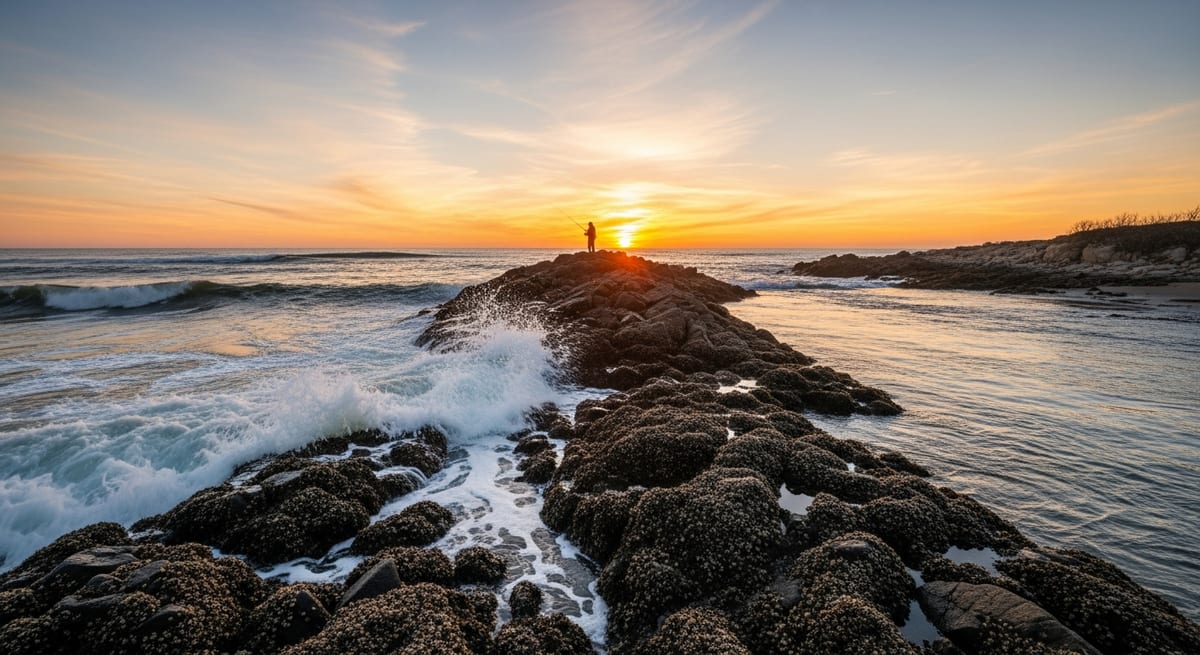
Anglers who fish Bluff Point's rocky tip during the October migration consistently report striper action within easy casting range of shore, and the only thing between them and the parking lot is a mile of trail. Connecticut's coastline holds far more productive public shore access than most newcomers realize: tidal river mouths, rocky state park points, and jetties that concentrate bait during migration windows. No boat required, and no specialized access beyond what DEEP and town parks already provide.
What the CT Shoreline Holds, and When It Shifts
Striped Bass: The primary target for CT shore anglers. Community reports from the shoreline describe stripers running from May through November, with the most accessible action in June and again in September-October. They follow bait, primarily bunker (menhaden), sand eels, and silversides, along the beach and into tidal rips. Feeding windows around dawn, dusk, and after dark are consistently the most productive for shore fishing; midday summer sessions in the western Sound often slow significantly as surface temperatures climb past the mid-60s°F.
Bluefish: Aggressive and typically abundant June through September. When blues are feeding in the surf, they announce themselves, visible surface blitzes on bait schools are common. Tackle shops along the shoreline note that bluefish will hit almost anything that moves and are excellent eating when bled immediately on capture.
Fluke (Summer Flounder): A bottom species that moves into the shallows through summer. CT shore anglers targeting fluke focus on sandy-bottom areas near structure, jetty bases, inlet edges, and sand flats, with bucktail jigs or Gulp! baits on 1 oz jigheads.
Weakfish (Sea Trout): Less common now than historically, and DEEP creel data reflects a population that has declined significantly from earlier decades. Still reported from back bays and tidal rivers, particularly in August, with soft plastics fished at night.
Porgy (Scup): Reliably plentiful in summer from jetties and rocky structure. Cut squid or sandworms on a simple dropper rig is the standard approach among jetty regulars.
Blackfish (Tautog): Available from rocky jetties through much of the year. Anglers who fish CT structure year-round consider May-June and October-November the prime tog windows, using green crabs or white sandworms. Tautog regulations carry seasonal closures that have shifted in recent years, verify current open seasons at ct.gov/deep before targeting them.
Public Access Points That Hold Structure Worth Fishing
Hammonasset Beach State Park (Madison): Connecticut's longest public beach, with long stretches of sand and tidal cuts that hold stripers and bluefish during migration. Anglers who fish it regularly report that arriving before 7 AM, or returning after Labor Day when swimmers leave, produces far better results than midday summer sessions when crowds occupy the beach.
Rocky Neck State Park (East Lyme): Rocky points, a small jetty, and varied bottom structure make this consistently more productive than flat sand beaches for shore fishing. CT shore anglers who fish this site describe working the rocky transitions and the cove edges rather than the open beach face for both stripers and tautog.
Bluff Point Coastal Reserve (Groton): An undeveloped coastal point with roughly a mile walk from the parking lot. The lack of vehicle access keeps crowds manageable through most of the season. Anglers who make the walk to the point's tip during fall migration. A pattern discussed regularly on CT fishing forums, consistently report strong striper action around tide changes.
Penfield Reef (Fairfield): The rocky reef visible from the Fairfield shoreline creates a current break that concentrates bait and predators. Kayak anglers reach the outer reef directly. Shore access to the immediate reef area should be confirmed against current town regulations before planning a trip, as access points along this stretch of the Fairfield shoreline have varied over the years.
Clinton Town Beach and Harbor: Tidal creek mouth, sandy flats, and a nearby jetty. Reported as a reliable fluke and bluefish location by anglers who fish the shoreline between New Haven and the Connecticut River.
Niantic Bay and Niantic River: The river mouth and sandy shallows of Niantic Bay produce fluke in summer and stripers during fall. Town docks and accessible shore areas are a practical entry point; kayak anglers launching from Niantic report working farther into the bay for additional structure.
Housatonic River Mouth (Milford/Stratford): Consistently described by CT surf regulars as one of the most productive striper destinations accessible from shore. The river mouth creates a large current plume that concentrates bait; the Charles Wheeler Wildlife Area provides public access. Anglers who fish the rips here report the outgoing tide as the most productive window, particularly in fall when larger fish push toward the Sound.
What Works From CT Surf: Rod, Reel, and Terminal Tackle
Rod: A 9-11 foot medium-heavy surf spinning rod handles the majority of CT surf situations. For jetty fishing and heavier presentations, moving up in action helps; for beach casting with lures, a 10-foot rod rated for 1-3 oz is what most CT surf anglers carry as their single all-purpose option.
Reel: A 4000-5000 size spinning reel paired with 20-30 lb braided line gives the casting distance and line capacity for surf work. The Shimano Stradic, Daiwa BG, and Penn Battle III are frequently cited in CT surf fishing discussions as reliable mid-range options that handle salt well without overbuilding the setup.
Line: 20-30 lb braid with a 20-30 lb fluorocarbon leader (12-18 inches). In clear water or bright conditions, lighter leaders typically produce more strikes. At night or in off-color water, heavier leaders are standard practice.
Terminal tackle:
- 1-3 oz bucktail jigs in white, chartreuse, or pink. The go-to surf lure among CT shore anglers across decades of use; they work on stripers, blues, and fluke
- 1-2 oz metal jigs (Kastmaster, Hopkins) for bluefish and stripers when fish are feeding at distance
- Soft plastics on 1 oz jigheads (Gulp! 4" Shrimp, Berkley Gulp! Grub) for fluke along sandy structure
- Pencil poppers and Stillwater swimmers for surface striper action at dawn and dusk
- Fish Finder rigs with circle hooks (#4/0-6/0) for bait presentations on sandy bottom
Waders: Hip or chest waders extend range significantly from beaches and allow access to jetty tips and rocky points that are impractical in sneakers. Boot-foot chest waders are the most common choice among CT surf regulars who fish both beach and jetty structure.
Reading Moving Water on the CT Shore
Current matters more than tide stage alone. CT shore anglers consistently report that the same location that fishes slowly during slack water, whether at high or low, produces sustained action on a moving tide. Both incoming and outgoing tides concentrate fish; the transitions. The first two hours of an incoming and the last two hours of an outgoing, are typically when action is most predictable from shore.
Where structure and current intersect: The most productive CT surf locations share a consistent feature: current hitting an obstruction. Jetties, rocky points, river mouths, and reef edges create rips and eddies where bait stacks. Anglers who regularly fish Rocky Neck, Bluff Point, and the Housatonic mouth describe positioning at the edge of the rip or the downcurrent seam, not in the main flow, where lures move too fast and fish don't hold.
Time of day: First light, roughly 30 minutes before sunrise through two hours after, and the last 90 minutes before dark through full dark are the windows CT surf anglers consistently favor for stripers. Night fishing on incoming high tides in summer is a well-established pattern documented across CT fishing forums over many seasons; experienced shore anglers who fish regularly report the two hours after midnight on a building tide as a peak window in July and August.
Water temperature: Stripers move into CT shoreline range as water warms toward 55-58°F in May, peak through June, and typically thin out in the western Sound during midsummer when surface temperatures exceed 70°F. They return in force in September-October as temperatures fall back into the preferred range. NOAA buoy data for both the eastern and western Sound refreshes on the hour. It's the tool most serious CT surf anglers use to time seasonal transitions and plan fall sessions.
CT Saltwater Regs: Verify Before Every Trip
Regulations in this fishery move annually, and ASMFC-driven adjustments to bluefish, fluke, and tautog have changed CT rules in-season in recent years. The figures below were current as of early 2026, but they are a starting-point reference only, always check ct.gov/deep for the current year's official marine regulations before heading out.
- Striped bass: 28 inches minimum, 1 fish per person per day as of 2026 (striper regulations update regularly, confirm any in-season amendments at ct.gov/deep before each trip)
- Bluefish: ASMFC has tightened bluefish limits multiple times in recent seasons; verify the current CT bag limit at ct.gov/deep before targeting them specifically
- Fluke (Summer Flounder): Minimum size and bag limits are set annually in coordination with ASMFC and have shifted in recent seasons; confirm the current 2026 CT-specific rules at ct.gov/deep
- Blackfish (Tautog): Size minimums and bag limits apply with seasonal closures that have been adjusted in recent years; check current open seasons and limits at ct.gov/deep before targeting tog
A CT Marine Fishing License is required for anyone over 16 fishing in tidal waters. Annual licenses are available at DEEP offices, most bait and tackle shops, and online at the DEEP website.
EVERY SATURDAY MORNING
Weekly fishing intelligence
Nationwide conditions, what's biting, and honest gear deals. One email, no noise.
No spam. Unsubscribe anytime.