
Boca Grande Pass Books Out by October for May. What Northeast Anglers Who've Made the Tarpon Run, FWC Tag Requirements, and Charlotte Harbor Guide Calendars Reveal About Planning Your First Silver King Trip from Connecticut
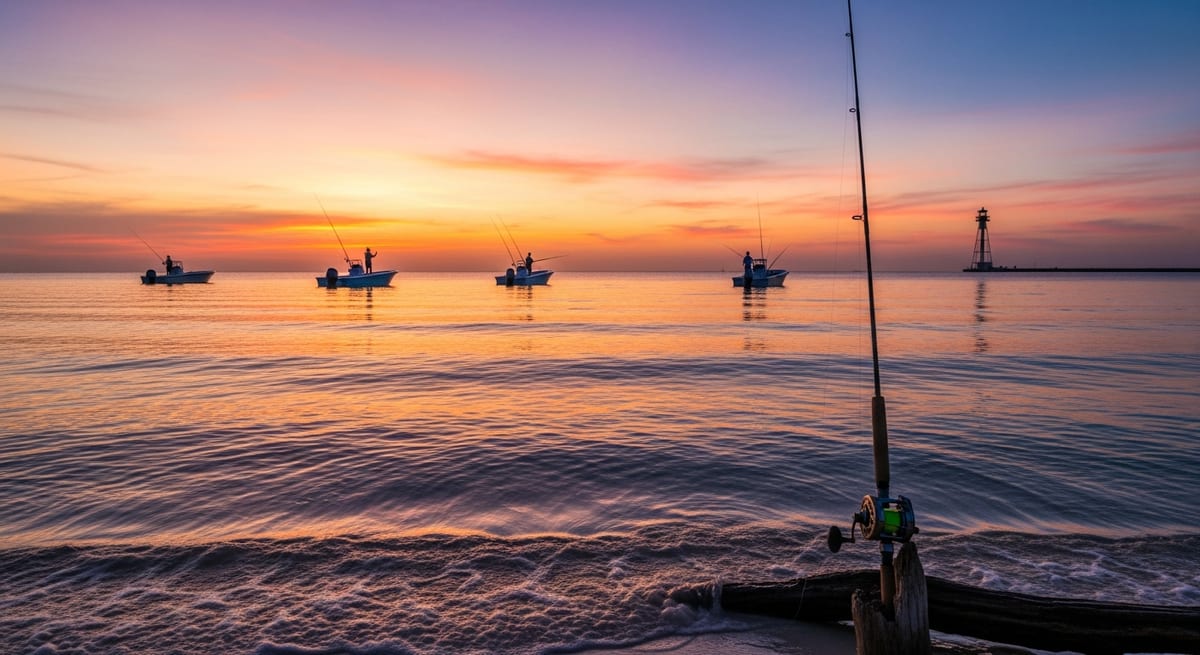
Boca Grande Pass on Florida's Gulf Coast runs roughly 60 feet deep at its center, and from late April through early June, guides working that cut report tarpon stacking in concentrations that anglers from Connecticut and other Northeast states describe as unlike anything available in Atlantic coastal waters. The flight from Bradley International to Fort Myers is about 2 hours and 45 minutes. What makes the trip complicated is not the distance. It is the booking calendar, the FWC regulations most first-timers miss entirely, and the meaningful difference between fishing Charlotte Harbor in May versus the Florida Keys flats in June.
Boca Grande Pass vs. the Islamorada Flats: Two Different Tarpon Fisheries That Require Different Plans
Florida's premier tarpon destinations pull Northeast anglers toward two distinct fisheries, and the choice shapes every decision that follows. Charlotte Harbor and Boca Grande Pass (Charlotte County, Gulf Coast) hold the most concentrated tarpon migration on the Atlantic or Gulf coast during the peak window from late April through early June. This is primarily live-bait conventional fishing from center-console boats. Guides work the deep cut of Boca Grande Pass and the surrounding shallow flats targeting fish that typically run 80 to 130 lbs. On peak-migration days, guides working the area report rolling tarpon throughout the pass in numbers that anglers from the Northeast consistently describe as unlike anything they expected. The Florida Keys flats, running from Key Largo through Marathon and Islamorada south toward the Lower Keys, offer a completely different experience. Light-tackle and fly fishing, sight-casting to individual fish in clear water two to four feet deep. The technical demand is higher: accurate casts to specific fish, precise presentation, and reads on fish behavior before they spook. The Keys season overlaps Charlotte Harbor (May through July) but extends better into summer. Anglers on Florida Sportsman forums who have compared both trips describe the Keys as where the visual dimension of tarpon fishing is most fully realized, but it demands more of the angler on the casting end. A common pattern among CT anglers who have made multiple trips: Charlotte Harbor for the first trip to experience the full fight, Islamorada or Marathon for subsequent visits focused on the sight-fishing.
Florida FWC Tarpon Regulations Every CT Angler Needs to Read Before Booking
Florida regulates tarpon more specifically than most Northeast anglers expect, and misunderstanding the rules creates problems at the dock. The Tarpon Tag: Florida FWC requires a Tarpon Tag ($50, available directly from FWC before the trip) to possess any tarpon over 40 inches, including temporary possession for a photo or measurement. Without a tag purchased in advance, tarpon over 40 inches must remain in the water at all times alongside the boat. This is not a harvest license; it is a possession permit. One tag per angler per year. The practical implication: On a guided trip without a tag, large tarpon are photographed in the water. The guide holds the fish alongside the boat while the angler leans over the gunwale. In-water photos of 100 lb tarpon are standard practice and experienced guides are skilled at positioning fish for shots, but anglers who want a classic lifted-fish photo need the $50 tag purchased before departure. Keep rules: Tarpon over 77 inches cannot be harvested regardless of tag status. The practical result is that virtually all tarpon fishing in Florida operates as catch-and-release, and guides handle every fish accordingly. State fishing license: A Florida non-resident recreational saltwater fishing license is required in addition to the tarpon tag. Some guides operating as USCG-licensed for-hire vessels cover passengers under the vessel's license for state requirements; verify this directly with your specific guide before the trip, as it varies. Both the license and the tarpon tag are available on the FWC website and are worth purchasing before boarding.
When the Peak Window Opens and When the Charlotte Harbor and Keys Guide Calendars Fill
Tarpon fishing in Florida is seasonal in a way that punishes late planners. The booking timeline is not weeks out but months, and the most-sought guides fill their best dates well before the season opens. April 15 through May 31: Charlotte Harbor and Boca Grande Pass. The migration window when tarpon arrive in peak concentrations. Guides based out of Placida, Rotonda West, and Englewood report May dates filling by October of the prior year. Northeast anglers who have attempted to book in February for the following May have consistently reported on regional fishing forums that quality guides are already full. The accurate booking window for Boca Grande during peak migration is 6 to 8 months in advance, and 10 to 12 months is not excessive for the most in-demand guides. May 15 through June 30: Florida Keys flats. Tarpon concentrate at Islamorada, Marathon, and the Lower Keys backcountry in late May and hold through June. This window books less aggressively than Boca Grande but quality Islamorada and Marathon guides still fill May dates early. June dates are more accessible from a booking standpoint. July through September: Juvenile tarpon, typically 15 to 50 lbs, in backcountry rivers, creeks, and coastal canals throughout Southwest Florida. More available guide dates, different tactics, and a useful entry point for anglers who want to develop tarpon fighting skills before committing to a full migration-season charter. Fish in this size range are fully acrobatic and provide a genuine introduction to the species. On booking directly: Community reports on Florida Sportsman forums and regional fishing boards consistently recommend contacting guides directly rather than through multi-brand booking platforms, which often carry outdated availability and do not reflect the guide's actual calendar.
Tackle for the Boat: What Charlotte Harbor and the Keys Require
Guides on a first tarpon trip provide all necessary tackle, and anglers should not feel obligated to bring their own. Understanding the setup helps participate meaningfully in the experience and prepares anglers for return trips or gear decisions. Charlotte Harbor and Boca Grande live-bait fishing: Heavy conventional setups, typically 7 to 7.5-foot rods rated for 50 to 80 lb line, paired with conventional reels spooled with monofilament or braid with a mono topshot. Guides work with circle hooks (4/0 to 7/0) on live crabs, threadfin herring, or pinfish. Circle hooks are the standard for guides focused on clean catch-and-release, as they reduce deep hookups and allow the hook to find the corner of the mouth. Florida Keys light-tackle and fly: Medium-heavy 7- to 7.5-foot spinning or conventional rods, 30 to 50 lb braid, with 60 to 80 lb fluorocarbon leader and a shock tippet of 80 to 100 lb fluorocarbon directly at the bait or fly. Fly anglers use 12-weight rods as the standard for tarpon, paired with a large-arbor reel capable of holding 300 yards of 50 lb backing. Drag systems on tarpon reels must run smoothly at high speed; any hesitation in the drag during a jump sequence can rip the hook from the bony, calcified mouth. The leader connection: The tarpon's jaw is hard and abrasive. A standard monofilament or fluorocarbon leader will abrade through in a single sustained fight without a heavy shock tippet between the class section and the hook. Florida guides working Northeast clients frequently report that anglers underestimate how specifically tarpon leaders must be constructed, and it costs fish. Classic tarpon fly patterns: Cockroach, Black Death, and Tarpon Toad are the consistent producers, tied on heavy-gauge hooks designed to hold point after repeated impacts against bone.
What Anglers Report About the Fight: Jumping, the Bow, and the FWC In-Water Release Protocol
Tarpon are acrobatic fighters that jump repeatedly beginning the moment they feel the hook. The standard guide instruction on every hookup is 'bow to the king': when the fish clears the water, drop the rod tip toward the fish to introduce slack. Maintaining tension during a jump pulls the hook from the bony mouth far more reliably than the tarpon pulling it free. The slack-on-the-jump reflex runs counter to every instinct developed fighting stripers and bluefish in Northeast waters, and it takes genuine focus to execute under the pressure of a large fish going airborne. What CT and Northeast anglers report: Forum accounts and guide notes from New England anglers who have fished Charlotte Harbor consistently describe the first tarpon fight as physically more demanding than anticipated, typically running 20 to 45 minutes of sustained rod pressure with multiple jumping sequences and repeated boat repositioning. Anglers in reasonable physical condition handle it without difficulty; knowing what is coming makes the difference. The jump: Tarpon typically clear the water 4 to 8 feet, with larger fish producing the most dramatic aerial. The sound of a 100 lb tarpon landing after a full-height jump is a distinct, explosive crash that anglers consistently describe as the most striking sound in the fight. Release protocol: Under FWC regulations and standard guide practice, large tarpon are revived and released in the water alongside the boat without being lifted. Guides hold the fish facing into current until it pushes off under its own power. Anglers on Florida fishing forums who describe the moment a large tarpon rights itself and disappears into deeper water are consistent: it is the part of the trip they talk about longest.
Getting There from BDL, PVD, or BOS: Airports, Timing, and What the Trip Actually Costs
Connecticut anglers have three practical departure airports, and the right choice depends on the Florida destination. For Charlotte Harbor and Boca Grande Pass: Fort Myers (RSW) is the closest option, roughly 2h45m nonstop from BDL (American, United) and BOS. Tampa (TPA) offers more carrier options and sometimes better fares; the drive from TPA to the Placida or Englewood area adds roughly 90 minutes over RSW. For a first Boca Grande trip, RSW is the cleaner routing. For the Florida Keys: Miami (MIA) is approximately 2h45m from BDL and BOS. Fort Lauderdale (FLL) is a frequent cheaper alternative. Islamorada is 60 miles south of Miami on US-1; Marathon is 90 miles south. Build the drive time into the schedule, particularly on arrival day. Budget estimate for a 5-day trip with two guide days: Guide fees run $650 to $950 per day for a quality full-day charter in either fishery; budget $1,400 to $1,900 for two days. Round-trip flights from Connecticut range $250 to $500 depending on booking window, with 6 months out generally offering better fares than last-minute. Accommodation near Placida or Englewood runs $120 to $180 per night; Islamorada and Marathon trend higher at $180 to $300, with fish camp-style options at the lower end. Total 5-day trip estimate: $2,800 to $4,000. What Northeast anglers on fishing forums consistently recommend: Build at least one non-fishing day into a first Florida tarpon trip. Departure delays from New England airports, particularly in spring, can cost a fishing morning if the itinerary is tight. Some Charlotte Harbor guides offer shorter inshore or scouting options for clients arriving the day before a full charter. It is worth asking directly when booking.
EVERY SATURDAY MORNING
Weekly fishing intelligence
Nationwide conditions, what's biting, and honest gear deals. One email, no noise.
No spam. Unsubscribe anytime.