
How to Catch Trophy Bass in Connecticut: Targeting 5+ lb Fish
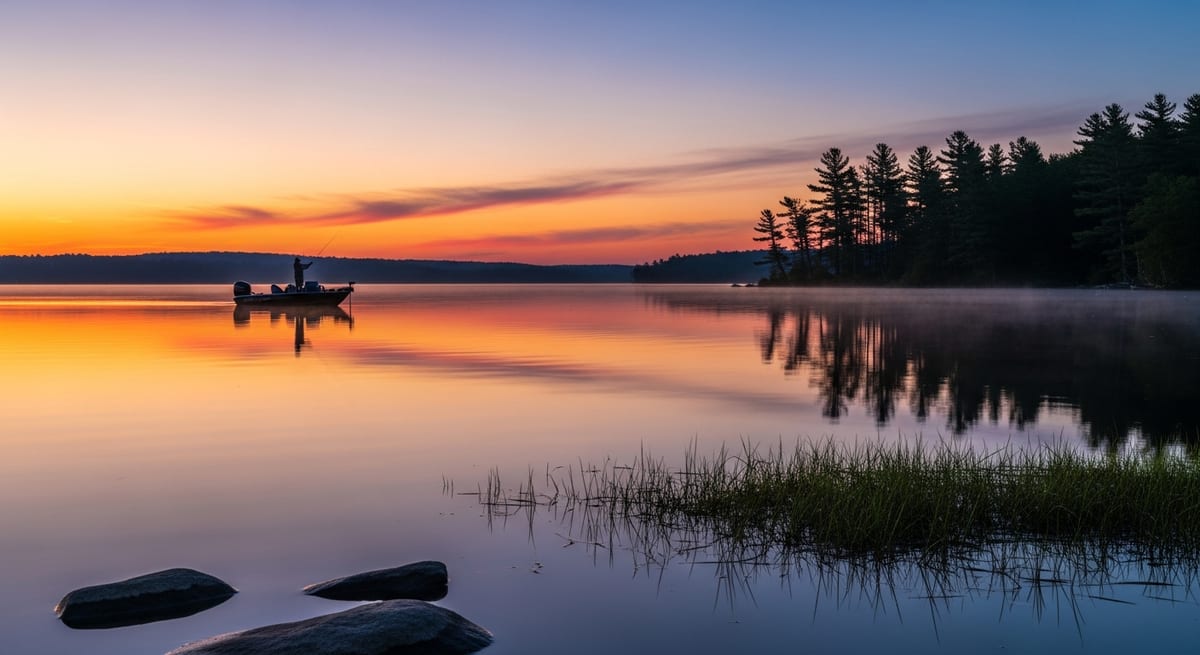
Connecticut isn't famous for trophy bass like Florida or Texas, but the state produces legitimate 6, 7, and even 8-pound largemouth every year. The fish are there. The question is whether you're fishing for them or fishing for numbers. Trophy bass require a different approach: fewer casts, better presentations, and an understanding of where big fish live and why.
Connecticut's Best Trophy Bass Waters
Certain water bodies consistently produce large bass:
Candlewood Lake: Connecticut's largest lake has decades of producing trophy bass, including fish over 8 lbs. The main lake structure, points, and secondary creeks hold fish year-round.
Lake Lillinonah: Impoundment on the Housatonic. Classic reservoir bass fishing with ledges, timber, and creek arms. Produces 5-7 lb fish regularly.
Banks Lake (Granby): Smaller lake with excellent forage base. Consistent large-bass reports from local anglers.
Boardman Lake: Secluded lake with large average bass size.
Lake Saltonstall (East Haven): Metro-area lake that sees less pressure than expected and produces quality bass.
Some trophy fish come from surprising places, small, private-access farm ponds and town-owned water bodies with minimal fishing pressure sometimes harbor the largest bass in the state.
When Trophy Bass Are Catchable
Timing matters enormously for big bass:
Pre-spawn (late March - late April): The best window of the year. Female bass feed aggressively to build energy for spawning. Shallow water, warming flats, and staging areas near spawning habitat hold the largest fish of the year.
Spawn (May): Big females are on beds. Sight-fishing spawning bass is controversial but productive. Fish are visible on gravel flats in 2-6 feet of water.
Post-spawn (June): Females recover and gradually feed again. Harder period, males are guarding fry, females are scattered.
Summer (July-August): Big bass move deep to thermocline and are harder to target. Pre-dawn topwater sessions in shallow water can produce but require perfect conditions.
Fall (September-October): Second best window. Falling temperatures trigger aggressive feeding as bass prepare for winter. Big fish move shallower and feed actively.
Lures and Techniques for Trophy Bass
Big fish respond to different presentations than average bass:
Large swimbaits: 6-10 inch soft plastic or hard swimbaits intimidate small fish but attract big bass. Big bass eat big food. A 4 lb largemouth regularly eats 8-inch fish.
Big jigs: 1/2 to 1 oz flipping jig with a large craw trailer. Slow, deliberate presentations around deep wood and dock pilings. The most consistent big-fish technique in CT.
Punch rigs: For CT ponds with heavy hydrilla or matted milfoil. Texas-rigged creature bait with 1-2 oz weight to punch through the mat.
Live bait: A live 6-8 inch sucker or shiner on a Carolina rig suspended under a weighted float is one of CT's most reliable trophy bass techniques, especially in spring.
Underwater structure: Target the deepest laydowns, the biggest dock sections, and the structural feature at the end of every point. Smaller bass fill the easier spots; big fish occupy the best position.
The Mindset Shift for Trophy Fishing
Trophy fishing requires accepting lower catch numbers:
Quality over quantity: You may fish for 3-4 hours and land one fish. If it weighs 6 lbs, that's a successful day. Adjust your expectation before you get on the water.
Slow down: Big bass rarely make quick decisions. A jig sitting on the bottom longer, a swimbait paused near structure, a frog left in the open pocket of lily pads for 20 seconds, patience is rewarded.
Eliminate water: Target only the 10% of the lake where large fish are most likely. Look for the combination of deep access + overhead cover + bait. Skip water that can't hold big fish.
Weather and season: Fish pre-front conditions, warm spring water, and the few weeks of peak pre-spawn. Timing matters more than any lure choice.
Catch and release: Most serious trophy bass anglers practice strict catch-and-release. Every 7-lb bass in Connecticut took a decade to grow, killing it removes that genetic lineage from the lake.
Understanding Bass Biology for Trophy Targeting
Big bass behave differently than average-size fish:
Territorial behavior: Large bass occupy the best feeding positions in a lake. If you catch a big fish from a dock or structure, another large fish will often move into that spot within a week.
Feeding windows: Large bass often feed in shorter, more intense windows than smaller fish. An hour at dawn, another at dusk. They conserve energy and eat efficiently.
Depth stratification: In summer, big bass often hold just above the thermocline in 18-25 feet. They move into shallower water at night and at dawn to feed, then retreat deep.
Female vs. male: The largest bass are almost always female. Male bass rarely exceed 3 lbs. Females grow larger, live longer, and are the true trophies. Handling and releasing females with care preserves the fishery.
EVERY SATURDAY MORNING
Weekly fishing intelligence
Nationwide conditions, what's biting, and honest gear deals. One email, no noise.
No spam. Unsubscribe anytime.