
Matching the Hatch in Connecticut: Fly Selection for CT Trout Streams
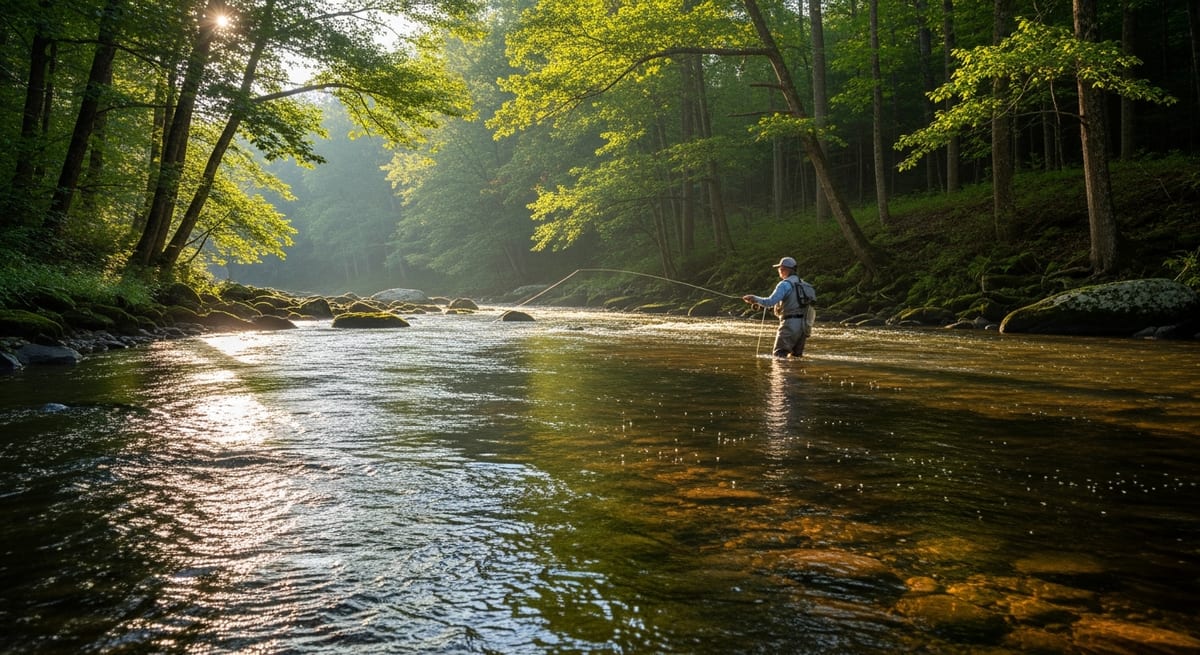
Connecticut's trout streams, particularly the Farmington River, have some of the most reliable insect hatches in the Northeast, and matching those hatches is one of the most satisfying technical challenges in fishing. When the sulphur hatch is on and trout are rising all around you, choosing the right fly and presenting it correctly separates the angler who fills their net from the one who watches fish eat something they can't figure out.
Why Hatches Matter
Aquatic insects (mayflies, caddisflies, stoneflies, midges) spend most of their lives as larvae underwater. This is the nymph stage. When they mature, they rise to the surface, shed their nymphal shuck, and emerge as winged adult insects to mate and die. This emergence is what anglers call a 'hatch.' During a hatch, huge numbers of vulnerable insects are concentrated on the surface, and trout focus almost exclusively on the emerging insects. This is the 'matching the hatch' challenge: identifying what insect is hatching and presenting an imitation that looks and behaves like the natural.
Major Spring Hatches on CT Trout Streams
Blue-winged Olive (BWO, Baetis): The earliest reliable hatch, begins in late March and continues through April on cold, overcast days. Look for small (#18-22) olive-bodied mayflies and rising trout. BWOs hatch best in cold, rainy, overcast conditions (the ones that make you question why you're standing in a river). Parachute Adams and BWO Comparaduns in sizes 18-20.
Hendrickson (Ephemerella subvaria): April through early May on CT streams. The signature early spring hatch, pale pinkish-brown mayflies in sizes 12-16. One of the most anticipated hatches of the year on the Farmington. Dark Hendrickson (male) and Light Hendrickson (female) patterns, Sparkle Dun. The hatch typically starts around 1-3 PM on warm spring afternoons.
Caddis (Hydropsyche and Brachycentrus): Multiple caddis species hatch throughout spring. The 'Mother's Day caddis' hatch in early May is particularly heavy on many CT streams. Elk Hair Caddis in tan, olive, and brown in sizes 12-16 covers most CT caddis hatches.
Summer Hatches on the Farmington River
Sulphur (Ephemerella dorothea): May through July, peaking in late May and June. The most important summer hatch on the Farmington River. Yellow-bodied mayflies in sizes 16-18 that hatch reliably in the evening (6-9 PM) on warm days. Trout key on sulphurs intensely. The standard imitation is the Parachute Sulphur or comparadun in yellow/pale yellow. An evening sulphur hatch on the Farmington with rising trout everywhere is one of the best dry fly fishing situations in the Northeast.
Light Cahill (Stenacron interpunctatum): Late June through August. Cream-colored mayflies in sizes 14-16 that hatch in evenings. Light Cahill dry fly or Comparadun imitation.
Trico (Tricorythodes): July through September on the Farmington's catch-and-release sections. Tiny mayflies (#20-24) that hatch in massive spinner falls in the morning (8-10 AM). A challenging match-the-hatch scenario. Trout feeding on these tiny flies require a precise imitation on light tippet (7X).
Reading a Rise to Identify What's Hatching
Watch the rise form before tying on a fly:
Sipping rise (barely any disturbance, just a ring): Trout are eating spent spinners (dead adult insects lying flat on the surface) or midge pupae just below the surface. Use small (#18-22) patterns, low-profile flies.
Head-and-tail rise (head breaks surface, dorsal fin visible, tail): Trout eating insects in the film during emergence. The nymph is breaking through the surface but not fully out yet. Use an emerging pattern (Sparkle Dun, RS2) rather than a fully formed adult.
Splashy rise: Trout chasing caddis or stoneflies that are skating across the surface. Use a caddis with a skittered presentation (drag on the fly can actually trigger strikes).
Loud, aggressive rise: Trout eating large insects, stonefly adults, grasshoppers, or large caddis. Time of day and season indicate which.
Essential Fly Box for CT Trout Streams
You don't need hundreds of patterns. This selection covers the majority of CT trout stream situations:
Dry flies: Parachute Adams (#14-22). The universal impressionistic dry fly that works when you don't know exactly what's hatching. Elk Hair Caddis in tan and olive (#14-18). Parachute Sulphur (#16-18) for June-July evenings. BWO Comparadun (#18-20) for spring overcast days.
Nymphs: Pheasant Tail (#14-18). The most universal nymph. Copper John (#14-16), adds weight and flash. Hare's Ear (#14-18), impressionistic buggy pattern. Bead Head Woolly Bugger (#10-12), as a streamer-nymph hybrid.
Wet flies: Partridge and Orange, Soft Hackle Pheasant Tail, for fishing the swing during hatches.
Emergent patterns: CDC Comparadun, Sparkle Dun in sulphur and BWO colors, for the most selective rising trout.
Presenting the Fly, dead Drift vs. Swing
Dead drift: The fly drifts at exactly the same speed as the current, with no drag from the line pulling it faster or slower than the water. This is the goal for most dry fly and nymph fishing. Achieving a drag-free drift requires casting upstream, mending the line to remove current drag, and following the drift with the rod tip. Practice this skill. It's the core of dry fly fishing.
The swing: Letting the fly arc across the current on a tight line at the end of the drift. Traditional wet fly technique that can trigger strikes from fish that won't take a dead-drifted fly. The fly speeds up and rises toward the surface during the swing, imitating an emerging insect. Work this at the tail of pools where fish often stack.
EVERY SATURDAY MORNING
Weekly fishing intelligence
Nationwide conditions, what's biting, and honest gear deals. One email, no noise.
No spam. Unsubscribe anytime.