
CT's Managed Reservoirs Hold Walleye That Have Been There for Decades. Getting Access Requires Permits From Two Different Water Authorities, which Is Why the Fishing Pressure Stays Low.
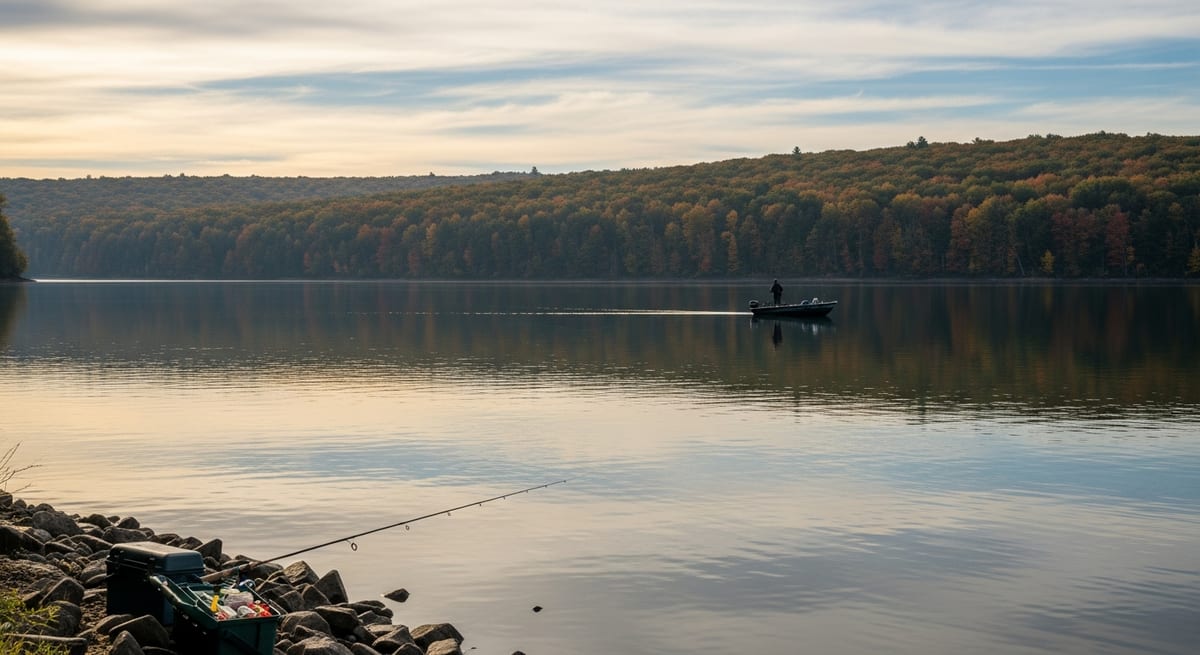
Barkhamsted Reservoir holds one of Connecticut's most consistent walleye fisheries, and reaching it requires a Metropolitan District Commission permit that most CT anglers have never applied for. That access barrier is a significant part of why the walleye community in Connecticut stays small: the fish are there, the low-light bite is real, and anglers who've worked out the permit process describe fishing these waters with almost no boat traffic. Walleye populations have been established in select CT reservoirs through DEEP stocking programs over the years, and the waters that hold them sit largely unfished while most anglers pass through chasing bass and trout. The species rewards preparation, knowing which waters hold fish, which agencies manage access, and when to be on the water matters more in Connecticut than in states where walleye show up in every impoundment.
The Short List: CT Waters Where Walleye Are Actually Present
Not every Connecticut lake holds walleye. The waters that do are specific enough to be worth knowing by name.
Barkhamsted Reservoir (Hartland/Barkhamsted): The water with the strongest walleye reputation among CT anglers who target the species. Barkhamsted is a Metropolitan District Commission property. A separate MDC fishing permit is required beyond a standard DEEP freshwater license, applied for through the MDC directly. Anglers who hold MDC permits and fish Barkhamsted regularly describe it as the state's most reliable option for walleye size. Reports from permit holders over multiple seasons include fish in the 5-pound-plus range and occasional catches above 7 pounds, though creel data specifics vary by season and DEEP survey records are the authoritative source for documented size trends. The reservoir runs deep and cold, which keeps walleye comfortable through summer conditions that shut down shallower lakes.
Saugatuck Reservoir (Weston/Redding): An Aquarion Water Company property that requires a separate Aquarion fishing permit in addition to a DEEP license, rangers check, and anglers who've shown up without one describe being turned away at the gate. The reservoir is deep and clear, conditions that suit walleye better than most of the warmer, shallower lakes in the state. CT walleye regulars who fish Saugatuck describe spring evenings near the dam and along rocky points as the most productive windows, particularly as water temperatures climb through the upper 40s to low 50s in late April.
Lake Zoar (Monroe/Oxford/Shelton): A Housatonic River impoundment with more straightforward access than either managed reservoir. A standard CT DEEP freshwater license covers it without an additional permit. The walleye population runs smaller here and trophy-class fish are less common than at Barkhamsted, but it's a legitimate option for anglers in that stretch of Fairfield County who want to target the species without navigating a separate permit process. The dam end during spring evenings is the consistently mentioned starting point among anglers who've fished it specifically for walleye.
Connecticut River (central and upper sections): Walleye are present in the main river through the central and upper stretches, particularly in slower pools and deeper eddies. They show up regularly as bycatch for bass and pike anglers working jigs through slow water rather than as a deliberately targeted species. CT River regulars who've encountered them describe the same low-light pattern that holds on still water. Fish that are rarely targeted but present enough to appear on a jig worked through the right pool at the right hour.
Low-Light Windows and When the CT Bite Turns On
Spring (March-May): The window that draws the most consistent effort from CT walleye anglers. As water temperatures climb into the upper 40s to low 50s, walleye move shallow to spawn on rocky or gravelly bottoms, and post-spawn fish feed aggressively. The two hours bracketing sunset through April into early May are the period that anglers fishing CT reservoirs specifically for walleye describe most consistently as productive.
The biology behind the low-light preference is well-documented: walleye carry a reflective layer in the eye called the tapetum lucidum that makes them efficient hunters in near-darkness while prey species have less visual advantage. Anglers fishing Saugatuck and Barkhamsted in spring describe the consistent pattern as positioning and fishing before light fades entirely rather than arriving after dark. The fish are already actively moving when there's still color on the horizon.
Summer: In clear, stratified reservoirs, walleye suspend over the thermocline in 20-40 feet of water. Finding them requires vertical jigging with live bait or slow-trolling deep-diving crankbaits along depth contours. Most CT walleye regulars scale back in summer and wait for fall. Without sonar and patience for methodical slow work, summer is the hardest season to chase these fish consistently in Connecticut.
Fall (September-November): As water temperatures drop, walleye move shallower and feed hard ahead of winter. The locations that produce in spring produce again in fall, with the added advantage of minimal recreational boat traffic. Anglers who target CT walleye in fall consistently describe it as an underrated window, less pressure than spring at the same locations, fish behaving similarly, and the added advantage that the permit holders who fish these waters are often the only boats on them.
Winter / Ice: Walleye are caught through the ice on waters where access permits allow. Tip-ups rigged with live sucker or shiner set near the bottom in 15-25 feet are the standard setup among CT ice anglers who've encountered walleye. Jigging with blade baits, swedish Pimples, Rapala Jigging Raps, provides an active alternative when tip-ups go cold.
What CT Walleye Regulars Have Settled On for Clear Reservoir Water
Jig and minnow: The setup that anglers fishing CT reservoirs specifically for walleye have most consistently converged on. A 1/4 oz jig head tipped with a 3-4 inch live minnow, golden shiner, fathead minnow, or emerald shiner when available, worked slowly along the bottom with a lift-pause cadence. In the clear water of CT's managed reservoirs, live bait consistently outperforms plastics in low-light conditions, based on what Saugatuck and Barkhamsted regulars describe across multiple seasons. The live minnow component is treated as non-negotiable among anglers who fish these specific waters.
Lindy rig with nightcrawler or minnow: A slip-sinker setup that lets a walleye pick up the bait without feeling resistance, dragged slowly along the bottom in 8-20 feet of water. Particularly effective in spring and fall when fish hold in moderate depths. CT walleye anglers describe it as better suited to anchored or slow-drifting presentations than to active jigging. A more patient approach that produces steadily when fish aren't actively chasing.
Shallow crankbaits after dark (spring): An approach that doesn't appear in generic walleye content but that CT reservoir regulars describe as genuinely effective in April and early May. Walleye move into very shallow water, sometimes 2 to 5 feet, after full dark. A medium-diving crankbait like a Rapala Countdown or Shad Rap worked slowly over rocky bottom reaches fish that most anglers don't know are in that depth range at night. The pattern that experienced CT walleye anglers describe: fish too deep during early evening, then transition very shallow as full dark sets in.
Jigging spoons and blade baits (ice): Drop to the bottom, lift 6-12 inches, let the lure flutter down, pause three to five seconds between lifts. Walleye typically strike on the drop, line kept barely taut enough to detect the pickup.
Tackle note: Anglers fishing CT's clear managed reservoirs have largely settled on 6-8 lb fluorocarbon as either main line or a leader off braid. The near-invisibility of fluorocarbon in clear conditions is consistently cited by Saugatuck and Barkhamsted regulars as a meaningful factor, particularly during the low-light window when fish are feeding actively but water clarity still works against opaque line.
Permits and Regulations: Confirm the Details Before You Go
CT walleye regulations, minimum size, daily bag limits, and any special rules for managed reservoir properties, are set by DEEP Inland Fisheries and updated each season. The current freshwater regulations on the DEEP website are the authoritative source; any secondhand account, including this one, may not reflect current-season changes.
Reservoir-specific permits: Both Saugatuck and Barkhamsted require fishing permits from the managing water authority, separate from a standard DEEP freshwater license.
Saugatuck Reservoir is managed by Aquarion Water Company. Permit applications and current-season access details are available directly through Aquarion. Permit availability and processing timelines vary by season, checking the Aquarion site before planning a first trip is the reliable approach rather than estimating from prior-year accounts.
Barkhamsted Reservoir is managed by the Metropolitan District Commission. MDC permit information and application procedures are available through the MDC directly. The same applies: confirm current-season availability and process with MDC rather than relying on secondhand information about prior years.
Waters covered by a standard DEEP license: Lake Zoar and the Connecticut River do not require additional permits beyond a standard CT DEEP freshwater fishing license. For anglers new to CT walleye fishing, either is the more straightforward entry point while working out the managed-reservoir permit process for Saugatuck and Barkhamsted.
The permit step is what separates the anglers who fish these waters consistently from those who've tried once and found the gate closed. The walleye fishing at both reservoirs is worth the extra step. The access process is where to invest time before the trip, not after arriving at the boat launch.
EVERY SATURDAY MORNING
Weekly fishing intelligence
Nationwide conditions, what's biting, and honest gear deals. One email, no noise.
No spam. Unsubscribe anytime.