
Winter Flounder Largely Disappeared From CT Harbors After the '90s Collapse. Harbor Reports and DEEP Survey Trends Say the March Window Is Worth Picking Up Again.
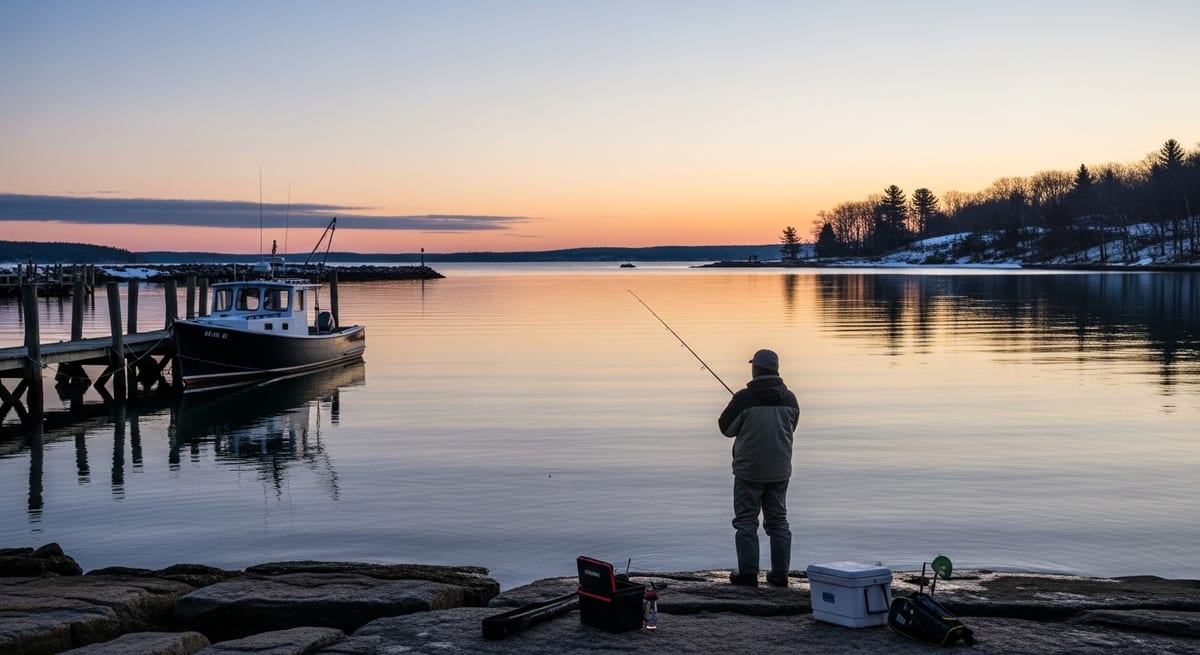
Dock regulars at Guilford's town dock reported double-digit keeper mornings in early March 2022, same ultralight rigs, same Aberdeen hooks and bloodworm spreads that produced in the '90s, same mud flats. For the first time in years, the old spots were actually working. A generation ago, winter flounder were the first rite of spring along the Connecticut coast. Anglers lined the docks in Guilford, Westport, and Mystic in March, pulling fat flatfish from the harbors in numbers that current regulations would never allow. Then the population collapsed. Commercial and recreational overharvest through the 1990s and early 2000s gutted the stock. The fish went quiet. A lot of the old-timers stopped bothering. They're not back to historic numbers, nowhere close. But CT DEEP surveys have been slowly, cautiously encouraging, and the fish are showing up in the old spots again. If you can manage expectations and appreciate light-tackle harbor fishing for what it is, March flounder season is worth your time.
Real Numbers From a Still-Recovering Stock
Blackback flounder. The name most CT harbor anglers use for winter flounder (Pseudopleuronectes americanus), were once the dominant inshore spring species all along the Connecticut coast. Harbors, tidal rivers, near-shore flats: they were everywhere, and large enough to make excellent table fare.
CT DEEP data and angler reports are blunt: the fish are not abundant. The population is well below historic highs and recovering slowly. CT DEEP stock assessments have shown measurable improvement in certain harbor complexes, though exact recovery rates and geographic distribution shift with each annual assessment cycle. Fishing pressure remains tightly controlled.
Current regulations (always verify the current year with CT DEEP before you go):
- Minimum size: 12 inches, measured whole length
- Bag limit: subject to annual revision, confirm with CT DEEP Marine Fisheries before the season opens; has been set at 10 fish per person per day in recent regulatory years, but this number is not fixed and cannot be assumed stable
- Season: Typically late February through April for inner harbors; exact dates shift year to year
- Some areas carry additional restrictions
The season dates and bag limits change as population surveys come in. The CT DEEP Marine Fisheries website and the current Marine Waters Regulations booklet are the authoritative sources. Don't assume last year's rules still apply.
Where the Fish Actually Show Up
Winter flounder spend the cold months in deeper offshore water and move into nearshore bays, harbors, and tidal rivers in late winter and early spring to spawn. The fish that return to specific locations are largely local populations, and those local populations are recovering at very different rates.
As of spring 2026, these are the areas worth putting on your list:
- Niantic River and Niantic Bay (East Lyme): historically one of the best flounder rivers in CT. It still holds fish in early spring, and when water temperatures hit the low 40s in March, the inner river produces. Access from the Niantic boat ramp or by kayak from the town dock.
- Mystic River harbor: the inner harbor and areas below the Bascule Bridge produce fish in March and April as temperatures come up. Fish run smaller here but come in decent numbers on a good morning.
- Thames River (New London area): the lower Thames holds flounder in the spring; access from the New London waterfront and the Eugene O'Neill Memorial Bridge boat launch area.
- Guilford Harbor and Indian River: the shallow mud flats here have historically held some of the best harbor flounder populations in the state. The Guilford town dock gives you a solid starting spot without needing a boat.
- Norwalk Harbor and western CT inner harbors: angler reports through 2025 describe more consistent activity along this stretch than in the worst collapse years. Multiple public docks and access points.
Water temperature is the actual trigger. Winter flounder move inshore when water climbs into the 38-42°F range, typically late February and March. They're most active at 40-55°F. A thermometer tells you more than a calendar.
Light Tackle and a Patient Touch
Winter flounder fishing requires lighter tackle than most saltwater anglers are used to. The bite is subtle, and the hook needs to penetrate a small, tough mouth cleanly.
The rig that works:
- Light to ultralight spinning rod, 6-7 feet, rated for 1/8 to 1/4 oz
- 6-8 lb monofilament or light braid with a 6-8 lb mono leader
- Flounder spreader rig with two short dropper loops, each tied to size 8-10 long-shank Aberdeen hooks
- 1 oz or less bank sinker. The bait needs to be on the mud, not floating above it
- Bait: bloodworms first, always; sandworms work; small squid strips as a trailer on the second hook
The most common mistake anglers make: fishing flounder like stripers, feeling the first tap and hammering the hook immediately. Flounder don't commit that fast. They mouth the bait, move with it, and then take it. The consensus among experienced CT harbor anglers is to wait three to five seconds after the first nudge before lifting. When you do set, a gentle upward sweep does the work, not a hard jerk. Their mouths are fragile and the hook pulls right through if you overdo it.
Move spots if there are no bites within twenty minutes. Flounder aren't spread evenly across the bottom. When you find them, it becomes obvious quickly.
Gear tip: Replace hooks whenever they dull. Sharp hooks matter more for flounder than almost any other inshore species because the bite is so soft.
The Bait That Works (And the Alternatives When It Doesn't)
Bloodworms are the gold standard for winter flounder, and nothing else quite replaces them. They produce consistently year after year. Most Connecticut bait shops carry them in late February and March, though supply can be spotty early in the season, call ahead before you make the drive.
They're not cheap. As of spring 2026, bloodworms are running $18-$25 per dozen at most CT shops. Buy more than you think you need. A hook with a fresh, properly rigged worm outperforms a bare hook with a scent additive every time.
Rigging bloodworms: Thread the worm from the head end, covering the full hook shank and leaving a short tail to dangle. Don't bunch it. A flat, extended worm moves more naturally and is more attractive than a balled-up mess at the bend.
When bloodworms aren't available:
- Sandworms, less effective but will take flounder; rig the same way
- Grass shrimp. A natural forage item in estuarine areas; works well in tidal rivers
- Small squid strips, best as a trailer on one hook while bloodworm goes on the other
- Mussels, opened and threaded on the hook; effective in areas where mussels are the natural food source
On scent additives: Angler reports on commercial fish attractants and shrimp-based dip baits are mixed. In slow conditions, they're worth trying. On a day when fish are being picky, anything that improves commitment rate is reasonable to experiment with.
Whether the March Trip Is Worth Making
Worth it, but expectations matter.
Winter flounder fishing in Connecticut is not what it was 30 years ago. Anglers going in expecting the limits of fat flatfish the old-timers describe are going to be disappointed. What's realistic in good conditions, at the right time, in the right spot: scattered fish with productive mornings producing four to eight keepers and slow mornings producing nothing.
Catch reports from recent seasons note that fish are running larger than during the worst of the collapse years, because size limits have been protecting immature fish from harvest. When a keeper comes to hand, it's a real keeper.
Who this fishery is actually for:
- Anglers who appreciate light-tackle fishing and the challenge of detecting a delicate bite
- Anyone who wants a reason to be on the water in March before striper season opens. Stripers don't typically show in CT until mid-May, and flounder season fills that gap
- People who remember what this fishery was and want to track how the recovery is progressing. The news, cautiously, has been good
- Anglers who believe that regulations and patience actually work
If you keep fish: Winter flounder are exceptional table fare. The white, mildly sweet meat is as good as any flatfish you'll find on a restaurant menu. Keep what the regulations allow, measure carefully, and let undersized fish go cleanly.
Keep an eye on the DEEP stock assessment reports. They're published annually, and the last several have been cautiously encouraging. The fish are coming back. Go in March, be patient, and be part of the reason the numbers keep moving the right direction.
EVERY SATURDAY MORNING
Weekly fishing intelligence
Nationwide conditions, what's biting, and honest gear deals. One email, no noise.
No spam. Unsubscribe anytime.