
White Perch Fishing in Connecticut: The Spring Run That Most Anglers Miss
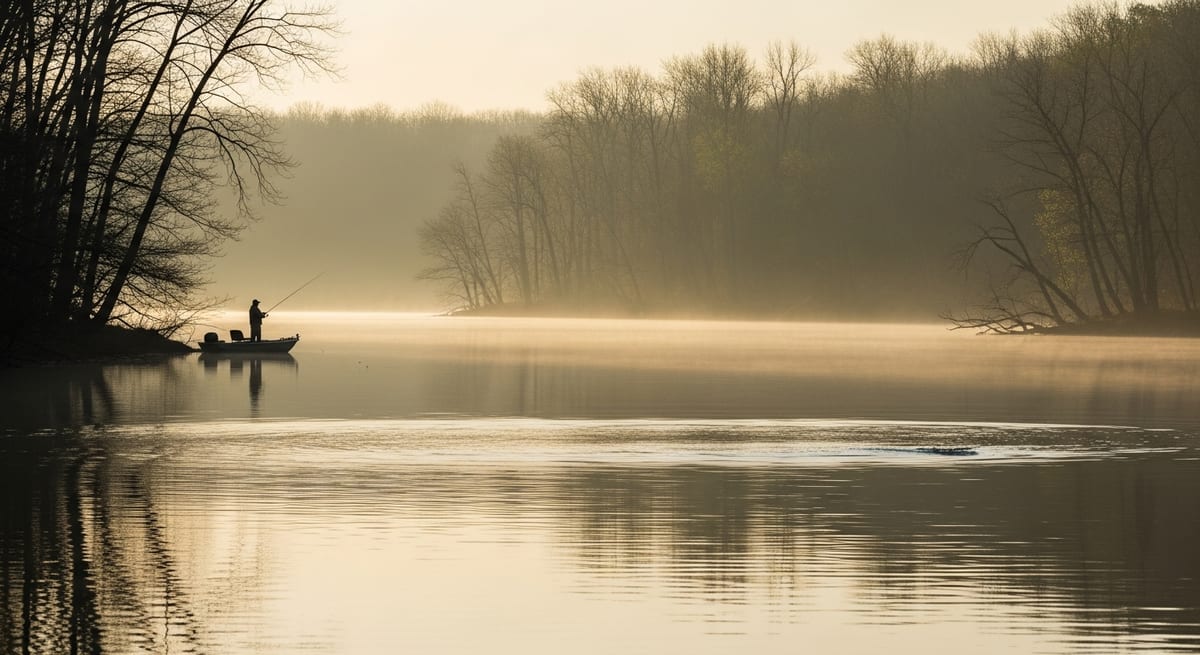
The Hamburg Cove area of the Connecticut River, accessible from the public launch on Hamburg Road in Lyme, holds some of the densest white perch concentrations in the state from mid-April through early May, and on most mornings, you'll fish it alone. While most CT anglers are waiting for bass season to open or chasing early striper reports, white perch are stacking in tidal rivers and coastal ponds across the state. They school tight, feed aggressively, and respond well to an ultralight spinning rod paired with 1/16 oz jigs in pink or chartreuse. The spring run is one of the most accessible fishing opportunities in Connecticut and one of the most overlooked.
What White Perch Are and Why They're Worth Your Time
White perch (Morone americana) are not actually perch. They're in the same family as striped bass and white bass. They're a panfish-sized species that moves between saltwater, brackish, and freshwater environments. Typical Connecticut fish run 8-12 inches and 0.5-1.5 lbs, with occasional fish pushing 2 lbs in productive coastal ponds.
The spring spawning run is the prime opportunity. Fish concentrate in tight schools in tidal river pools and coves when water temperatures typically reach 50-55°F, usually mid-April through early May in most years, though cold springs can push the peak back toward late April or even into the first week of May. The run at any given location typically lasts 3-4 weeks.
A productive spot during the run can yield 20-30 fish in a morning of light tackle fishing. White perch are excellent eating, white, firm, mild flesh that fries up cleanly in butter. In Connecticut, there's no size or bag limit on white perch, which makes keeping a mess of them for the table a perfectly reasonable spring activity.
Where to Find Them in CT
White perch concentrate in predictable locations during the spring run:
Connecticut River: The Hamburg Cove area in Lyme is one of the most reliable tidal river spots in the state. Access via the public boat launch on Hamburg Road off Route 156 in Lyme, or fish the rocky shoreline from shore. The Essex Town Dock at the foot of Main Street in Essex offers shore access to mid-river pools and deeper bends. Follow the fish upriver as water warms through April.
Housatonic River: The tidal stretch between Derby and Shelton holds good numbers from mid-April on. The Osborne Landing ramp off Chatfield Street in Derby puts you right on the productive water. Shore anglers can work the bank near the Route 34 bridge in Derby where current slows at the bend.
Coastal ponds: Bride Lake in East Lyme has a public launch on Bride Lake Road and holds resident perch that concentrate in shallow coves for the spring spawn. Lake Saltonstall in Branford/East Haven is accessible via the launch on Tavern Road in East Haven. Rogers Lake in Lyme/Old Lyme has a ramp on Lake Road, look for white perch in the northern coves in April.
The thermocline trick: White perch follow the warmest water in April. Shallow coves and back eddies where sun hits early and current is minimal warm up fastest. On cold April mornings, fish those pockets before the main river channel warms.
Gear and Tackle
White perch are a light tackle species. Don't overthink it:
Rod and reel: Ultralight to light spinning rod, 5'6" to 6'6", with a 1000 or 2000 series spinning reel. This isn't a heavy tackle situation, white perch run 8-12 inches, and an ultralight setup makes every fish more fun to land.
Line: 4-6 lb monofilament or 6-8 lb braid with a 6 lb fluorocarbon leader. Braid gives better sensitivity in stained water; mono is fine for this application. These fish are not leader-shy.
Terminal tackle: The most reliable setup is a 1/16 to 1/8 oz jighead with a 1-2 inch soft plastic grub, shad tail, or tube. Pink, white, chartreuse, and yellow all produce. A clip-on float rig with a small hook and nightcrawler section is the classic approach and works well for getting kids into fish fast.
Rod sensitivity isn't critical: White perch hits are usually solid and unmissable. A basic $30 spinning combo does the job completely, no need to spend more for this fishery.
Techniques for the Spring Run
Locate the school first. White perch school tightly. If you're not catching in 5-10 minutes, move. When you find them, you'll know, multiple hits per cast, fish following the lure to the rod tip, occasionally fish visible in the water column.
Vary your retrieve depth. In early April cold water, fish often suspend or hold near bottom. A jighead bounced along the bottom with a slow lift-drop-pause typically outfishes a straight retrieve. As water warms in late April, fish move up in the column and a mid-depth swimming retrieve produces better.
Work structure transitions. The edge where a cove meets the main river, just inside a creek mouth entering a tidal pond, and the shadow line under a dock or bridge are all concentration zones. White perch hold in places where current changes speed or direction.
Use sound in stained water. The Connecticut River often runs murky in April from snowmelt. Small rattles on soft plastics or blade baits with built-in vibration help fish locate the lure. Anything that creates vibration gives them a target in off-color conditions.
The float rig for stacked fish: When you've located a school at a specific depth, a float set to that depth and drifted through with a small hook and nightcrawler section can produce fish after fish with minimal casts. Low-tech, highly effective when the fish are stacked tight.
Cleaning and Cooking
White perch are some of the best-eating freshwater fish in Connecticut, mild, white, flaky flesh without the strong flavor some species carry.
Filleting: Slice behind the pectoral fin down to the spine, run the blade along the spine toward the tail, then flip and remove the skin. No unusual bones to worry about, unlike pickerel. Rinse fillets and pat dry.
The classic prep: Coat fillets lightly in seasoned flour or cornmeal and fry in butter over medium-high heat, 2-3 minutes per side until golden. Squeeze of lemon, salt and pepper. That's the whole recipe.
Volume tip: A productive April morning can produce 20-30 fish. White perch freeze well, lay fillets flat on a sheet pan to freeze individually, then bag them. Spring perch in the freezer is a legitimate way to bank good eating into summer.
EVERY SATURDAY MORNING
Weekly fishing intelligence
Nationwide conditions, what's biting, and honest gear deals. One email, no noise.
No spam. Unsubscribe anytime.