
Most Beginners Overbuy Tackle Before Their First Cast. CT Anglers Consistently Point to the Same Short List.
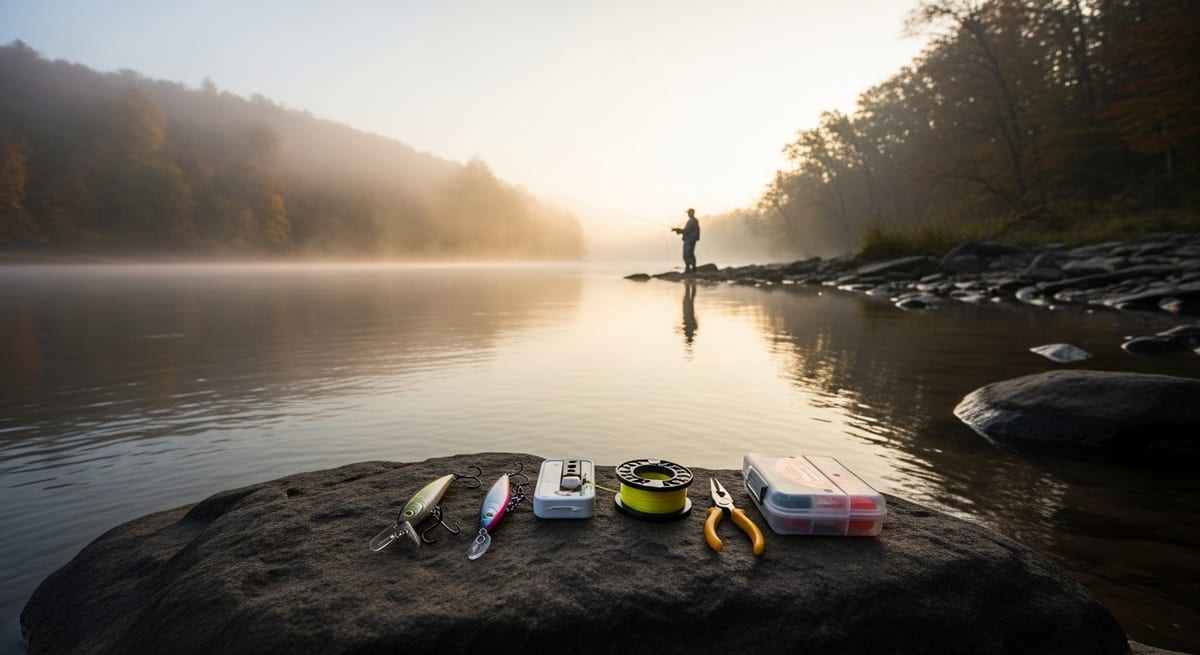
The pattern CT tackle shop regulars and fishing community members describe every spring is the same: a first-timer walks in with a $150-$200 budget, leaves with a basket of specialty lures and pre-rigged rigs, and catches fewer fish than the angler next to them running a nightcrawler on a $45 spinning combo. Fishing in Connecticut is accessible and affordable when you ignore the rack displays. A beginner setup covering most freshwater situations, from stocked trout on the Salmon River to panfish at Coventry Lake, runs under $80 and fits in a daypack. Below is the gear list experienced CT anglers consistently pass along to newcomers, paired with three specific waters worth checking on your first trip.
Three Connecticut Waters to Put on Your Shortlist First
Choosing a spot before you buy gear prevents a common beginner mistake: loading up on specialty tackle for situations you won't encounter in year one.
Salmon River (Colchester / East Haddam): Among the most consistently productive stocked trout destinations in the state, receiving DEEP rainbow and brown trout stocking from April through May. Walk-in access via Salmon River State Forest. Anglers on CT fishing forums describe this water as forgiving for newcomers, stocked fish feed actively and the river's pools are readable even without experience. Light spinning gear and a worm get results here regularly.
Coventry Lake (Lake Wangumbaug): Public shore access off the town beach and along the western shoreline. Holds largemouth bass, yellow perch, and chain pickerel throughout the season. The panfish and perch bite is consistent enough that beginners fishing a nightcrawler under a float reliably get action, which matters in the first few outings.
Farmington River (Collinsville to New Hartford stretch): Multiple DEEP-maintained access points along this run. Stocked heavily with rainbow and brown trout each spring. The flatter water sections above and below Collinsville are more approachable for beginners than the technical tailwater below the dam, which produces larger trout but requires more skill to read effectively.
A quick stop at a local bait shop near your target water is worth the 10 minutes. Staff near stocked rivers tend to know exactly which pools are holding fish and what the bite looks like week to week.
The Setup CT Anglers Consistently Recommend to First-Timers
The consensus across CT fishing forums and local shop recommendations points consistently to the same starting point: a 6'-7' medium-light or medium spinning combo in the $40-$60 range.
Brands that come up most reliably in these conversations: Ugly Stik GX2, Zebco Roam, and entry-level Shimano or Daiwa combos. These hold up to beginner handling, dropped on rocks, stowed in wet bags, and are sensitive enough to register a strike from a small bass or perch without requiring any technique to feel it.
The combo typically includes a size 2500-3000 spinning reel, either pre-spooled or ready to spool. Spinning gear is the right choice for beginners: easier to cast than a baitcaster, appropriate for nearly every freshwater species in Connecticut, and capable of light saltwater work whenever you eventually head to the shore.
Line:
- 8-10 lb monofilament. Mono is forgiving to tie, stretches enough to help land fish without breaking off, and floats, useful for certain presentations on still water like Coventry Lake or Bantam Lake near Litchfield.
- Spool to within 1/8" of the rim. Too little line shortens your cast; too much spills over the bail mid-cast.
The Tackle Kit: A Short List That Actually Gets Used
Terminal tackle is the department that stretches most first-season budgets without proportional return. The short list CT anglers keep returning to when pointing newcomers toward what actually gets used:
- Size 2 and size 4 live bait hooks (gold or bronze): for nightcrawlers and small live baits. These cover panfish, bass, yellow perch, and pickerel. The species most CT beginners encounter in their first season.
- Barrel swivels (size 8 or 10): to prevent line twist when using spinners or live bait rigs.
- Split shot sinkers (assorted): small pinch-on weights to get bait down to the right depth.
- Snap swivels (size 8): for fast lure changes without cutting and retying.
- A small float/bobber assortment: for suspending bait at depth, particularly effective for perch and panfish in still water.
- Size 8 or 10 treble hooks: worth adding if you plan to fish spinners or small plugs from the start.
A $15-$20 starter tackle pack at most sporting goods stores or local bait shops contains everything on this list. Use it before adding anything else. Most of what ends up filling a tackle box after that first season was bought before it was actually needed.
Two Lures to Add Once You're Comfortable on Bait
Anglers in CT fishing communities frequently note that beginners buy a full lure spread and then default to live bait once they're actually at the water. The approach that tends to produce better first-season results: start with bait, add two lures after you've got a feel for the gear and the water.
1/8 oz inline spinner (Rooster Tail or Mepps Aglia): Cast across current or around structure, retrieve steadily. Consistently produces bass, trout, perch, and pickerel. A practical all-water option for CT freshwater. Silver or gold blade with a white or yellow tail handles most light and water color conditions.
1/4 oz chartreuse or white spinnerbait: Effective on largemouth bass in ponds and lakes. Coventry Lake, Bantam Lake, and Lake McDonough in Barkhamsted are all reliable spinnerbait waters. Slow-roll along the bottom or just below the surface. More forgiving of beginner retrieve mistakes than crankbaits or topwater lures.
A white or chartreuse tube jig on a 1/8 oz jig head rounds out coverage for most CT freshwater situations. Experienced anglers generally recommend learning these three presentations before expanding the box, cT ponds and rivers don't require more variety than that to produce fish consistently.
CT Licenses, the Trout Stamp, and What the Regulations Require
Connecticut requires a fishing license for anyone 16 and older. Purchase at ct.gov/deep or at most bait and tackle shops throughout the state.
On pricing: License fees are adjusted periodically by the state, and any specific dollar amounts cited here may become outdated before your first trip. As of the 2024-2025 season, a resident freshwater license ran under $25 and a combined freshwater and saltwater license ran under $50, but verify current pricing at ct.gov/deep before purchasing.
The trout and salmon stamp is a separate add-on required when fishing for or possessing trout and salmon in Connecticut. The requirement applies when you're fishing designated trout management areas and stocked waters, not only when you plan to keep fish. If you're on a DEEP-stocked stream and an officer checks your license while you have trout in possession, they will ask to see the stamp. As of the 2024-2025 DEEP regulation booklet, the stamp ran around $10 for residents. Verify current language and pricing at ct.gov/deep or in the printed regulation booklet before fishing any stocked water.
Key rules to review before your first outing:
- Minimum size limits vary by species and waterbody. Largemouth bass carry a 12" minimum under general statewide regulations in many CT waters, but designated management areas and special regulation waterbodies have different rules, check the DEEP regulations booklet for the specific water you plan to fish.
- Bag limits apply to fish you possess, not only fish caught and released the same day.
- The DEEP freshwater fishing regulation booklet (free at ct.gov/deep) lists every stocked water, current size limits, and special regulations by specific waterbody. Reviewing it for your target water before your first outing is the single most reliable way to avoid a citation.
EVERY SATURDAY MORNING
Weekly fishing intelligence
Nationwide conditions, what's biting, and honest gear deals. One email, no noise.
No spam. Unsubscribe anytime.