
Walleye on Candlewood Peak at Dawn in April. Trout Holdovers on Barkhamsted Run Through August. CT's Most Productive Freshwater Lakes, Broken Down by Target Species.
Barkhamsted Reservoir's wild rainbow trout. Fish that reproduced naturally rather than arrived via the stocking truck, represent a benchmark few CT trout lakes can match. CT DEEP creel data has documented wild fish in the reservoir across multiple seasons, while most other stocked waters in the state reset to baseline each spring. Bass and walleye populations follow different logic: they self-sustain wherever structure, forage, and water quality support them, which narrows genuinely productive waters from hundreds of fishable lakes to a manageable shortlist. The breakdown below covers which CT lakes anglers have identified as top-tier fisheries by species, what access looks like, and the timing patterns that hold up across seasons.
Largemouth and Smallmouth: The Bass Lakes That Consistently Produce
Moodus Reservoir (East Haddam): One of Connecticut's most consistently productive largemouth bass lakes. The reservoir has layered structure, channel edges, submerged timber, rocky points, and significant weed growth, and the bass tournament circuit has long treated Moodus as a reliable trophy-fish producer, with multiple clubs running events here specifically because quality fish show up predictably across seasons. Boat launch available; limited shore access. Spring and early fall are the peak windows anglers report most consistently.
Lake Hayward (East Haddam/Colchester): Eastern CT's most talked-about bass lake among serious local anglers. Consistent quality fish from spring through fall; the local fishing community is active enough that Hayward discussions appear regularly in CT Bass Federation forums and eastern CT fishing circles. Some shoreline access points are through private property, use the public boat launch and fish from the water.
Lake Pocotopaug (East Hampton): The largest natural lake in Middlesex County, with a largemouth population that holds up to significant pressure because of the lake's size. Anglers who fish Pocotopaug regularly report quality fish in the 3-4 lb range from the weed edges and cove structures in late spring. Public boat launch. Worth checking even mid-summer when smaller lakes nearby have slowed.
Lake Lillinonah (Southbury/Newtown): Connecticut's largest inland impoundment and the state's strongest dual bass fishery. The consensus among central CT bass anglers is that Lillinonah's smallmouth, found along the main lake's rocky structure, are among the largest in the state, with multiple 4+ lb fish documented in tournament weigh-ins. Largemouth concentrate in the coves and secondary arms. Multiple access points; state boat launch available.
Mashapaug Lake (Union): Located within Bigelow Hollow State Park in the northwestern corner of CT, Mashapaug receives a fraction of the pressure of the state's better-known bass lakes. Most visitors to the park are hikers, not anglers. Anglers who make the drive consistently describe the bass as less pressured and more willing, a pattern that tracks with the near-absence of motorboat traffic and the remoteness of the access road. State boat launch within the park (as of 2026, confirm seasonal hours at ct.gov/deep before the trip).
Gardner Lake (Bozrah/Salem): A solid eastern CT bass fishery with state boat launch access. Anglers fishing Gardner through the summer report consistent numbers rather than occasional big-event catches. It's a reliable producer rather than a trophy destination, and worth the trip when nearby waters are getting crowded on weekends.
Beseck Lake (Middlefield): A well-managed central CT bass lake with a healthy naturally reproducing largemouth population and documented quality fish through the season. Note: CT DEEP does not stock largemouth bass statewide, all bass populations rely on natural reproduction. Beseck's is strong. Access from the DEEP-managed boat launch.
Candlewood Lake (western CT): Connecticut's largest lake holds both largemouth and smallmouth bass, but pressure on the main basin is high enough that fish learn quickly. CT anglers who fish Candlewood regularly report that the secondary arms and coves receive dramatically less traffic than the main lake, and that the quality fishing on weekend mornings lives in those quieter reaches. Worth the effort for anyone willing to explore beyond the obvious access points.
Cold and Deep: The CT Lakes Where Trout Actually Hold Over
Barkhamsted Reservoir (Winchester/Hartland/Barkhamsted): CT's benchmark trout lake. The reservoir runs cold, clear, and deep, habitat that allows trout to thrive beyond the stocking window rather than just survive spring. DEEP creel surveys have documented wild rainbow trout in the reservoir; holdover browns and rainbows are reported by anglers fishing the deeper structure through summer. CT DEEP maintains a fishing access area in the Barkhamsted area; current launch availability and access road conditions should be confirmed at ct.gov/deep before the trip, as access points on larger reservoirs can change seasonally.
West Hill Pond (New Hartford/Barkhamsted): A cold, clear Litchfield County pond managed for trout. Spring stocking of rainbows and browns plus natural holdovers reported in deeper sections through early summer. DEEP public access on the west shore. Anglers who fish it in early season tend to describe it as underrated relative to better-known nearby waters.
Coventry Lake / Wangumbaug Lake (Coventry): Eastern CT lake with spring trout stocking. Larger than many trout ponds in the state, which helps fish survive into summer in the colder, deeper basin sections before surface temperatures push them down. Anglers from the Coventry area report consistent early-season action that tapers with warming water.
Bantam Lake (Morris): Connecticut's largest natural lake. Spring trout stocking supplements an established warm-water fishery of bass, walleye, and perch. Public launch and shore access at Bantam's state boat launch. Trout fishing is most productive before surface temperatures clear 60°F, typically April through mid-May depending on the season.
Waramaug Lake (New Preston/Warren): One of CT's most scenic fishing settings, in the Litchfield Hills. Trout stocked in spring; anglers who fish the deep center of the lake report holdovers into early summer. Public access at Lake Waramaug State Park, which has camping (as of 2026, check CT State Parks for seasonal entry fees and park hours before visiting in summer).
DEEP-stocked trout waters statewide: CT DEEP publishes a complete list of stocked trout waters annually at ct.gov/deep, updated each season. Based on public stocking records, waters deeper than 12 feet typically hold trout into June; those with sections over 20 feet may carry fish through summer in the cold hypolimnion. The DEEP list is the authoritative source for what's been stocked, where, and when, worth bookmarking before any spring trout trip.
CT's Walleye Fishery: Where the Fish Are and When They're Catchable
Walleye are less widely distributed in Connecticut than bass or trout, but they exist in specific waters in genuine numbers, and anglers who target them seriously have documented consistent patterns worth knowing.
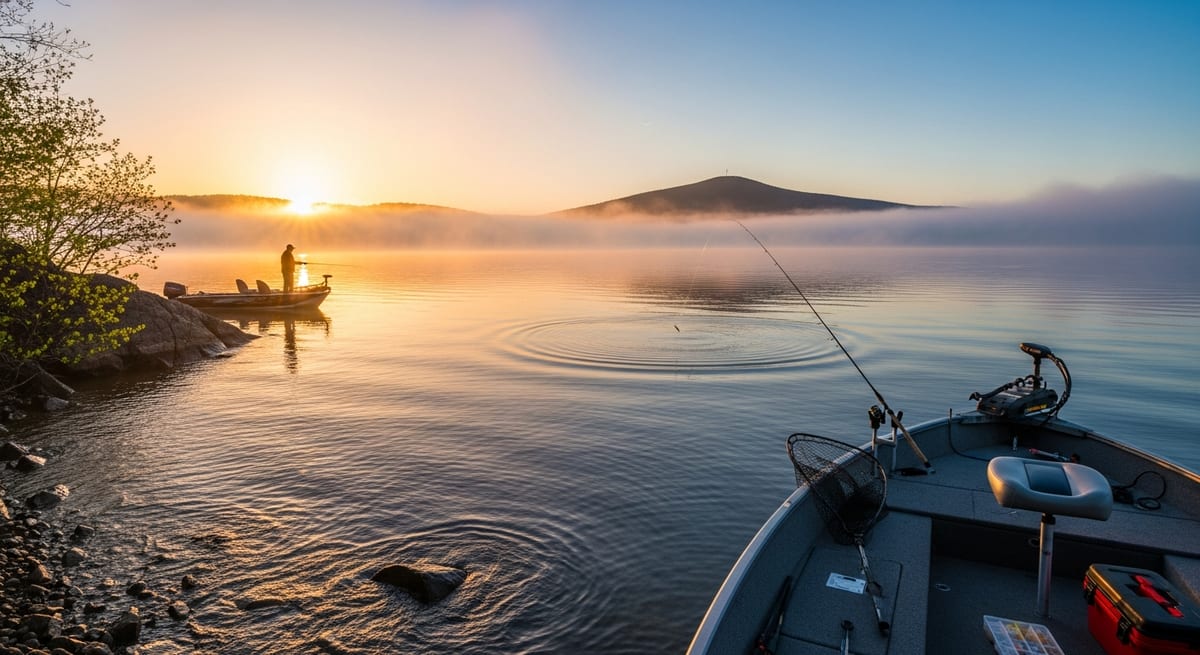
Candlewood Lake: Connecticut's largest walleye fishery by angler consensus. The lake's rocky, deep structure suits walleye, and regular stocking has sustained a robust population. The pattern CT anglers fishing Candlewood consistently report: peak action at dawn and dusk in spring (April-May), with fish staged on rocky points and drop-offs. By mid-morning, fish have typically retreated to deeper structure and become significantly harder to locate.
Bantam Lake: Walleye have been present in Bantam Lake for decades, documented in DEEP stocking records and referenced in creel survey summaries. Spring walleye fishing in the shallows around spawning season (April-May) is the most productive window local anglers describe; summer fish move to deeper main-lake structure and require vertical jigging or live bait presentation at depth.
Squantz Pond (New Fairfield): A smaller lake near Candlewood that holds walleye of its own. State boat launch at Squantz Pond State Park. Squantz Pond and Candlewood Lake are proximate geographically but are managed as separate water bodies, check current CT DEEP regulations for each before fishing.
Connecticut River: The main river holds walleye throughout its Connecticut reach. The Enfield area below Enfield Dam is the most consistently cited CT River walleye location in freshwater angling forums and DEEP public reports, with both boat and shore access. Spring is the primary window before fish scatter through the broader river system.
East Twin Lake and West Twin Lake (Salisbury): Litchfield County lakes in the northwestern corner of CT. Both hold walleye and receive notably less pressure than the central CT fisheries. Anglers from the northwest CT community describe them as worth the drive for spring walleye before the summer recreational traffic builds.
Yellow Perch, Crappie, and Bluegill: Where Panfish Anglers Focus
Candlewood Lake: The most consistently cited perch fishery in CT by anglers who target the species seriously. Yellow perch here run larger than comparable CT lakes. The lake's rocky structure and clear, deep water produce fish that Candlewood's ice fishing community has been documenting for years, as noted in CT Yellow Perch Peak coverage and regional ice fishing forums. Perch fishing is an active year-round pursuit on Candlewood, with ice fishing the primary winter method on the main lake. Check current CT DEEP inland fishing regulations at ct.gov/deep (as of 2026) for bag limits and size minimums before targeting perch specifically.
Saugatuck Reservoir (Easton/Redding): A southwestern CT watershed reservoir open to fishing with an Aquarion water company fishing permit (as of 2026, permits available through Aquarion's website; annual fee applies). Anglers who hold the permit describe excellent perch and bass in clear, cold water, with pressure limited to the permitted angler pool. Consistent permit-holder reports describe fishing quality well above comparable public lakes nearby. The low-pressure environment makes a measurable difference.
Lake Lillinonah: Good yellow perch and crappie alongside the bass fishery. Anglers who fish Lillinonah specifically for perch report that mid-depth sections: 10-20 feet in the main lake basin, concentrate fish through summer after they've moved off shallow early-season structure.
Housatonic River (upper sections): Often overlooked as a panfish fishery. White perch concentrate in the tidal sections of the lower river; yellow perch appear throughout the river and its associated backwaters. Anglers fishing the upper river in spring report perch activity around submerged wood and deeper bends that don't receive significant angling pressure.
Bluegill and sunfish in local ponds: Bluegill and pumpkinseed sunfish are present in virtually every shallow, weedy pond in Connecticut, no named destination required. State-managed ponds listed on the DEEP access map (ct.gov/deep) are the simplest starting point for finding public access to panfish water close to home.
Crappie: The best crappie fishing in CT tends to concentrate in central and eastern waters with submerged timber and dock structure. Lake Hayward, Gardner Lake, and Mashapaug Lake all have documented crappie populations alongside their bass fisheries. Anglers targeting crappie specifically report that submerged structure in 8-15 feet of water during late April through May, as water temperatures move through the 58-65°F range, is the most reliable pattern.
Access Points, Permits, and What CT DEEP Regulations Cover (as of 2026)
DEEP Boat Launches: CT DEEP maintains public boat launches on most of the lakes in this guide. As of 2026, most DEEP launches require either a CT boat registration (which includes an annual launch sticker) or a daily launch fee. Current fee schedules and seasonal launch hours are listed at ct.gov/deep. Conditions, including temporary closures and capacity limits on high-traffic lakes, can change; checking before the trip takes two minutes and avoids a wasted drive.
State Park access: Several lakes are accessed through CT State Parks, squantz Pond State Park, Lake Waramaug State Park, and others, where seasonal entry fees apply. As of 2026 CT State Parks policy, fees run from Memorial Day weekend through Labor Day. On peak summer weekends, parks serving Candlewood and Lillinonah access can reach capacity before 9 a.m.; early arrival matters.
Watershed permits: Some of CT's least-pressured fishing requires a separate water authority permit. Saugatuck Reservoir (Aquarion) and MDC reservoirs near Hartford are the primary examples. These are typically annual permits with modest fees, requiring registration. Anglers who hold them consistently report a quality difference that's worth the paperwork, cold, clean, low-traffic water is difficult to replicate on fully public lakes.
Finding public access: CT DEEP's online mapping resources at ct.gov/deep show public fishing access locations, managed launches, and state waters, with access details including parking, motor restrictions, and permit requirements where applicable. Every CT freshwater angler should have this page bookmarked.
Shoreline access and property: Most land abutting CT lakes and ponds is private. Fish from public access points, DEEP launches, and state parks. Connecticut's public water access rights are more nuanced than in many western states. The rules on what anglers can and cannot do from a boat regarding shoreline contact vary by situation. CT DEEP's current inland fishing regulations booklet covers access rights and relevant trespass law in plain language; it's available free at ct.gov/deep and at most bait shops, and the 2026 edition applies to the current season. When in doubt, stay on the water.
EVERY SATURDAY MORNING
Weekly fishing intelligence
Nationwide conditions, what's biting, and honest gear deals. One email, no noise.
No spam. Unsubscribe anytime.