
CT's Best Public Fishing Access Isn't at the State Parks. WMA Shorelines, Reservoir Permits, and Tidal Mouths That Stay Light All Season.
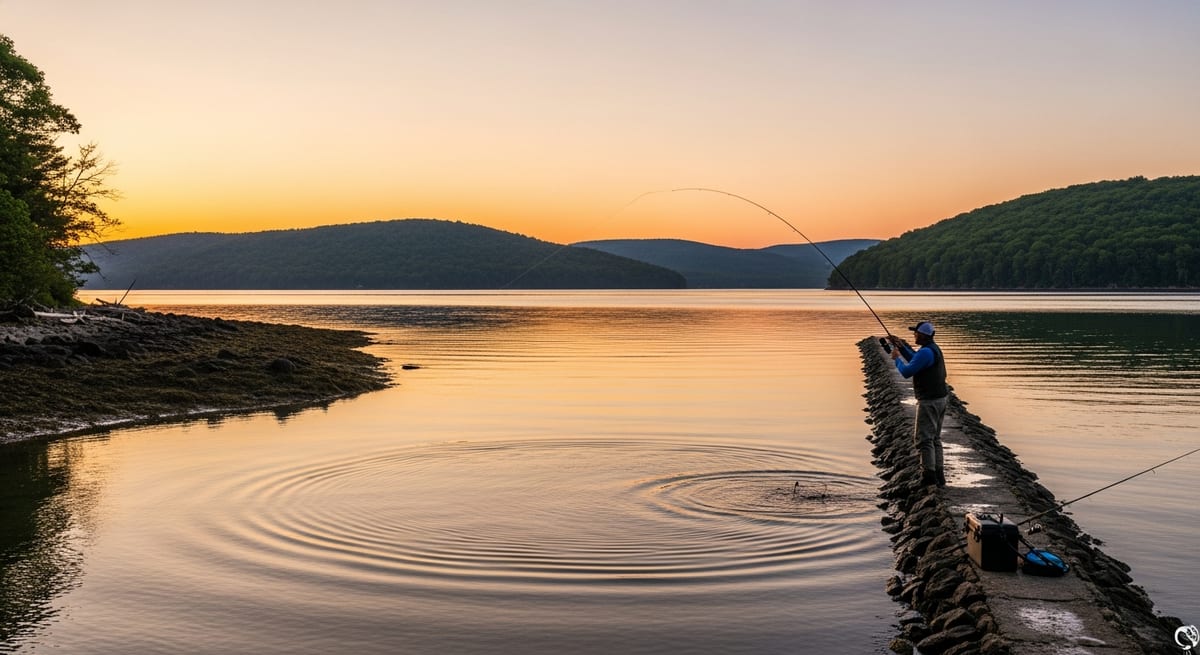
Barn Island WMA in Stonington holds more productive saltwater shoreline than most Connecticut anglers fish in an entire season, tidal marsh channels, a Pawcatuck River boat launch, and estuary flats that push snapper bluefish through late August and stripers through November. Anglers who log trip reports on CT fishing forums consistently note that the Barn Island parking lot stays half-empty on May weekends when Hammonasset's lot is full. WMA access doesn't advertise itself, which is why it runs light. DEEP manages public fishing through several distinct categories, wMAs, state parks, designated reservoir access, river corridor launches, and water authority permit lands. Each type has different peak windows, access terms, and permit requirements. The further a category sits from the average angler's default search, the better the catch-to-pressure ratio tends to run.
DEEP Wildlife Management Areas: The Underused Category
Connecticut's Wildlife Management Areas are state-owned tracts managed for wildlife habitat and public recreation, including fishing. Entry is free with a valid CT fishing license; most WMAs are open year-round. Anglers who've worked through DEEP's full WMA inventory. The complete list with maps is at ct.gov/deep/wma, consistently report that WMA waters run markedly less pressure than comparable public water at state parks, particularly on weekends from June through August.
Barn Island WMA (Stonington): The tidal marsh channels and estuary flats are the fishing focus, not a single access point but a connected system of tidal water with multiple entry spots. Snapper bluefish arrive reliably from mid-August; stripers push through from late September as water temps in the Sound drop toward 60°F. The Pawcatuck River boat launch is accessible by kayak and canoe. Shore anglers working the marsh edge channels report the outgoing two hours as the most consistently productive tidal stage.
Great Island WMA (Old Lyme): Connecticut River estuary access at the river's tidal terminus. Anglers who fish this area in spring describe consistent striper action when water temps cross 55°F, typically mid-to-late April in recent seasons, with white perch and American shad active through May. The backwater structure makes this better kayak water than shore water for most.
James L. Goodwin State Forest (Hampton): Eastern CT bass and panfish ponds with public access and noticeably lower weekend pressure than the state park circuit. Largemouth become active in the shallows as water temps reach the mid-50s, late April in most recent years, per DEEP freshwater conditions updates.
Nehantic State Forest (Lyme/East Haddam): Uncas Pond and Ayers Pond are both public-access waters with bass and panfish. Eastern CT anglers who fish this area describe them as reliable mid-summer options when more prominent bass lakes see tournament and recreational pressure simultaneously.
Cockaponset State Forest (Chester area): Pataconk Reservoir is the primary fishable water here, shore access with bass and panfish in the Chester/Haddam Neck corridor, off Route 148.
State Park Fishing: Timing Matters More Than Location Choice
State parks get treated as the default public access option, show up, find the water, fish. Anglers who time park access around specific conditions rather than convenience consistently report better outcomes than those who treat park water as interchangeable.
Hammonasset Beach State Park (Madison): The Hammonasset River mouth, not the open beach, is the productive fishing focus. The consensus on CT striper forums is that the May 1-20 window on outgoing tides produces the best spring shore striper action at Hammonasset. Summer delivers panfish and snapper bluefish. Under current DEEP regulations, fishing on designated swim beaches is restricted during lifeguard hours. The river mouth tidal area is the practical access.
Rocky Neck State Park (East Lyme): Snapper bluefish show in the tidal creek and adjacent Sound shoreline from mid-August through September. Shore casting on a falling tide produces more consistently than fishing the open beach; the tidal creek is wadeable at low water.
Squantz Pond State Park (New Fairfield): The park sits at the northern reach of Candlewood Lake, providing access to one of CT's most consistent bass and perch fisheries via the state boat launch and park shoreline. CT fishing forums that track Candlewood conditions treat the late-April to mid-May window as the highest-value pre-spawn shore access before summer boat traffic takes over.
Three eastern CT parks for specific windows: Chatfield Hollow State Park (Killingworth) has Schreeder Pond, stocked with trout under DEEP's spring stocking program. The trout schedule is posted again each week at ct.gov/deep through the season. Hopeville Pond State Park (Griswold) follows the same spring stocking pattern in eastern CT. Burr Pond State Park (Torrington) provides northwest CT access to stocked trout in spring and holdover bass through summer; current shore access status is on DEEP's park page.
Connecticut River: Public Access from Enfield to Old Saybrook
The Connecticut River runs 60 miles through the state with most of its banks privately held, but DEEP and town-managed access points are distributed along the full corridor. The river operates as two distinct fisheries: a freshwater reach above the salt front (roughly above Middletown) and a tidal reach from Middletown south to Old Saybrook.
Enfield Dam: The most reliably productive spring shad spot in Connecticut. American shad push upriver when CT River water temps stabilize in the 55-62°F range, historically mid-April through mid-May in most seasons, though warming trends have moved some years earlier. Anglers who fish the shad run annually report that weekday mornings in early May, before weekend crowds build, consistently outperform the same spots on Saturdays. Walleye hold below the dam in the same spring window; DEEP stocks walleye in the Connecticut River system under its annual freshwater program.
Haddam Meadows State Park (Haddam): A practical mid-river access point with shore fishing, boat launch, and picnic area. Channel catfish are the summer staple; shad are present through May on the upriver migration. The tidal influence becomes significant at Haddam, and stripers start appearing in this reach by late May as the salt front pushes north with warming water.
Cromwell/Portland/Middletown corridor: Multiple town boat launches and shoreline parks along the mid-river reach. White perch run the tidal river throughout the full season; American eel are taken incidentally. DEEP's coastal access viewer at ct.gov/deep includes current launch status for this corridor.
Chester to Old Saybrook (tidal reach): Stripers push into the tidal Connecticut River as Sound water temps rise in April and May. Anglers reporting spring 2025 conditions on CT fishing forums noted consistent striper presence at the Chester and Deep River stretch by the third week of May. Great Island WMA on the Old Lyme bank and Saybrook Point on the opposite side provide the primary public shore access at the river mouth.
Long Island Sound Shore: What's Actually Public and When to Fish It
Connecticut's Long Island Sound shoreline is predominantly private. The public saltwater shore access available is fragmented and uneven in quality. The reliable access points are worth knowing specifically. Assuming access from an unfamiliar stretch typically ends with a no-trespassing sign.
The established public shore access points: Rocky Neck State Park (East Lyme) and Hammonasset Beach State Park (Madison) are the largest Sound-facing public beaches with fishing access. Silver Sands State Park in Milford. A less-visited western Sound option, has snapper bluefish and weakfish as late-summer targets, with stripers pushing through on the fall migration. Lighthouse Point Park in New Haven (town-managed, not state) is a documented fall striper access point; the concrete jetty concentrates fish when stripers push baitfish against structure, typically from late September through November on dropping water temps.
Municipal access: Most coastal CT towns operate at least one public boat launch with adjacent fishable shoreline. Access terms vary significantly. Some restrict non-resident parking, and seasonal hours affect availability. The recommendation on Shore Fishing CT community threads is to verify current access via the town parks department before driving, particularly for towns with resident-only or metered lots.
Tidal river mouths as the practical alternative: The mouths of the Housatonic at Devon, the Niantic River, the Thames River, the Mystic River, and the Salmon River cove near Old Saybrook all have documented public access and provide consistent striper access in spring and fall without open Sound exposure. Anglers who fish these mouths regularly describe the outgoing tide on a dropping water temp in September and October as the most reliably productive striper window available from CT public shore. Kayak and wading access is generally more practical here than on open beach shoreline.
Intertidal access: Under Connecticut law, the intertidal zone is publicly accessible on most coastal properties, but upland access to reach that zone must come from an established public access point. The legal framework is more nuanced than a simple rule, and DEEP's coastal access resources at ct.gov/deep list current legal access locations along the Sound shoreline.
Reservoirs and Permit Fisheries: The Lowest-Pressure Freshwater Access
The most underused public freshwater fishing in Connecticut may be the regional water authority reservoir systems, large bodies of water that require a separate annual permit but offer quality fishing with structural barriers to casual pressure. The process of obtaining the permit filters out most of the anglers who would otherwise be there.
MDC (Metropolitan District Commission) reservoirs: The MDC manages Barkhamsted Reservoir, Colebrook River Lake, and related waters in central and northern CT, allowing fishing in designated areas with an annual MDC permit available at mdc.org. Anglers who hold MDC permits consistently describe these as among the lowest-pressure bass and trout waters accessible in the state. The access process filters out casual traffic, and the fishing reflects it.
South Central Regional Water Authority and Aquarion: Both water authorities allow limited fishing on watershed lands with annual permits, separate from the MDC system. Access policies have shifted in recent seasons, and open areas vary by specific reservoir. Contacting each authority directly for current permit terms is the standard recommendation from the CT freshwater fishing community before making plans around specific waters.
DEEP designated fishing areas: DEEP maintains specific shore access parcels along many reservoirs and larger lakes, distinct from WMAs, these are tracts of DEEP-owned land with parking and shoreline access, sometimes with small boat launches. West Hill Pond (New Hartford) and portions of the Colebrook River Lake corridor have DEEP-designated access; the freshwater access viewer at ct.gov/deep lists current status for each.
Navigating shared waters: Connecticut's navigable waters doctrine allows fishing from a boat on bodies of water navigable in fact, using a legal public launch, regardless of who owns the shoreline. This is not a flat rule based on acreage alone. The applicable law is more nuanced and varies by specific water body. DEEP's fishing regulations booklet, revised each year, outlines access restrictions on specific waters and is the recommended reference before fishing less-familiar reservoirs or ponds with mixed public/private shoreline.
EVERY SATURDAY MORNING
Weekly fishing intelligence
Nationwide conditions, what's biting, and honest gear deals. One email, no noise.
No spam. Unsubscribe anytime.