
Most CT Anglers Know the State Parks. The DEEP's Full Public Access Network Extends Well Past Them, and Much of It Goes Largely Unfished.
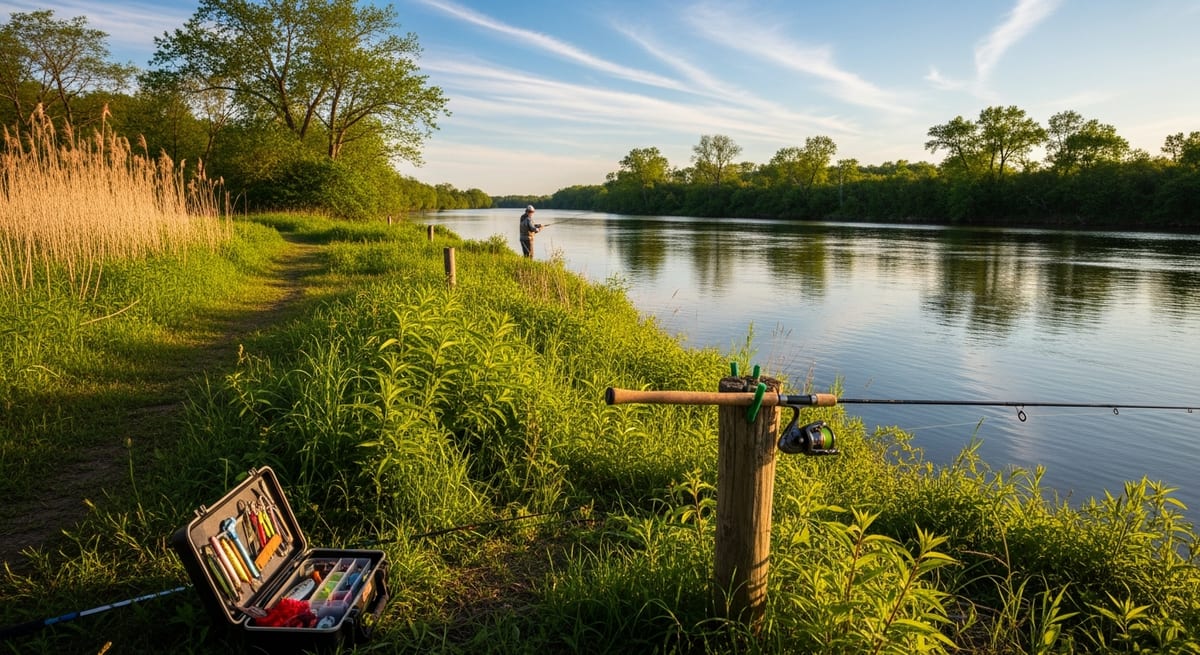
Connecticut law gives anglers public rights along the beds of navigable rivers, but a fence post and a No Trespassing sign stop most people before they ever reach the bank. Anglers who've learned to cross-reference DEEP access maps with state parcel data find legal water where others assume private property begins, and consistently report less competition at spots that don't appear in the first search result. The public water is there in volume: state parks, DEEP-managed river access points, town ponds, and reservoir permit programs with a fraction of the weekend pressure of popular stocked stretches. The access system rewards the anglers who bother to learn how it works.
State Land and DEEP Access Points: More Square Miles Than Most Anglers Realize
Connecticut's state parks and forests include more fishable water than their reputation suggests. Not every park is worth the drive, but the ones worth knowing are worth knowing cold.
Reliable state park access: Housatonic Meadows State Park in Kent offers direct bank access to some of the state's most consistent trout water. CT trout anglers who fish this stretch regularly report active browns and rainbows through late April and May on the upper reach, with stocked fish pushing activity again into October, though conditions vary year to year and the DEEP weekly stocking report is the most reliable indicator of timing. Salmon River State Forest near Colchester provides walk-in access to the Salmon River, which CT fishing reports and angler accounts suggest holds some holdover browns into summer in the deeper pools when water temperatures stay favorable. Macedonia Brook in Kent runs small but carries wild brook trout in the upper reaches, early April, before water warms, is when most accounts put peak activity there.
DEEP Public Fishing Areas: Beyond the named parks, the DEEP maintains a list of public fishing areas at non-park locations, dedicated river access points, boat launches with shore access, and spots on DEEP-owned land that don't carry a state park designation. These draw less weekend traffic than the marquee parks, which matters on rivers where stocked fish concentrate around predictable pools. The full list is on the DEEP fishing page and worth downloading before a new trip.
How public access rights actually work: Under Connecticut law, the state holds public rights along certain navigable waterways, generally extending to the ordinary high-water mark on navigable rivers and the mean high-water mark on tidal waters. CT navigability is a fact-specific determination, coverage varies by stretch and ownership history, and not every river corridor is clearly covered.
The access right applies to the water; it doesn't create a right to cross private land to reach it. Legal access means approaching from a public access point, a public road, or arriving by kayak or canoe from an already-public stretch. When ownership is uncertain, DEEP access maps and state parcel data are the most reliable reference before committing to a new stretch.
Town Ponds and Reservoir Permits Most Anglers Skip
Most CT towns maintain at least one publicly accessible pond where fishing is permitted. These aren't glamorous, but they're often more productive than they look, particularly for bass and panfish from late spring through September.
Town fishing ponds: Municipal access varies significantly. Some towns have formal parking and maintained paths; others have a gravel pull-off and an unmarked trail to the bank. Town parks and recreation departments can confirm what they manage. A brief call often surfaces water that doesn't appear in any statewide database. Anglers who make that call regularly report finding local spots with consistent weekend action and no permit required.
Reservoir permit programs: The Metropolitan District Commission runs a public fishing program on several Hartford-area reservoirs; the South Central Connecticut Regional Water Authority has a comparable program on reservoirs near New Haven. Both require permits, dates, costs, and permit locations change, so each agency's website is worth checking before showing up.
CT anglers who use these programs regularly report lower weekend pressure than comparable state park water, with solid bass fishing on the reservoirs that see the least general awareness. The main draw isn't the fish count. It's reduced competition on water that's technically public but practically underutilized.
ADA-accessible sites: The CT DEEP maintains a list of ADA-accessible fishing sites, level ground, nearby parking, often rail or dock access. Beyond their primary purpose, these sites are practical benchmarks for short outings when conditions or time don't allow a longer hike to the bank.
Rivers: Where the Access Question Gets Complicated
CT rivers are where anglers hit the most confusion, and where access questions are most likely to create real problems for everyone using the water.
State-maintained river access points: The DEEP has mapped access points on the state's major rivers. The Connecticut River, Housatonic, Farmington, Salmon, Shetucket, and others. These have established parking and marked paths to the bank. On rivers you don't know well, these designated points are the right place to start before assuming any additional bank access exists along the corridor.
State parks on rivers: Several state parks sit directly on major rivers with full legal bank access: Housatonic Meadows near Sandy Hook for the main-stem Housatonic, Salmon River State Forest in Colchester for the Salmon, People's State Forest for the Farmington in the Burlington and Barkhamsted area. These are the reliable anchor points on popular rivers, worth treating as base camps when exploring new water in those corridors.
Road crossings and bridge access: Public bridges over rivers create access in some situations, where road right-of-way extends toward the water, but this varies significantly by location, town, and the specific easement involved. CT river anglers experienced in scouting new stretches generally recommend staying on the bridge structure itself when bank ownership is uncertain, rather than stepping onto adjacent land before confirming parcel status. Repeated trespass complaints on a stretch have historically led to landowners closing off river access that the broader angling community previously used without issue.
On river access generally: If a specific bank can't be confirmed as public through a DEEP list or parcel map, the working assumption among experienced CT river anglers is to treat it as private. Verified public water in this state is plentiful enough that guessing carries more downside than upside.
What Experienced CT Anglers Use to Scout Public Water
CT DEEP Fishing Guide: The most comprehensive official source for CT public access. Lists state-managed access points by town and waterbody, with general location and species notes. The PDF version is worth keeping on a phone. It covers water that doesn't surface in standard search results. CT anglers who fish new water regularly treat this document as the first stop, not a backup reference.
DEEP Interactive Map: The DEEP website's fishing access map overlays public access points on state GIS data, searchable by town or region. It's a practical starting point for visual orientation when scouting unfamiliar sections of the state, before pulling satellite imagery or parcel data. Coverage is stronger for named parks than for informal access points, so it works best as an initial filter rather than a final answer.
OnX Hunt / HuntStand: Built for hunters, but both apps display public versus private land boundaries using state parcel data. CT river anglers use them to clarify bank ownership on unfamiliar stretches, whether a given half-mile of riverbank is state land, town land, or private. The subscription is easier to justify when you're regularly working water with ambiguous access.
Google Maps satellite view: Satellite imagery helps identify pull-offs near water, visible paths, and informal boat launches. Cross-referenced with parcel data, it's a workable method for evaluating whether a piece of bank merits a drive. Satellite imagery doesn't tell you who owns what, so it functions best alongside a parcel lookup rather than as a standalone check.
Local tackle shops: CT tackle shop staff tend to know about informal pull-offs, reservoirs where the permit program recently got easier to navigate, and town-managed water that doesn't appear in any statewide database. Anglers who ask regularly describe these conversations as among the most useful access intelligence available, not because the staff are guarding secrets, but because that local knowledge isn't written down anywhere else. Buy the bait, ask the question.
EVERY SATURDAY MORNING
Weekly fishing intelligence
Nationwide conditions, what's biting, and honest gear deals. One email, no noise.
No spam. Unsubscribe anytime.