
Neighborhood CT Ponds and a Panfish-First Approach Have Made More Young Anglers Than Any Bass Lake Trip. What Families Who Keep Coming Back Do Differently.
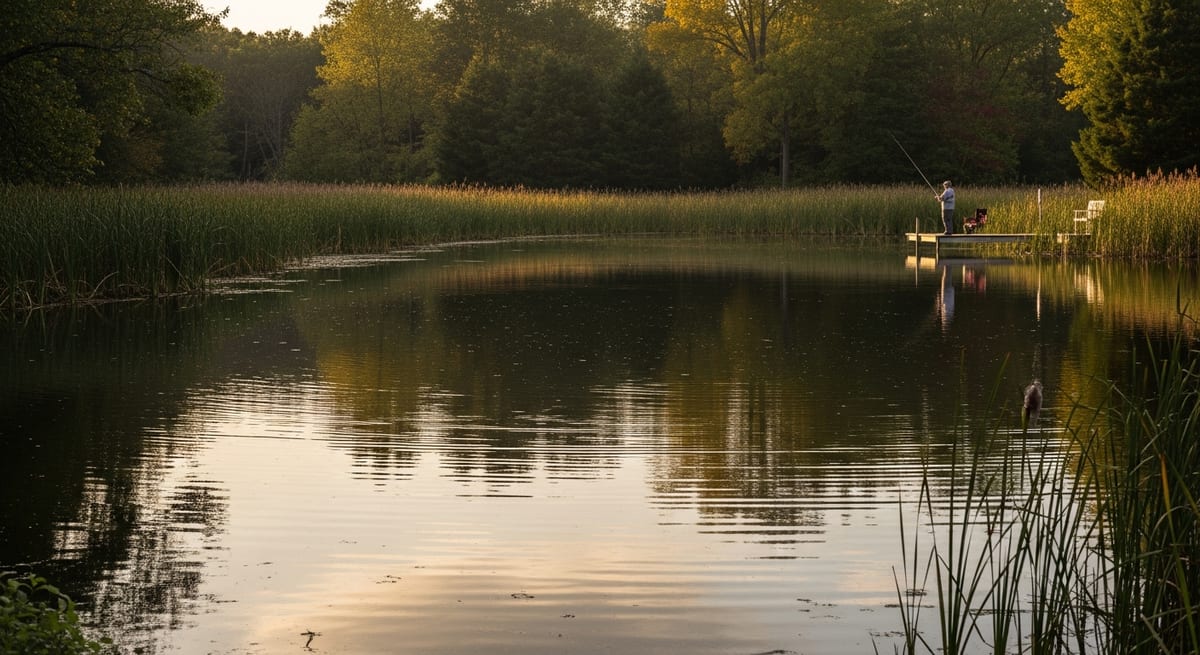
CT DEEP's public access map lists warmwater ponds in nearly every corner of the state, but the species most likely to get a child hooked on fishing lives in most of them year-round without any stocking help. Bluegill, sunfish, crappie, and yellow perch hold in almost every warm, weedy Connecticut pond. They bite during daylight hours and don't require a specific tide, a structure find, or a practiced presentation to produce consistently for young anglers. Families who fish Connecticut ponds with young kids report a consistent pattern: the trips that build lasting interest aren't the ones chasing largemouth in deep water. They're the ones where something happens on the line every ten or fifteen minutes. A child who catches three bluegill in an hour has had a successful fishing trip. A child who watches a motionless bobber for two hours may reasonably decide fishing isn't for them. The difference between a trip that builds a lifelong angler and one that kills the interest early almost always comes down to three factors: wrong species, wrong pond, and adult expectations that belong on a different kind of outing altogether.
Bluegill, Crappie, and Yellow Perch, why CT Fishing Families Default to Panfish for First Trips
Bluegill, sunfish, crappie, and yellow perch are the right beginner fish, and anglers who regularly introduce kids to Connecticut fishing reliably echo this. They're abundant in state ponds, they bite readily on simple presentations, and they're active during the daytime hours when young anglers are actually on the water. Most importantly: they bite often enough that the waiting doesn't feel like waiting.
A pond where ten bluegill come to hand in an hour produces a better first trip than a lake where big bass live but rarely show on a calm Tuesday afternoon. That trade-off is worth understanding before committing to any well-known bass destination for a child's first outing.
Where to find panfish in CT: Almost every warm, weedy pond in Connecticut holds bluegill and sunfish. They thrive in shallow, vegetated water common throughout the state. CT DEEP maintains a list of ADA-accessible fishing sites worth bookmarking for families with younger kids, since easy access to the water matters as much as what's in it.
Crappie: Black crappie are worth targeting specifically in early spring and late fall. They hold in colder water than bluegill and tend to stack around structure: dock pilings, brush piles, submerged logs. When you locate them, a short window can produce a lot of fish. Candlewood Lake, connecticut's largest lake, situated in the western part of the state along the Fairfield-Litchfield county line, has documented crappie populations, as do ponds in northeastern CT including Mashapaug Pond in Union, where anglers fishing the public shoreline access points report consistent crappie catches through late fall.
The Gear Setup That Works, and Why Pre-Rigging the Night Before Changes Everything
The right setup for kids is simpler than most parents expect. The most consistent advice from CT families who fish with young anglers: pre-rig everything the night before departure, not the morning of the trip.
Rod and reel: A 5-6 foot ultralight or light rod is the right range. The Shakespeare Ugly Stik GX2 Youth (spinning combo) and the Zebco 33 (spincast combo) are both proven starter options, available at Walmart, Dick's Sporting Goods, or most tackle shops in the $20-$40 range. Spincast reels like the Zebco 33 use a covered face with a push-button release that many beginners find easier to operate than an open-face spinning reel. Both styles work well for panfishing, and either is a reasonable starting point. Avoid reels with stiff drag systems that frustrate kids when a fish runs and they can't figure out why the line won't give.
Line: 6 lb monofilament handles anything a kid is likely to catch panfishing and casts a small hook cleanly without unnecessary tangles.
Hooks and bobbers: Size 8-10 baitholder hooks with a simple clip-on bobber. The visual cue of watching a bobber dip holds attention between bites in a way that no other part of the setup reliably does. Set depth so the hook sits mid-column or just above the bottom depending on the pond.
Bait: Earthworms, consistently. Red wigglers or nightcrawlers from a bait shop the night before, not the morning of, since one more stop between home and the water costs time and momentum. Small pieces of worm on a size 8-10 hook will out-fish almost anything else for bluegill and sunfish.
Night-before prep matters more than most families give it credit for. Time spent tying knots at the water's edge while a kid watches is time they're not fishing. Arriving ready to put a rod in a child's hand within two minutes of parking sets the tone for the whole session.
Connecticut Ponds Worth Visiting With Kids
Wharton Brook State Park (Wallingford): A reliable first stop. The pond gets heavily stocked with trout in spring and holds panfish year-round. Easy access, a manageable layout for young anglers, and free admission make it a low-friction choice for a weekday morning.
Collis P. Huntington State Park (Redding): Multiple ponds spread through wooded terrain with easy walking paths. Largemouth bass, pickerel, and bluegill all present. Watercraft access is carry-in only, which keeps the water quiet. Anglers who fish the park regularly note that the eastern pond is worth working the lily pad edges from May through August for consistent bluegill action.
Mashapaug Pond (Union): A productive lake in northeastern CT with documented bluegill and crappie populations. Public access points run along portions of the shoreline, check current CT DEEP access maps before making the drive if you're planning to walk the bank rather than fish from one fixed spot, since available frontage varies by season.
Harkness Memorial State Park (Waterford): Shoreline access on Long Island Sound offers a completely different experience from inland panfishing. Scup and striped bass move along this section of coastline during their seasonal runs, according to anglers who fish the Harkness shoreline regularly, and a saltwater fish, even a small one, tends to engage kids differently than another bluegill. The grounds give you something to do between bites.
Your town's local pond: Many parents drive past the best option. CT towns maintain small ponds with public fishing access that see far less pressure than the well-known state parks. These neighborhood spots often hold impressive numbers of panfish year-round, and the short drive means you can leave when attention spans hit their limit without feeling like you wasted the outing.
When the Bite Goes Quiet, because It Will
Every trip with kids hits a slow stretch. How that stretch is handled usually determines whether they want to come back.
The pattern CT fishing families describe most often: adults who double down during slow periods, moving spots quickly, switching rigs, getting visibly frustrated. Kids pick up on that energy and file fishing away as a stressful activity. What anglers with experience fishing alongside young kids consistently report works instead is treating the slow stretch like it was already part of the plan.
Keep a task ready. Let them hold the net. Let them pick the next bobber color. If shallow water is nearby, let them look for minnows while the rig gets adjusted. When the line goes tight again, full attention snaps back without prompting.
Time trips to avoid the worst windows. Early morning (first two hours of daylight) and early evening are the peak panfish windows in Connecticut. The periods that consistently deliver action before patience runs short. Mid-afternoon in summer is reliably the slowest: fish drop deep, bites slow down, and so does everyone's tolerance for standing still. Getting to the water by 7 AM typically means steady action for the first hour or two of the session.
Leave before you have to. The families who fish with kids most successfully describe the same rule: end the trip while everyone is still enjoying it. A 90-minute session that wraps on a high note outperforms the three-hour marathon that ends badly. Short trips that feel like a win are the ones kids bring up on the drive home, and ask about again the following week.
Timing, Licensing, and What First-Time CT Fishing Families Most Often Miss
CT fishing license: Under CT DEEP regulations as currently published, anglers under 16 are not required to hold a fishing license, but verify the current rules at ct.gov/deep before your trip, since regulations are reviewed and updated on an annual basis. Adults must hold a valid CT license, available online through the CT DEEP website or at most bait shops. For early morning trips, buying the night before avoids delays at the water.
When to go: June through August is the prime window for panfishing with kids in Connecticut. Fish are shallow, active, and reliably catchable during this stretch. Early spring (April-May) works as well, especially for crappie, though morning temperatures can run cold enough to cut the session short. Late summer evenings tend to produce well and typically come with calmer water as a bonus.
What first-time families most often miss: The goal of a first trip isn't to lock in a fishing habit on the spot. It's to leave a child curious enough to ask about coming back. Catching fish helps, but so does watching a great blue heron work the shallows, seeing a carp roll near the surface, or just sitting near the water with no screens and nowhere to be.
CT families who've introduced multiple kids to fishing over several seasons describe a consistent arc: low-pressure early trips, frequent enough action to feel worth repeating, and a long enough runway before anyone tries to scale up the difficulty. The families who build young anglers from that foundation are the ones who treated the first few trips as a patient introduction, not as an audition for a more serious hobby.
EVERY SATURDAY MORNING
Weekly fishing intelligence
Nationwide conditions, what's biting, and honest gear deals. One email, no noise.
No spam. Unsubscribe anytime.