
CT Kids Fish Free, and the DEEP's Panfish Ponds Are Stocked for It. What Families Who Use the Loaner Program Learn After the First Few Trips.
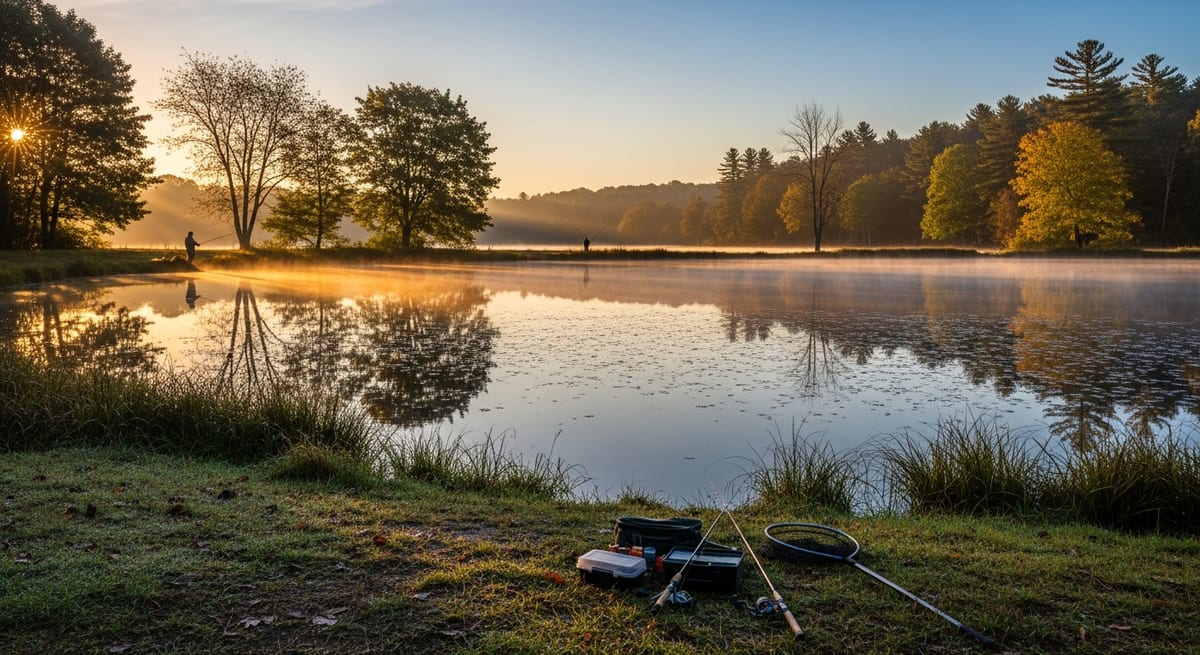
Connecticut's DEEP Fishing Tackle Loaner Program runs through more than thirty designated sites across the state. Most of them panfish ponds where bluegill and yellow perch stack near shore throughout warm weather. Families who have gone through the program report that the gear-on-site access removes the biggest barrier for a first trip: you don't need to own anything to have a productive day. CT anglers who bring kids to these ponds consistently report that one afternoon of steady bluegill bites is enough to make the next trip the kid's idea, not the parent's. A few things separate the families who leave with a hooked kid from the ones who drove 45 minutes to sit on an empty shore.
Why CT Pond Panfish Are the Right Starting Point, not Just Because They're Easy to Catch
Families who regularly fish Connecticut ponds with children, particularly at DEEP-managed loaner sites, consistently point to bluegill and yellow perch as the species that convert skeptical kids into repeat anglers. The reasons that come up across community fishing forums and at DEEP access points are predictable but worth walking through.
They're abundant across the state: CT DEEP stocking programs maintain panfish populations at dozens of designated freshwater sites, and anglers fishing these ponds report that large numbers of fish are often within casting distance of the dock or shoreline. Nearly every Connecticut pond holds bluegill.
They bite on simple bait: Bluegill respond to basic presentations with little coaxing. Families at DEEP loaner sites report that nightcrawlers, waxworms, and similar basic baits produce consistent bites throughout the day, kids get action, not just waiting.
They're catchable without technique: A bobber, a hook, and a piece of nightcrawler produces bluegill and yellow perch reliably. The setup is kid-operated from the first cast, without requiring any learned skill to generate results.
They're safe to handle: Bluegill dorsal spines are firm but not a serious hazard for children. The fish are easy to unhook and hold near the water for examination before release. Compared to a head-shaking largemouth or a coastal bluefish, panfish are manageable at any age.
They fight on light tackle: Pound-for-pound, bluegill are among the harder-fighting freshwater fish on appropriate gear. Families who fish them on 5-foot ultra-light spinning setups report that a 6-inch bluegill generates real excitement on the rod, not just a visual experience of holding a fish.
Where CT Families Consistently Find Fish: DEEP Access Points, Town Ponds, and the Spots Local Anglers Point Newcomers To
DEEP Fishing Tackle Loaner Program sites: Connecticut DEEP maintains designated family fishing sites where rods, reels, and tackle can be borrowed at no cost. As of 2025, the program runs through multiple sites statewide, and the ponds attached to these locations are regularly stocked and tend to produce consistent panfish action. Families who have used the program report that having gear on-site removes the setup barrier for a first trip. The current site list is posted at ct.gov/deep under the fishing programs section, confirm before visiting, as site availability can vary by season.
Squantz Pond State Park (New Fairfield/Sherman): Part of the Candlewood Lake system and one of the more reliably documented family fishing access points in western CT. The park has established public dock and shoreline access, and Candlewood's perch, bluegill, and largemouth bass populations are represented in CT DEEP historical creel survey data. Anglers at this site report consistent family fishing throughout warm-weather months.
Town ponds: Every Connecticut town has at least one park pond managed by the parks or recreation department, and many are stocked periodically. The most current information on which town ponds hold fish comes from local bait shops. This sourcing is consistently more reliable than any published list for real-time conditions.
Rocky Neck State Park (East Lyme): Offers coastal and freshwater fishing options with established parking and shoreline access. Conditions and stocking status vary; confirm with CT DEEP before a dedicated fishing trip.
Coastal shoreline for small saltwater species: Families fishing harbor piers and tidal access points along Long Island Sound, bridgeport, New Haven, and Norwalk harbor areas among them, report catching scup and small bluefish (snappers) in late summer. Snapper bluefish have historically moved into coastal CT waters from approximately late July through September, though year-to-year timing and specific pier access vary. CT DEEP Marine Fisheries publishes in-season run advisories; check current reports before targeting any specific pier location.
Farm ponds (with landowner permission): Anglers who have fished private farm ponds describe them as some of the most productive low-pressure panfish water available in the state. Many are maintained by owners, see minimal fishing effort, and hold strong bluegill and bass populations. A respectful request, close gates, pack out garbage, follow any posted conditions, is typically welcomed.
What Actually Works: The Gear Setup That Shows Up at Every Productive Kids' Outing
The bobber and worm rig: Families who fish CT panfish ponds consistently describe the same configuration: a 5-6 foot light or ultra-light spinning rod, a 1500-2000 size spinning reel, 6 lb monofilament, a small spring bobber, split shot to keep the bait suspended, and a size 8 hook. Setup takes under five minutes. Kids can operate this independently within the first outing once the basics are demonstrated.
Pre-spooled beginner combos: Spinning combos in the $20-$40 range from sporting goods stores are widely reported as adequate for kids' panfish fishing. Look for 5-6 foot rods in light action with pre-spooled reels. Families who have tried both dedicated kids' combos and repurposed adult light gear generally report that purpose-built light-action setups handle better in small hands.
Spincast reels (Zebco 33 or similar): The enclosed, push-button spincast reel eliminates line management problems entirely. Kids cast by pressing the button, releasing on the forward stroke, and retrieving. The Zebco 33 has been the standard recommendation among CT fishing instructors and family-oriented bait shops for decades, no birdnesting, no open-bail mistakes.
Bait: Nightcrawlers remain the standard recommendation for CT panfish ponds. Cut into smaller pieces for smaller hooks. A half-worm on a size 8 hook is the right scale for bluegill. CT bait shop pricing has risen in recent years; call ahead to confirm current availability and cost before the trip.
What veteran family anglers consistently leave home: Families who have run several kids' fishing trips report the same pattern: less gear makes for a better day. Multiple rods, specialty lure collections, and overpacked tackle boxes create logistics overhead that competes with fishing time. One simple setup per kid, bait, and a bucket is the configuration that comes up repeatedly among families who have dialed in the routine.
CT License Rules for Family Outings, what Applies to Kids, What Applies to Adults
Children under 16 fish free: Per CT DEEP freshwater fishing regulations (as of 2025), Connecticut residents and non-residents under 16 are exempt from the fishing license requirement. No documentation is required at the water.
Adults must be licensed: All anglers 16 and older must hold a valid Connecticut fishing license when freshwater fishing, including adults assisting a child at the rod. As of 2025, licenses are available online at ct.gov/deep and through licensed agents including most bait shops and larger sporting goods retailers.
Stocked trout season: The spring stocked trout opener, typically mid-April per CT DEEP's annual management schedule, produces high-catch-rate fishing for the first few weeks after each stocking event. CT DEEP publishes stocking reports and trout management schedules on its website. Catch rates tend to drop as stocked fish disperse and are harvested; the early-season window, within the first two to three weeks after a stocking, is the highest-probability option for a family trout outing.
Saltwater and combined licenses: Families fishing Long Island Sound tidal waters face separate or combined licensing requirements distinct from inland freshwater rules. As of 2025, CT DEEP offers licensing structures that cover both freshwater and marine recreational fishing. The DEEP website at ct.gov/deep is the authoritative source for current requirements, licensing structure and fees have changed in recent seasons, and the specific combination that applies depends on what water you are fishing.
What Families Who Do This Regularly Get Right, and Where First-Timers Usually Overcorrect
Duration is a deliberate choice, not a default: Families who fish regularly with young children report that two hours is a comfortable ceiling for kids under 10. The productive pattern that emerges after a few trips: arrive, fish hard for 90 minutes to two hours, and pack up while the kid still wants to stay. Ending before the enthusiasm drains builds motivation for the next trip; extending past that window tends to make fishing feel like obligation.
Let them manage the rod: The instinct to take over, to adjust the cast, reset the hook, or re-rig after a tangle, is common among adults with fishing experience. Families who have worked through this report that kids who manage their own gear, even clumsily, develop faster and feel more ownership over the results. A fish reeled in under the kid's own power registers differently than one an adult mostly handled.
Bring water and snacks, make it part of the kit, not an afterthought: Families who fish with children consistently name this as one of the variables that determines how long an outing stays productive. Kids who run low on food or water exit sooner; those who don't, fish longer.
Mark every fish on its own terms: A 4-inch bluegill is a genuine event for a 6-year-old. Experienced family anglers recommend photographing it, putting a name to it, and making it a story worth retelling. The first fish caught and released is routinely the one that still comes up in conversation a week later.
Handle fish together and explain why: CT fishing instructors and family anglers at DEEP loaner sites consistently recommend wet hands before holding any fish to protect the slime coat, keeping the fish near the water surface during any examination, and a clean, gentle release. Families who establish these habits early report that kids adopt them without prompting by the second or third trip. It becomes part of what fishing means to them.
Build in a pivot: When nothing is biting after 30 to 45 minutes, the pond environment itself sustains the day. Frogs, turtles, water insects, and bird activity are all genuine points of interest for young kids. Families who have done enough of these trips note that the non-fishing observations often drive the car ride conversation on the way home.
What regulars at CT DEEP loaner sites describe as the biggest adjustment: They leave the full tackle box in the car, bring one rod per kid plus a spare, and fish the same pond two or three consecutive times before trying a new location. Familiarity with a single water, knowing the dock layout, where the fish tend to hold, what bait worked on the last visit, consistently produces better outcomes than exploring new spots each trip.
EVERY SATURDAY MORNING
Weekly fishing intelligence
Nationwide conditions, what's biting, and honest gear deals. One email, no noise.
No spam. Unsubscribe anytime.