
The Lower Connecticut River Is Four Fisheries in One. Most Anglers Only Know One of Them.
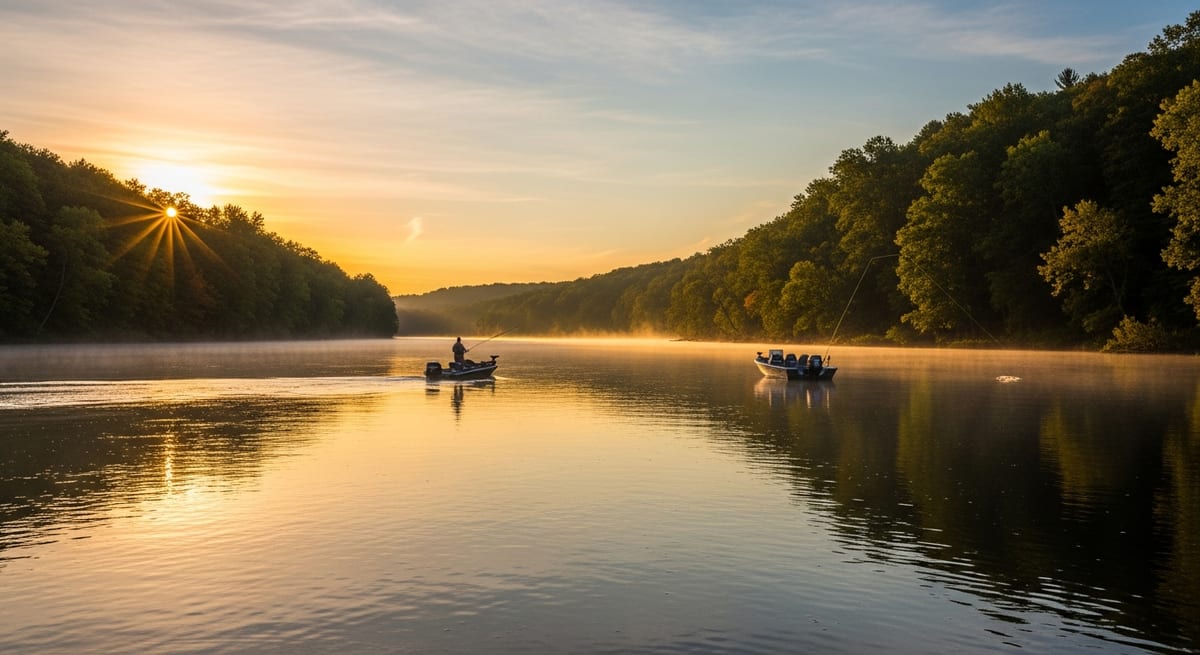
During peak weeks of the April shad run, anglers report the Enfield Dam shoreline filling before sunrise, with productive water 15 miles downstream running a fraction of that pressure even as the bite is happening at the same intensity. That pattern holds across every season on the lower Connecticut: concentrated attention on one target species at one access point, while three other fisheries run largely uncontested through the same stretch of river. The lower Connecticut from Hartford to Old Saybrook produces striped bass through May and June, largemouth in tidal backwaters, smallmouth in rocky upriver stretches, and fall staging stripers near the mouth before temperatures push them back out to Long Island Sound. Anglers who've worked the river across multiple seasons describe it as one of the more underutilized multi-species fisheries in the Northeast, not because it's unknown, but because most visitors arrive for the shad run and don't return until the following April.
April-May: The Shad Run at Enfield and What Runs With It
The spring shad run is the headline event on the lower Connecticut River, and it earns that status. American shad enter from Long Island Sound in April when water temperatures push into the low-to-mid 50s, moving upstream toward Hartford and beyond by May. The concentration of fish below the Enfield Dam during peak weeks is consistent enough that anglers who've fished the run across multiple seasons describe it as one of the more reliable spring spectacles in Connecticut freshwater.
The Holyoke Dam that appears in many shad articles is in Massachusetts, fishing around it is a Massachusetts trip, not a Connecticut one. The first major barrier within the state is the Enfield Dam, and that's where Connecticut fish stack. From Enfield downstream through Hartford, Cromwell, Middletown, Haddam, and the Salmon River confluence at Salmon Cove in East Haddam, fish are present throughout the run.
What works: Shad darts and small spoons in chartreuse, red, or white are the standard. Fish them on a slow drift, just ticking bottom, shad in fresh water aren't actively feeding, they're reacting to stimulus, so presentation and depth matter more than lure choice. Fly anglers do well with small flashy streamers on a dead drift or slow swing. Small jigs and inline spinners also draw strikes.
Timing: Mid-April through May. Water temperature is the most reliable trigger. The run gets moving when temps climb consistently into the low 50s, with fish continuing to push upriver through late May. Anglers who fish both ends of the run consistently report that the Haddam and East Haddam stretch in the final two weeks draws lighter crowds than the Enfield Dam in early April, with comparable catch rates.
Regulations: CT DEEP's freshwater fishing guide lists no minimum size for American shad, though bag limits apply, check the current year's regulation booklet at ct.gov/deep/fishingguide before the season opens.
When the Stripers Arrive Behind the Shad
Striped bass follow the shad upriver from the Sound, and by May they're working the lower river from Old Saybrook through Essex, Chester, and Haddam. CT DEEP angler report data and regional charter logs have noted bass reaching the Hartford stretch during strong run years, though documented catch activity concentrates most consistently in the tidal sections below Middletown. They're not here by accident, shad and herring are primary forage for bass, and the fish track the forage schedule.
The spot: The Salmon River mouth at Salmon Cove in East Haddam is consistently cited as the top single striper location on the lower river. Bass stack here when shad and herring are funneling through, and the combination of tributary confluence, tidal current, and structure makes it a reliable producer through May and June. Hamburg Cove near Lyme and the tidal flats near Essex and Chester are close seconds in angler reports.
What works: Live herring is the premier bait when available. Bunker chunks and large swimbaits cover the mid-water column effectively. At dawn and dusk, 7-9" soft plastic jerkbaits worked near the surface or rigged weedless over tidal grass flats draw the most aggressive strikes. Walk-the-dog surface lures like the Heddon Zara Spook are worth throwing whenever fish are visibly working near the top. The blowups in shallow tidal water are something anglers who've been on the bite consistently describe as a standout moment on this river.
Access: Salmon Cove boat launch (East Haddam), Essex harbor boat launch, Haddam Meadows State Park, and multiple CT DEEP access points along the lower river corridor.
Regulations: Striped bass on the tidal Connecticut River fall under CT DEEP coastal regulations, which have shifted in recent seasons. Check the current season's coastal fishing guide at ct.gov/deep before targeting bass in May and June, size and bag limits differ from inland freshwater rules and are not the same year to year.
Summer: Bass in the Backwaters, Catfish in the Deep Holes
After the spring migrations wind down and water temperatures climb into the 70s, the river becomes a different proposition. The crowds thin out, bass fishing gets more technical, and the catfish fishery, which draws almost no public coverage on this river, enters its most productive window.
Largemouth bass hold in the quieter backwaters, tidal coves, and creek mouths along the lower river. The Salmon River mouth area, Chester Creek backwaters, and coves near Deep River are consistent largemouth territory. Work a Whopper Plopper or hollow-body frog over tidal grass at first light, then transition to Texas-rigged soft plastics and drop shots as the sun comes up. In the mid-summer heat, anglers who fish this stretch in July and August consistently favor slowing down and working shaded cove edges near hard structure over covering open water.
Smallmouth bass concentrate in faster, rockier water mid-river. The Enfield Rapids area north of Hartford is the most notable smallmouth stretch in Connecticut. Anglers who target it through June and July describe the quality as comparable to rivers further north that draw significantly more traffic, with a fraction of the pressure.
Channel catfish hold in the deeper holes below Middletown, around bridge structures near Haddam, and in the lower stretch toward Old Saybrook. CT DEEP electrofishing work on the lower river has documented channel catfish through the system, though recorded sizes vary considerably by location and season. A bottom rig with cut bait or chicken liver in 8-12 feet of water, fished after dark through July and August, is the standard starting point. The catfish fishery on this stretch draws so little pressure that regulars who fish it describe it as close to private water.
Regulations: CT DEEP freshwater regulations govern non-tidal river sections; tidal sections fall under separate coastal rules. The standard freshwater bass season and size minimums apply to most of the upriver smallmouth water, consult the current regulation guide at ct.gov/deep before early or late-season trips to verify which rules apply to the section you're fishing.
Fall: Adult Bass Staging Before the Push Back Out
Fall on the lower Connecticut River draws less pressure than spring while producing some of the largest fish of the season. Rather than chasing a migration, anglers are targeting staging adults. Stripers loading up on baitfish before dropping temperatures drive them back out to the Sound.
When water temperatures fall into the mid-50s, typically sometime in October, extending into early November in warmer years, schools of adult bass move into the tidal sections near the mouth and feed aggressively. Old Saybrook, the Great Island area, and the lower Chester and Essex stretch are the locations anglers fishing the staging window most frequently report as productive during this period. A sustained cold front can compress the bite or move fish out fast, which means watching temperature trends rather than circling calendar dates.
What the fall regulars do differently: Anglers who specifically target the staging window, rather than arriving during fall general-purpose trips, consistently describe working the tide change as the critical variable. The most commonly reported productive approach for the big-fish window is a heavy bucktail, 1.5 to 2 oz., worked slow along channel edges at tide change and rolled across the bottom where depth breaks from 4 feet to 12. Large soft plastics and live bunker also produce during the same window.
Brown trout push into CT River tributaries in fall, and the Salmon River holds fish through November for anyone looking to vary the target species.
Timing note (as of fall 2024): The Great Island and lower Essex corridor was reliably active through mid-November during years with gradual temperature drops. An unusually warm October can push the window later; a single hard cold front can end it in a matter of days.
Getting to the Water: Public Access on the Lower River
The lower Connecticut River is well-served for public access, both by trailered boat and on foot.
State boat launches: Haddam Meadows (Haddam), Salmon Cove (East Haddam), the area near Gillette Castle State Park, and the Old Lyme/Black Hall River area are all maintained and workable for trailered boats. Check ct.gov/deep before launching at smaller lots, hours and seasonal conditions vary.
Shore fishing: The Enfield Dam area north of Hartford is walkable and accessible, producing shad and smallmouth consistently in spring and early summer. Many bridge crossings along the lower river allow limited shore access. Haddam Meadows State Park has extensive river frontage and is one of the better walk-in options on this stretch.
DEEP fishing access: Multiple small pull-offs and access lots are distributed along secondary roads through Haddam, Chester, Essex, and Old Saybrook. The CT DEEP's online fishing access map at ct.gov/deep covers them all, downloading it before a first trip surfaces access points that don't appear in any other publicly available guide.
Tidal marshes by kayak: The Great Island Wildlife Management Area in Old Lyme and the surrounding marsh system offers a different kind of fishing, shallow-water stripers and bass in a setting that doesn't read as a standard public access point. Anglers who fish it consistently approach by kayak or canoe at mid-tide, when the water is moving and the grass edges are fishable.
EVERY SATURDAY MORNING
Weekly fishing intelligence
Nationwide conditions, what's biting, and honest gear deals. One email, no noise.
No spam. Unsubscribe anytime.