
October Stacks the Blackfish Opener, Peak Striper Migration, and the Last CT Bass Window Into the Same Three Weeks. Most Anglers Only Show Up for One
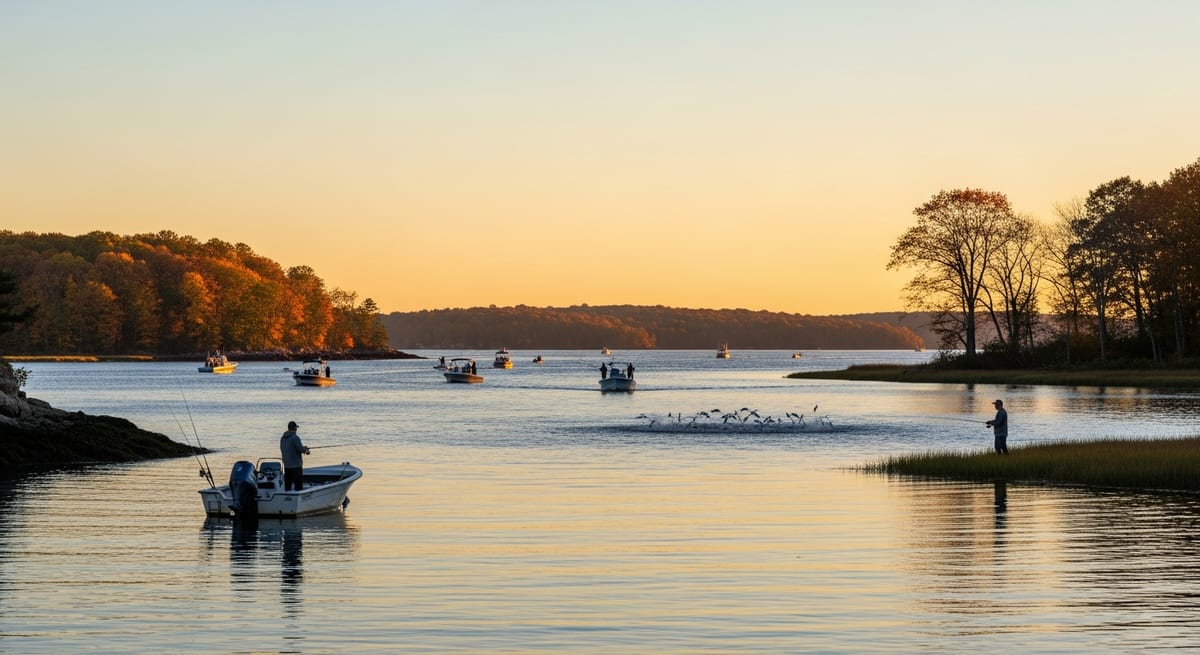
CT DEEP creel survey data shows angler pressure on stocked trout waters drops sharply after Labor Day, often in the same week fall stocking trucks are making their rounds on the Farmington and Salmon rivers. The same pattern repeats across species: blackfish season opens in early October with minimal shore competition, the striper blitzes along Long Island Sound peak with the largest fish of the year within reach of Connecticut shore anglers, and bass on the major inland reservoirs enter the most aggressive feeding phase of the season. The window from late September through mid-November stacks species peaks that most anglers treat as separate trips, or miss entirely.
Why September Bass on Connecticut Reservoirs Outperform the Summer Bite
As water temperatures drop below 70°F, typically the second or third week of September on most Connecticut lakes, largemouth bass that held deep through the August heat push back into the shallows and begin feeding hard. Tournament anglers who fish fall events on Candlewood Lake, Lake Zoar, and Bantam Lake consistently report that the September-October shallow bite rivals spring pre-spawn action on fish in the 3-5 lb class.
What drives the feed: Shad, shiners, and perch schools move into the backs of coves and along shallow points as surface water cools. Bass follow the bait. The fall pattern is movement-based. Anglers who tracked specific structure all summer shift to following active bait concentrations, watching for diving birds and surface disruptions along weed edges and point transitions.
Connecticut lakes with documented fall production:
- Candlewood Lake (Sherman/New Milford): Multiple DEEP access points including the Squantz Pond State Park ramp off Shortwoods Road in New Fairfield and the Chicken Rock Road launch in Danbury. Angler reports on CTFishTalk cite the back coves on the Danbury side as consistently active in September when shad push shallow.
- Lake Zoar (Oxford/Shelton): DEEP public access off Pumpkin Ground Road. CTFishTalk reports point to the Shelton-side coves as reliable fall largemouth water through mid-October.
- Bantam Lake (Morris/Litchfield): Public launch off East Shore Road. One of Connecticut's cleaner shallow-water fisheries; the lily pad edges on the north end produce fall bass through October in most years, according to anglers posting on the CT Trout & Bass Forum.
Best fall presentations by water temperature:
- Above 65°F (early September): Lipless crankbaits (Rat-L-Trap, Strike King Red Eye Shad) ripped through weed edges; topwater on warm evenings and early mornings.
- 60-65°F (mid-September through October): Swimbaits in 3-5 inch paddletail profiles matching shad; medium-speed retrieves along bait-school edges produce more consistent contact than structure-specific presentations.
- Below 60°F (late October through November): Jigs and drop shots near bottom-oriented structure. Anglers who fish the Farmington arm of Zoar report slowing retrieves significantly once water drops into this range and giving fish extra time before setting.
Reading the Striper Migration: Bait School Movement Matters More Than the Calendar
The fall striper migration through Long Island Sound delivers the largest fish Connecticut shore anglers see all year. Fish that spent summer in Cape Cod and Massachusetts waters, moving south through the Sound from September through November. Based on CT DEEP striped bass harvest surveys and captain logs shared on CTFishTalk and local tackle shop report boards, the eastern Sound around Niantic Bay, New London Harbor, and the Mystic River mouth typically sees the leading edge of the migration before bait schools push west through Westbrook, Clinton, Madison, and Milford, though the timing varies by several weeks year to year depending on water temperature, and anglers who plan around the calendar alone routinely miss the best windows.
What drives the blitzes: Fall stripers chase menhaden schools through the Sound. When bunker concentrates near the Connecticut shore, pushed to the surface by feeding fish. The results are visible from shore: birds diving, bait erupting, and breaking fish running across a quarter-mile of water simultaneously. Anglers who monitor daily tackle shop report boards along the Connecticut Shore during October have the most current read on where bunker schools are stacking; conditions can shift from slack to chaos in hours.
Gear for the fall run:
- Heavy spinning or conventional tackle with 30-40 lb braid and a 4-5 foot fluorocarbon leader handles the range of conditions.
- Metal jigs (2-4 oz) cast to the edge of a bait school and worked at moderate speed produce reliably during active blitzes.
- Large swimming plugs and poppers for surface strikes when fish are visibly breaking.
- Live eels at night near rocky structure. A technique that charter captains based out of Niantic and New London consistently report as most effective for fish over 30 inches.
Regulation note: CT DEEP manages stripers under a slot limit framework that has shifted in recent seasons following ASMFC stock assessments. Slot violations are among the most common citations CT marine enforcement issues during fall, per DEEP enforcement reports, check current size and bag limits at DEEP.ct.gov before keeping fish.
CT DEEP's Fall Stocking Schedule: What Gets Added After Labor Day and When
The CT DEEP's fall stocking program runs from late September through October, adding brown trout and rainbow trout to rivers and streams that have cooled after summer, typically once water temperatures drop below 65°F. Target waters include the Farmington River, Salmon River, Natchaug River, and Willimantic River, among others.
DEEP publishes stocking activity reports on their fisheries management pages at DEEP.ct.gov; the fall schedule updates as stockings are completed. Timing a trip within a few days of a stocking report produces the highest fish density in a given stretch. Trout that have been in the river two to three weeks scatter and begin feeding more selectively on the local forage.
What changes from spring to fall: Farmington River Watershed Association trip reports, published on fwra.org, document October caddis activity in the TMA through mid-month in most years, with midges producing surface feeding during cooler morning hours. Anglers who fish the TMA in early October frequently report fish rising to caddis in the #14-16 range well before the water drops into November lows.
Fall gear and approach:
- Spinners (Mepps Aglia size 1-2 in gold or silver) and small spoons produce well in wider, lower sections of the Farmington and Salmon.
- Nymphs (Hare's Ear, Pheasant Tail, size 14-16) work through the Farmington TMA for fly anglers; dead-drift presentations in riffles and tailouts during visible caddis activity.
- Water temps in the 45-55°F range make fall trout less reactive than spring fish, regular TMA visitors report that smaller fly presentations (size 16-18) and extended drifts outperform faster retrieves in the clearer fall water.
Shore Access to Tautog Structure: What Eastern Sound Forum Reports Actually Show
Blackfish anglers on CTFishTalk and regional tackle shop report boards consistently rate October through mid-November as the year's strongest run. Fish that held on summer structure move onto rocky reefs and boulder piles in 15-30 feet of water and feed aggressively before winter cold pushes them deeper. CT charter captains who share fall reports on those threads use green crabs almost exclusively as bait, with Asian shore crabs as backup when green crabs are scarce.
2024 CT DEEP regulation baseline: For the fall 2024 blackfish season in Long Island Sound, CT DEEP set a 16-inch minimum length and a 3-fish daily bag limit for the October-November window. These limits shift with annual ASMFC stock assessments, verify the current season's rules at DEEP.ct.gov before fishing, as they have tightened in recent seasons.
Most tautog fishing in Connecticut happens from boats over mapped reef structure, but three shore-accessible spots in the eastern Sound provide bank anglers access to actual rocky bottom:
- Fort Trumbull State Park (New London): Jetty extending into the Thames River mouth, accessed via Fort Trumbull Road south off Howard Street. Rocky structure produces blackfish in the 2-4 lb class; parking is free. CT DEEP manages the park, confirm seasonal hours before planning a late-November trip, as posted hours shorten after Labor Day.
- Avery Point (Groton): UConn Avery Point campus off Shennecossett Road. Public shoreline access along Eastern Point's rocky bottom; park in the main campus lot. Shore anglers on the CTFishTalk Groton thread report consistent fall blackfish here from mid-October onward, particularly on incoming tide.
- Harkness Memorial State Park (Waterford): Rocky shoreline along the Sound with seasonal parking. Regulars posting in the CTFishTalk saltwater forums report larger fish here than at Fort Trumbull in strong years, particularly during the mid-October to early November window when water temps are in the low 50s.
Standard shore rig: 6-7 foot medium-heavy rod, 40 lb braid, 3-foot fluorocarbon leader to a 2/0-3/0 octopus hook with a 2-3 oz egg sinker. Fish directly on the bottom; tautog takes register as a subtle weight change rather than a hard strike. Most experienced shore anglers set the hook on any change in bottom pressure rather than waiting for a defined pull.
EVERY SATURDAY MORNING
Weekly fishing intelligence
Nationwide conditions, what's biting, and honest gear deals. One email, no noise.
No spam. Unsubscribe anytime.