
CT Pond Anglers at Crystal Lake, Bantam Lake, and Black Pond Report That Bluegill Concentrate on Spawning Beds in Late May, what CT DEEP Warmwater Survey Data, Spawn-Window Timing, and the State's Panfish Community Reveal About Connecticut's Most Available Warmwater Species
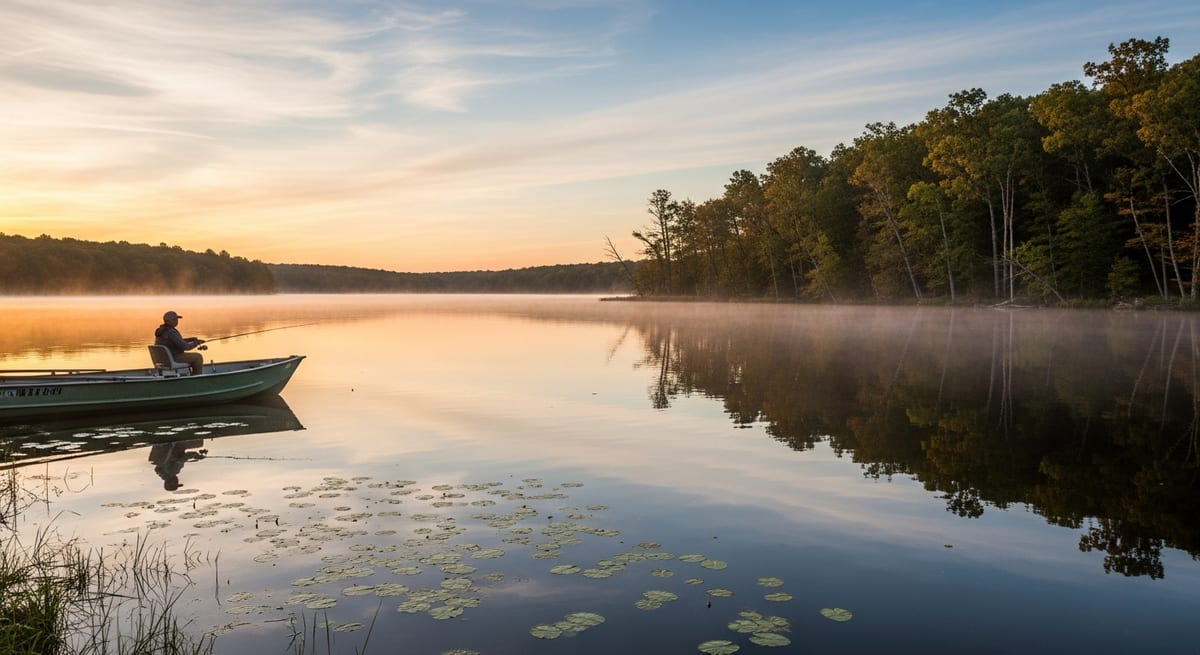
Anglers fishing the shallows of Crystal Lake in Ellington and the protected coves of Bantam Lake in Litchfield consistently report bull bluegill, males exceeding 9 inches, sitting on visible spawning beds in 1 to 3 feet of water during the last two weeks of May. According to CT DEEP warmwater survey records, bluegill rank among the most widely distributed panfish species in Connecticut's inland waters, documented in nearly every surveyed warmwater lake and pond across the state. They bite readily on most presentations, make for solid table fare by most panfish regulars' accounts, and on ultra-light gear in the 2-4 lb class they put up a disproportionate fight relative to their body size. The challenge isn't locating bluegill in Connecticut. It's learning which windows and structures concentrate the fish worth targeting.
Sorting CT Bluegill From Pumpkinseed and Redbreast: Why the ID Matters on the Water
What CT anglers collectively call 'bluegill' is often a mix of related sunfish species. True bluegill are identified by the solid black ear flap with no colored border, blue-green coloration on the face and opercula, and a dark blotch at the rear of the dorsal fin. Among the common sunfish found in CT warmwater systems, they tend to run the largest.
Pumpkinseed sunfish are common throughout CT, identified by an orange or red border around the black ear flap and more complex patterning: orange spots and wavy blue lines on the face. Both species occupy the same habitat and respond to identical techniques, so for fishing purposes the distinction matters mainly at the cleaning table.
Redbreast sunfish, known locally as 'yellowbelly', are common in CT rivers, particularly the Salmon River and Farmington. They carry a long, narrow black ear flap and a reddish-orange belly. River fishing in summer typically produces mixed bags of all three species from the same stretch of water.
Anglers should verify current size and creel rules in the CT DEEP annual Inland Sport Fishing Guide before harvesting, as individual water management plans can set rules that differ from statewide defaults for sunfish species.
Named CT Waters Where the Panfish Community Reports Bluegill Worth Targeting
Nearly every CT warmwater lake, pond, and slow river section holds bluegill in some density. These are the waters where regulars consistently report larger fish and reliable access:
Crystal Lake (Ellington): Consistently mentioned in CT warmwater fishing circles as one of the more productive bluegill lakes in the state. Anglers who fish it regularly describe above-average fish size relative to comparable CT lakes, with strong numbers along the vegetated eastern shore. Accessible shoreline and a public boat launch.
Black Pond (Meriden): Easy access with a healthy population. Regulars report good evening fishing through the summer months and consider it a reliable family panfish destination.
Bantam Lake (Litchfield): Connecticut's largest natural lake holds solid bluegill populations alongside bass and yellow perch. Multiple public access points. The northeast coves, shallower and weed-edged, generate the most consistent panfish reports from regulars.
Nautucket Reservoir (Groton): Receives less attention than the larger southeast CT lakes. Regulars who make the trip describe solid fish relative to the effort, with fewer competing anglers than the more well-known public waters.
Housatonic River slow sections: Below Stevenson Dam and in the Derby-Shelton stretch, the river holds extensive slow water with good bluegill and redbreast sunfish populations. Kayak or canoe access opens up stretches that see significantly less pressure than standard shore access points.
CT town park ponds: The panfish community consistently notes that nearly every town park pond in CT holds bluegill, often within 15 to 20 minutes of most residents in the state. Weekday evenings see low pressure and fish that respond quickly.
What the CT Panfish Community Actually Uses: From Bobber Rigs to Fly Rods
The baseline approach that consistently produces across CT warmwater systems: a size 8 or 10 wire hook, a small split shot, a small float, and a piece of nightcrawler. Cast near aquatic vegetation, under overhanging trees, or alongside dock pilings. The panfish community reports this setup out-produces more elaborate rigs on unfamiliar water because it covers depth and structure quickly without over-complicating the presentation.
The ultra-light setup CT pond regulars default to when targeting larger fish: a 5 to 6 foot ultra-light rod in the 2-4 lb line class, a 1/32 oz jig tipped with a 1.5 inch curly-tail soft plastic, and a slow horizontal or subtle vertical retrieve. Anglers who fish this rig consistently describe it as the most effective way to separate larger fish from the school, smaller bluegill tend to miss the jig, while the 8 to 10 inch fish commit.
Fly fishing: 3-weight rods with small foam poppers or woolly buggers draw consistent reports from the CT fly-fishing community, particularly during calm summer evenings near weed edges. The CT fly-fishing forum consensus is that bluegill on surface presentations are among the better low-cost ways to develop topwater technique on light tackle.
Summer evening pattern: Regulars across CT warmwater lakes report the most productive window of the day is the final 90 minutes to 2 hours before dark, when fish move shallow and surface presentations become viable even on lakes that fish slowly through the midday heat.
How to Isolate the Larger Fish: What Spawn Timing and Post-Spawn Structure Reveal
The largest bluegill. Fish exceeding 9 inches, called 'bull bluegill' in CT panfish circles, are not evenly distributed through the water column or across the season. The CT panfish community reports two distinct windows for targeting them with consistency.
Spawn timing: The spawn typically occurs when water temperatures reach 68-72°F, which falls in late May through mid-June in most CT lakes. Nest-guarding males become territorial and strike most presentations that enter their space. Spawn beds are visible in sandy or gravel shallows at 1 to 4 feet of water, round, cleared depressions 12 to 18 inches across. Anglers who locate active beds report that small jigs, soft plastics, and foam poppers all produce consistent strikes through this window.
Post-spawn structure: Once spawning ends, larger fish move off into 8 to 15 feet and relate to hard structure, brush piles, rock piles, dock posts in deeper water. The CT panfish community consensus is that vertical jigging with a 1/32 to 1/16 oz jig is the most reliable approach for this pattern. A slow drop-and-pause retrieve tends to out-produce horizontal presentations once fish have settled into deeper water.
Bait size: Regulars report that larger offerings. A full nightcrawler or a large wax worm, filter out smaller fish more effectively than smaller presentations, which every fish in the school will attempt to take.
Less-pressured water: On public CT lakes, panfish community reports consistently note that spots requiring a walk or a paddle hold larger average fish than water visible from the parking lot. The effort barrier keeps pressure down and average size up.
Keeping and Eating CT Bluegill: What the Regulations Allow and What Regulars Recommend
CT panfish regulars widely consider bluegill and pumpkinseed among the best-eating species available in the state's inland waters, mild, white flesh with a firm texture. Pan-fried whole bluegill, scaled, cleaned, seasoned simply, and fried in butter, is a preparation the CT panfish community consistently describes as a strong table option that holds up against most other freshwater species.
Anglers should verify current creel and size limits in the CT DEEP annual Inland Sport Fishing Guide before harvesting, as individual lake management plans can set rules that differ from statewide defaults. As of recent seasons, bluegill and sunfish in most CT inland waters have carried no minimum size and no creel limit under statewide regulations, but that can vary by specific water.
Filleting: fish under 7 inches are most practical to cook whole after cleaning. Fish above 7 inches yield fillets with a sharp, thin-bladed knife, though the per-fish yield is modest. A haul of 15 to 20 fish in the 7 to 9 inch range produces a solid meal for two.
A note on harvest: The CT panfish community widely observes that consistently removing all the larger fish from a local pond reduces average size over time. Keeping what will actually be eaten and releasing the rest is the practice most regulars describe as standard on their home waters.
EVERY SATURDAY MORNING
Weekly fishing intelligence
Nationwide conditions, what's biting, and honest gear deals. One email, no noise.
No spam. Unsubscribe anytime.