
The CT Bass Community Has Largely Standardized on Braid. Mono and Fluorocarbon Didn't Go Anywhere. They Just Found Different Jobs.
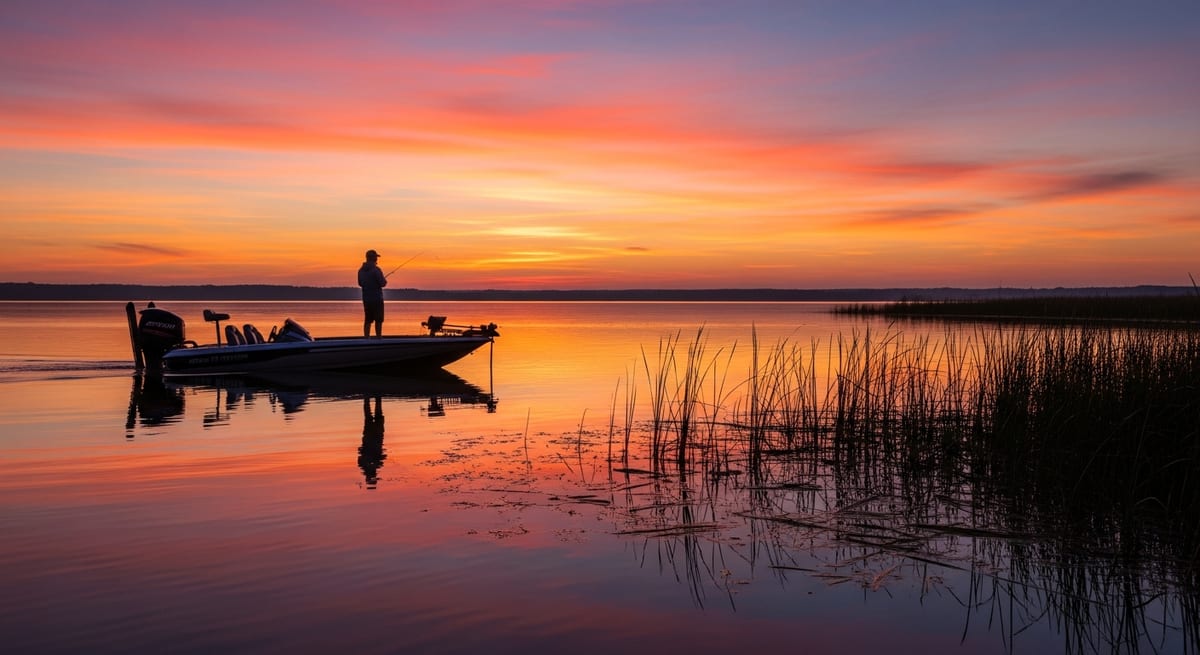
Tournament anglers competing on Candlewood Lake and Lake Lillinonah have largely settled on braid as their main line. A shift that consolidated through the 2010s and is now near-universal in competitive CT bass circles. That standardization didn't happen because mono and fluorocarbon went obsolete. It happened because anglers who fish the same water repeatedly developed firm opinions about which line does which job better, and those opinions converged. The picture that emerges from talking to CT guides and tournament regulars isn't a debate between three competing line types. It's a system: braid on the reel, fluorocarbon at the terminal end, and mono saved for the specific situations where its stretch or buoyancy is actually an asset. Understanding when each one belongs in the setup is what separates anglers who rig by habit from anglers who rig by purpose.
Mono Isn't Dead. It's Doing Specific Work.
Monofilament. A single-strand nylon line that's been in widespread use since the 1950s, hasn't been replaced so much as reassigned. On topwater presentations, CT guides working the Housatonic and the Farmington frequently stay on mono for one practical reason: it floats.
Braid sinks. On a walking bait or a popper, a sinking main line drags the nose of the lure down and kills the action. Guides on the lower Farmington who run dedicated topwater setups for bass have noted this as the reason they keep a rod spooled with mono even when everything else in the boat runs braid.
Stretch matters on specific presentations. Mono absorbs a meaningful percentage of sudden load. That cushion reduces pulled hooks on explosive top-water strikes and on hard-charging fish that surge at the boat. It's not a feature most setups need, but on crankbaits and treble-hook presentations it earns its place.
Practical limits: Mono holds coil memory from the spool, which creates tangles and affects casting in cold weather. On the Housatonic in November, that memory becomes a real nuisance. Mono also has more visible light refraction than fluorocarbon, though in the stained water common on lower CT rivers, that difference rarely matters.
Where CT anglers still reach for it: Topwater setups (walking baits, poppers, open-water frogs), crankbait rigs where shock absorption is a priority, and outings where line sensitivity isn't the primary concern. Typical freshwater range runs 8-17 lb depending on species and cover.
Why the CT Bass Scene Moved to Braid, and Why It Stuck
Braided line is woven from synthetic fibers, typically UHMWPE materials sold under trade names like Dyneema and Spectra. The outcome is near-zero stretch, dramatically thinner diameter per pound, and a level of bottom sensitivity that changed how CT anglers fish structure.
Tournament anglers fishing Candlewood Lake and Zoar Lake describe the shift clearly: when you can feel every rock transition, every piece of submerged timber, every subtle tap through the braid, you start making better decisions about where the fish are holding. Sensitivity on jigging setups is the most consistently cited reason for the switch, followed by the ability to fish lighter jig heads at depth because thinner line cuts water resistance.
On diameter claims: A quality 20 lb braid typically runs at a fraction of the diameter of mono at the same pound test, though the exact comparison varies significantly by brand and construction. Diameter specs printed on the spool are more reliable than cross-brand pound-test comparisons; some 15 lb braids run narrower than others labeled identically.
Topwater is the exception. Braid sinks, which is a liability on surface presentations. It's also clearly visible in the water column. On pressured, clear-water lakes like Squantz Pond in New Milford (DEEP walk-in access at Squantz Pond State Park), that visibility can be a real factor with line-shy fish after heavy weekend pressure.
Where CT anglers run it: As the primary main line on spinning and baitcasting setups for bass, walleye, and panfish. Nearly always paired with a leader, very few experienced CT anglers fish braid straight to the lure. Standard range runs 10-30 lb depending on technique and target species.
Fluorocarbon's Real Job in a Modern CT Rig
Fluorocarbon (PVDF) has a refractive index that closely matches water, making it far less visible to fish when submerged. That property drives most of its use in CT freshwater fishing, specifically as leader material, not as a main line.
The leader is where it earns its cost. Fluorocarbon is considerably more expensive per yard than monofilament. The actual premium varies by brand, but it's meaningful enough that most experienced CT anglers don't spool entire reels with it. The standard approach is braid on the reel with a fluorocarbon leader for the terminal section. The braid runs sensitivity and casting performance through most of the system; the fluoro leader handles visibility near the lure. Guides working Lillinonah and Candlewood have largely converged on this setup for clear-water bass presentations.
Fluoro as main line: a real but narrow use case. On spinning setups dedicated to clear-water finesse fishing, drop-shot rigs, Ned rigs, small jigs for heavily pressured fish: 6-10 lb fluorocarbon as the full main line provides an invisibility advantage. Anglers fishing Bantam Lake (the largest natural lake in CT, with public access in Morris and Litchfield) and Squantz Pond describe the difference as meaningful once mid-summer clarity peaks and fishing pressure intensifies. The tradeoff is cost and the stiffness fluorocarbon develops in cold water.
Physical traits worth knowing: Fluoro sinks (denser than water), which keeps a leader down and out of the way on sub-surface presentations. It's stiffer than mono at the same diameter, useful for abrasion resistance around rock and submerged timber, but worth factoring in on cold-weather setups. Stretch falls between mono and braid: more forgiving than straight braid, more sensitive than a full-mono setup.
The Braid-and-Leader System, how CT Guides Actually Rig It
The setup that tournament anglers and full-season CT guides have converged on for general-purpose freshwater spinning is consistent enough to describe:
Reel: Spooled with 15-20 lb braid (diameter varies by brand, check the spool specs rather than assuming a universal conversion applies) Leader: 6-10 lb fluorocarbon, 2-4 feet, connected with an Alberto knot or double uni knot Result: Bottom sensitivity through most of the system; reduced line visibility near the lure; thin overall diameter for long casts with lighter presentations
For heavier bass work, jigs and swimbaits in the deep creek arms of Candlewood or around Lillinonah's submerged timber. Guides step both up: 30 lb braid, 15-17 lb fluoro leader. For trout and panfish, the setup scales down to 10 lb braid with a 6 lb fluoro leader.
Knot practice before cold-water trips. The Alberto and double uni both hold well, but clean execution is required to maintain rated strength at the connection. Anglers who fish the Housatonic in late October or the Farmington in November consistently report that tying these knots with cold hands is harder than a warm-weather practice session suggests. A few reps at home before the season saves fish at the water.
Topwater exception: For walking baits, poppers, or surface frogs, many CT guides switch the main line to 15-17 lb mono rather than braid. The floating line doesn't dampen surface bait action, and the stretch cushions aggressive strikes. A 2-foot mono leader on a braid main line achieves a similar result on dedicated topwater setups where swapping spools isn't practical.
CT DEEP maintains public access on many of the reservoirs and lakes referenced above through Heritage Fishing and State Park programs. Current access information and special regulations, including slot limits and catch-and-release requirements on Housatonic and Farmington River trout segments, change from year to year in the CT DEEP Fishing Guide at ct.gov/deep.
EVERY SATURDAY MORNING
Weekly fishing intelligence
Nationwide conditions, what's biting, and honest gear deals. One email, no noise.
No spam. Unsubscribe anytime.