
CT Bass Don't Move on a National Schedule. What Bantam, Candlewood, and Lillinonah Regulars Have Mapped About Temperature Triggers, Seasonal Location Shifts, and the 12-Inch Minimum Most Anglers Know Cold.
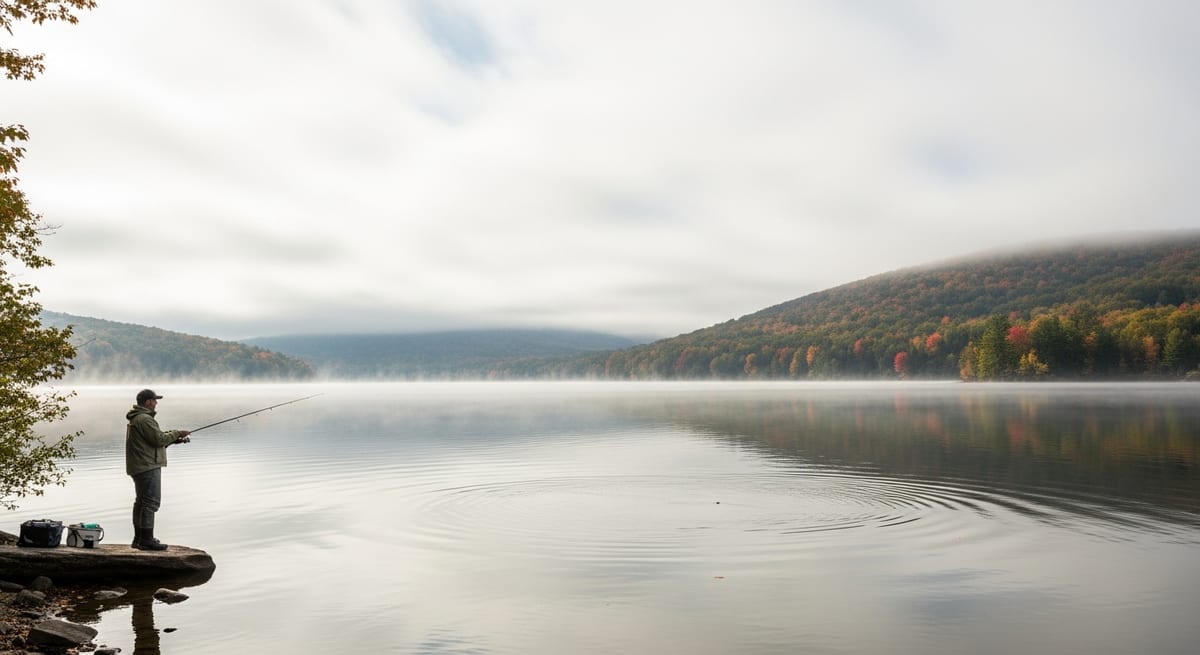
Anglers who fish Bantam Lake through early May regularly report that staging bass disappear from gravel points within days of the water crossing 60 degrees, the transition from pre-spawn holding to shallow spawning areas moves faster than most fishing calendars predict, and the window for intercepting migrating fish is measured in days rather than weeks. Bass behavior on CT waters follows a repeatable annual clock, but the timing runs on water temperature rather than months. What follows reflects what CT bass communities have tracked across Bantam, Candlewood, Lake Lillinonah, Moodus Reservoir, and sections of the Connecticut River, cross-referenced against public CT DEEP creel data and seasonal reports accumulated over multiple seasons.
The Temperature Clock: Why CT Bass Locations Shift Faster Than Most Expect
Largemouth and smallmouth bass are cold-blooded. Their metabolism, feeding activity, and location are driven primarily by water temperature, and on CT lakes the seasonal transitions can compress or stretch significantly depending on spring and fall weather patterns. Anglers who carry a water thermometer and log readings over multiple seasons report that patterns become far more predictable than any calendar-based approach.
Temperature thresholds CT bass anglers track most closely:
- Below 40°F: Minimal feeding. Fish hold in the deepest, most thermally stable water available, typically the basin sections on Candlewood and Lillinonah or the outside channel bends on the Connecticut River.
- 40-50°F: Metabolism increases. Some feeding activity begins. Fish start moving toward shallower staging areas along structural routes.
- 50-60°F: Pre-spawn period. Feeding intensity increases. Fish stage on secondary points and depth transitions near likely spawning flats.
- 60-68°F: Spawn window on most CT waters, though the exact timing varies year to year. Bantam and Candlewood anglers consistently note that cold springs push this window back by two to three weeks from what national fishing calendars predict.
- 68-75°F: Post-spawn recovery, then transition to summer patterns.
- 75-85°F: Peak summer. Shallow feeding concentrated in low-light periods; deeper structure during midday heat.
- Below 60°F (fall cooling): Feeding intensifies as fish prepare for winter. Community reports from CT impoundments describe this as the most consistently active surface and mid-water feeding window of the year.
These thresholds are broadly consistent with seasonal patterns documented in CT DEEP inland fisheries assessments, though individual lakes respond differently to the same air temperatures based on depth, surface area, and wind exposure.
Ice-Out to Pre-Spawn: The Migration Window on CT Largemouth Water
Pre-spawn (water: 50-62°F, typically late April through mid-May in CT, though cold springs shift this window by weeks):
The period between ice-out and peak spawn generates some of the most active bass fishing on CT waters, based on seasonal community reports from Bantam, Lillinonah, and the Housatonic River coves. Bass migrate from deep winter holding areas toward spawning flats along structural routes, using depth contours, channel edges, and underwater points as travel corridors.
Anglers on Lake Lillinonah report that secondary points extending into 8 to 12 feet of water over hard bottom function as reliable staging areas during this migration. Fish use these points as holding and feeding stations rather than pushing straight to the shallows. Candlewood regulars describe similar stacking behavior on the lake's underwater humps as water temperatures climb through the 50s.
The transition zones where deep water meets gravel, rock, or compacted sand bottom tend to concentrate the most fish during this window. Spinnerbaits, lipless crankbaits, and Texas-rigged soft plastics in the 4 to 8 foot range have been the most commonly reported producers among CT bass communities during pre-spawn.
CT DEEP regulations apply year-round: Connecticut's statewide largemouth bass minimum size is 12 inches, with a 5-fish daily bag limit. Some specific waters carry special regulations, and anglers should verify with the CT DEEP inland fisheries season guide before fishing any new water.
The Bed Window on Bantam and Candlewood: What CT Anglers Report About Spawn Timing
Spawn (water: approximately 62-68°F on most CT lakes, typically mid-May to mid-June, with substantial year-to-year variation):
Bass move to shallow water, often 1 to 5 feet, and create circular nests on hard, clean bottom. Males typically fan out a bed and guard it against intruders; females commonly deposit eggs and move off to adjacent deeper water, though behavioral variation across individual fish and conditions is real, and CT anglers note the general pattern does not hold uniformly on all waters.
Anglers on Bantam Lake, which has relatively clear water and extensive hard-bottom shallows, report that beds become visible in calm, bright conditions from mid-May onward in typical years. Candlewood anglers note the lake's volume means surface temperatures vary considerably by cove, with shallow northern coves warming and triggering spawning activity days before the main basin reaches comparable temperatures.
Post-spawn females scatter and can be difficult to locate for 10 to 14 days. The consensus among Bantam and Moodus Reservoir regulars is that targeting the edges of spawning areas, specifically the secondary points and transitions just outside shallow flats, produces more consistently than concentrating on visible beds during peak spawn.
Soft plastics worked slowly through adjacent structure have been widely reported as effective during the recovery period that follows.
Midsummer: When CT Bass Go Vertical and Why
Early summer (post-spawn, water: 65-72°F): Bass recover from spawning and resume active feeding. Fish distribute across multiple depth zones: some remain in the shallows, others move to mid-depth structure. The first three to four weeks after the spawn typically produce the most active shallow-water bass fishing of the summer on CT lakes, based on community reports from Bantam, Candlewood, and the Connecticut River backwaters.
Peak summer (water: 75-85°F): CT bass establish clear low-light vs. midday patterns during peak summer heat. Dawn and dusk movement to shallow feeding areas is consistent across Candlewood, Lillinonah, and the river backwaters. By mid-morning, particularly on clear calm days, fish retreat to deeper structure.
On deeper impoundments like Candlewood, larger bass often hold near offshore humps, ledges, and drop-offs during midday. Anglers who fish Candlewood's mid-lake humps regularly report that a thermocline develops in midsummer, with bass commonly holding just above where the temperature drops sharply. The specific depth varies by year and lake; 15 to 22 feet has been the range most frequently described by Candlewood regulars in recent seasons, though weather patterns and lake turnover timing shift it.
The consistency of summer dawn spots is something CT bass communities often describe as underutilized. A productive morning location on a given piece of structure tends to repeat reliably through July and August, morning after morning, while the same spot at midday may produce nothing.
The Fall Feeding Shift on CT Reservoirs
Early fall (water: 65-72°F, typically September through mid-October in CT):
Water cooling triggers some of the most visibly active bass feeding of the year on CT impoundments. Bass begin chasing schools of golden shiners, yellow perch fry, and other native baitfish as those fish move toward cove backs and shallow flats following cooling surface temperatures. Anglers fishing the back coves of Lake Lillinonah and Bantam's protected bays in October consistently report aggressive surface and mid-water feeding during this period.
Shiner and perch-patterned crankbaits, swimbaits, and spinnerbaits worked through actively feeding areas have produced strong results based on community reports from CT fall fishing. Locating the bait schools first is the consistent approach anglers describe: bass follow the forage. October is frequently cited in CT bass communities as the month when 4- to 6-pound largemouth appear more regularly than at any other time of year, though this reflects accumulated community observation rather than formal survey data.
Late fall (water: 50-60°F, November in CT): Feeding becomes less frequent as water cools further. Bantam and Moodus Reservoir regulars describe the late-season shift from faster reaction baits to slower presentations: jigs, drop shots, and finesse soft plastics worked near bottom. Bass stage on outside points and channel edges adjacent to deep water as they transition toward winter holding areas. The window tends to close quickly once temperatures drop below 50 degrees.
Cold Water and Slow Hands: Deep-Basin Bass Through the CT Winter
Winter (water: below 50°F, typically December through March on CT lakes):
Bass on CT waters settle into deep holding areas: basin sections on Candlewood and Lillinonah, the outside channel bends on the Connecticut River, and the deeper pools in smaller waters like Moodus Reservoir. Fish seek the most thermally stable water available and feed far less actively than at any other point in the annual cycle.
Occasional feeding occurs on warmer winter days when sunlight temporarily raises surface temperatures, but sustained activity is uncommon. The windows are short and presentations must match cold-water metabolism.
CT anglers who specifically target winter bass describe it as a high-patience finesse approach. A drop shot with a small soft plastic, shaken in place near confirmed deep structure. A blade bait or jigging spoon worked vertically off the bottom. A jig left motionless for 30 to 45 seconds between any movement. Community reports from anglers who have fished Candlewood in January and February consistently emphasize that the bite, when it comes, is often subtle: a slight increase in line weight rather than a definitive strike.
CT DEEP's 12-inch minimum and 5-fish bag limit apply through winter on most inland waters. Cold-water stress recovery is slower than in warmer seasons, and releasing fish quickly is standard practice among CT bass communities during this period.
EVERY SATURDAY MORNING
Weekly fishing intelligence
Nationwide conditions, what's biting, and honest gear deals. One email, no noise.
No spam. Unsubscribe anytime.